REVIEW · PHNOM PENH
13 Days Private Tour to Cambodia, Angkor Wat and Vietnam
Book on Viator →Operated by Global Travel & Tours Asia · Bookable on Viator
Angkor and Saigon, choreographed well in 13 days. What makes this trip special is the way it strings together UNESCO classics plus real-life moments on the water, with airport meets and guides that keep the days from feeling chaotic. I love the private, licensed English-speaking guides (not just a driver shuttling you around), and I also like that domestic flights are built in, so you spend less time on buses and more time seeing places.
The only real drawback to plan for is the pace: you’ll have several long travel days and full sightseeing blocks, so if you want lots of slow mornings, this route may feel like a sprint—just a well-run one.
In This Review
- Key moments that make this tour worth your attention
- Why this Cambodia-to-Vietnam route makes sense
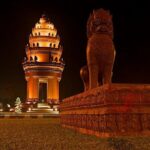
- Phnom Penh: Royal sights, then real history
- Angkor Thom and Angkor Wat: how to see the big stuff without feeling lost
- Banteay Srei, Preah Khan, and Kampong Phluk on the way north
- Hanoi: museums, mausoleum area, pagodas, and water puppets
- Ha Long Bay overnight: the cruise value is time, not just scenery
- Hoi An: Japanese bridge, old houses, river views, and the night show
- Hue’s imperial sites and a Perfume River cruise
- Saigon and Cu Chi: major landmarks plus the war museums
- Mekong Delta: My Tho and Cai Be from boat to lunch
- Hotels, guides, and what the included services actually buy you
- Price and logistics: is $4,360 per person good value?
- Who should book this private tour (and who should skip it)
- Should you book this 13-day private Cambodia and Vietnam tour?
- FAQ
- How does Cambodia visa work on this tour?
- Are entrance fees included?
- What meals are included?
- Are flights included between Cambodia and Vietnam?
- What types of hotels are included?
- What happens if I cancel?
Key moments that make this tour worth your attention
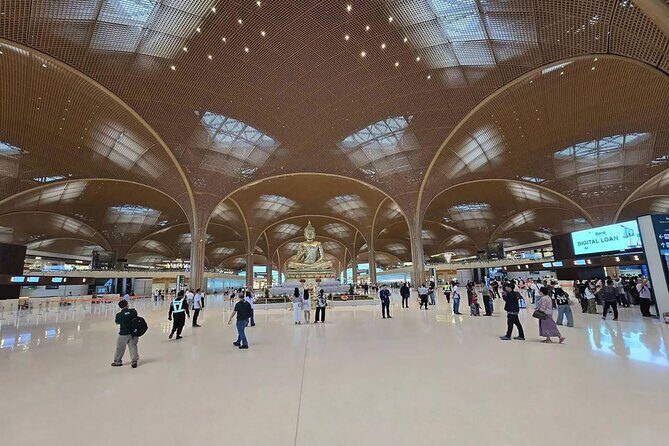
- Airport-to-hotel organization that helps you get oriented fast, including meeting you at arrivals.
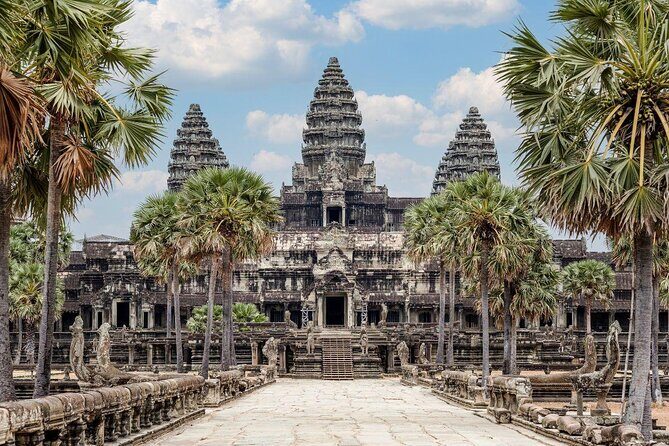
- Angkor Thom + Angkor Wat planned across multiple sites in a single focused stretch.
- Phnom Penh’s two-part history day with both Tuol Sleng and the Killing Fields.
- One-night Ha Long Bay cruise with morning time on the water and a village stop.
- Hoi An by foot and water: cyclo time, riverside views, then a cultural show.
- Saigon plus Cu Chi in one go, pairing major sights with the war-story museums.
Why this Cambodia-to-Vietnam route makes sense
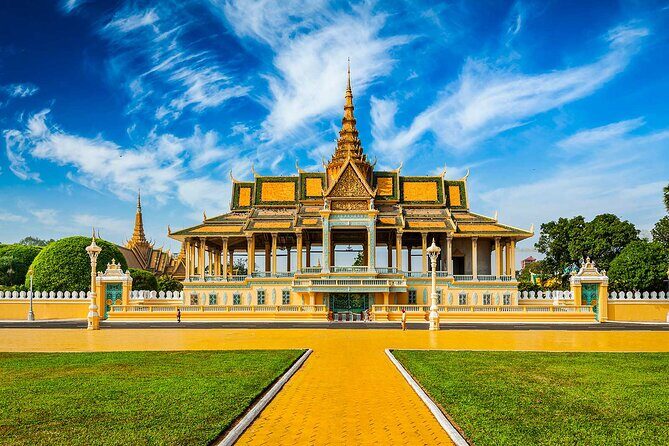
This is a classic “temples to empire to cities” route, but it’s set up like a practical travel plan, not a random list of highlights. You move from Cambodia’s big Khmer center to Vietnam’s north (Hanoi and Ha Long Bay), then slide south through central Vietnam (Da Nang/Hoi An, Hue), and finish in the fast energy of Saigon with the Mekong Delta after.
What I like is the variety in how you see the region. You get major monuments (Angkor, Hué’s imperial sites), and you also get the everyday rhythm: cyclo rides, boat cruises, market time, village visits, and river life. That balance keeps the trip from feeling like you’re only checking boxes.
Other Angkor Wat day trips from Phnom Penh

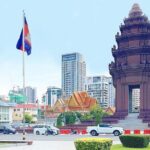
Phnom Penh: Royal sights, then real history
Your trip starts in Phnom Penh, with the Cambodia arrival process handled on day one so you’re not stuck figuring out the first steps after landing. Day two is a full day, and it’s intentionally split between beauty and truth.
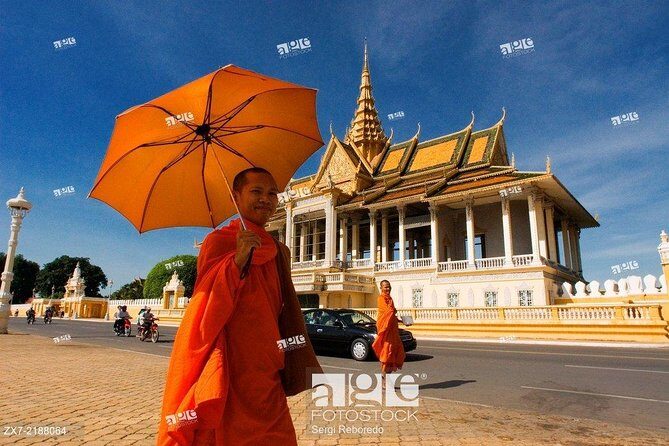
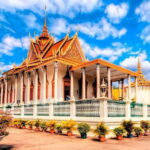
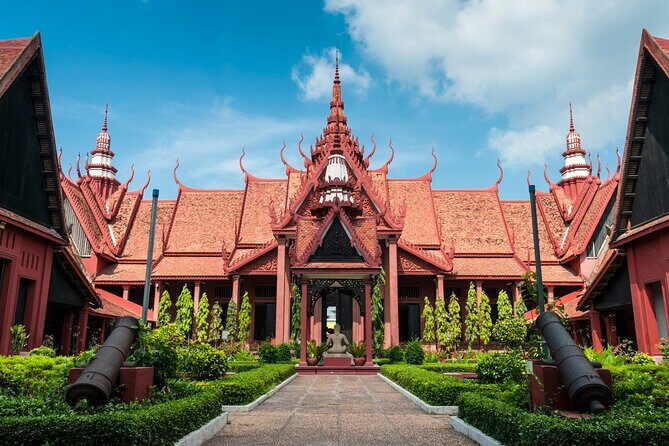
You begin at the Royal Palace and Royal Garden area, built in the 1860s, then move to the National Museum—a calm place to orient yourself to Khmer art and sculpture before you start seeing it carved into temple stone. Wat Phnom is next, a simpler but meaningful Buddhist landmark tied to the city’s name.
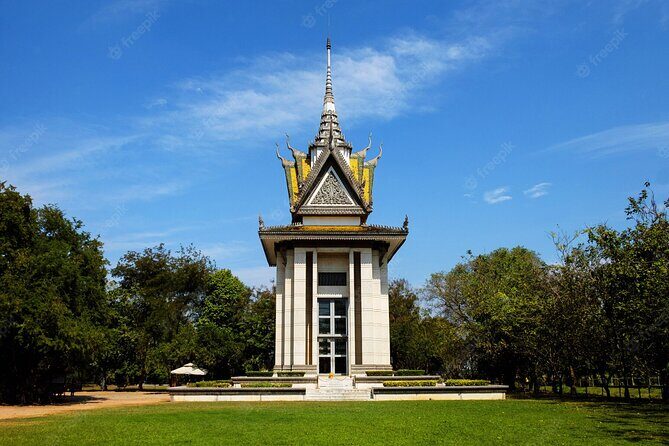
Then the day turns heavy. After lunch, you go to Tuol Sleng Genocide Museum (S-21) and continue to Choeung Ek, the Killing Fields. These stops aren’t “fun,” but they’re important. You’ll walk away understanding why Cambodia’s modern story is shaped by what happened here. If you’re sensitive to graphic history, give yourself a breather before the next day’s flights—plan for that emotional reset.
Angkor Thom and Angkor Wat: how to see the big stuff without feeling lost

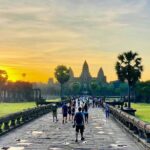
Angkor is the main event, and this tour treats it like one. Day three is built around Angkor Thom, the walled capital area, with a strong sequence that takes you from the outside gates into the heart of the city.
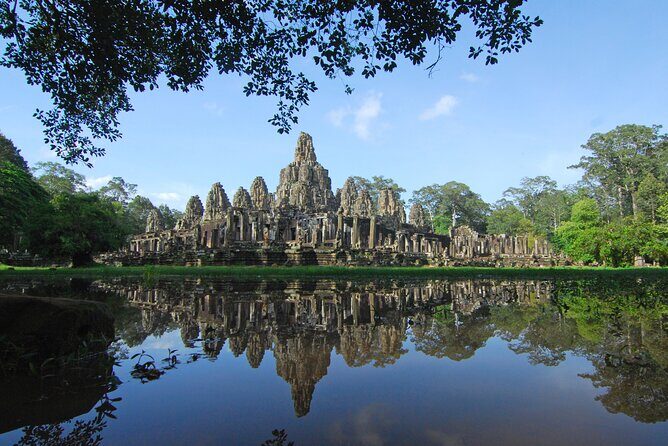
You start at the South Gate, then visit the face-studded Bayon Temple, followed by Baphuon and the historic terraces like the Terrace of the Elephants and Terrace of the Leper King. You also get Phimeanakas, then you head into the temple atmosphere people remember for life: Ta Prohm with its iconic tree roots.
Lunch breaks up the day before you land on Angkor Wat—and yes, it’s huge. The value here is timing and flow. Instead of doing one temple and rushing off, you’re placed into the larger story of how the site was designed and used.
A consideration: Angkor means heat and crowds, even in a private setting. You’ll want water, sun protection, and a mindset for long outdoor walking—this is not a sit-and-watch tour.
Banteay Srei, Preah Khan, and Kampong Phluk on the way north
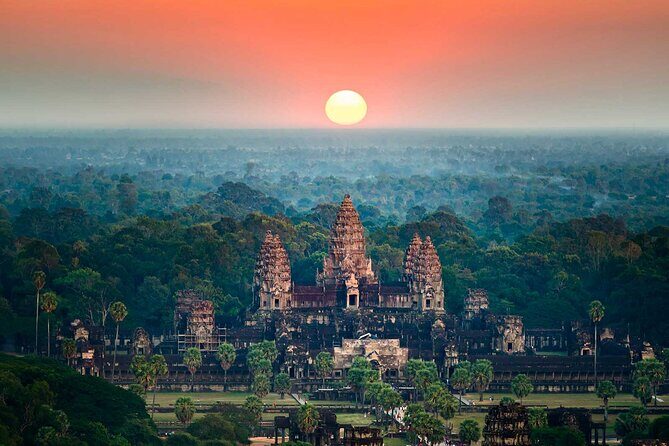
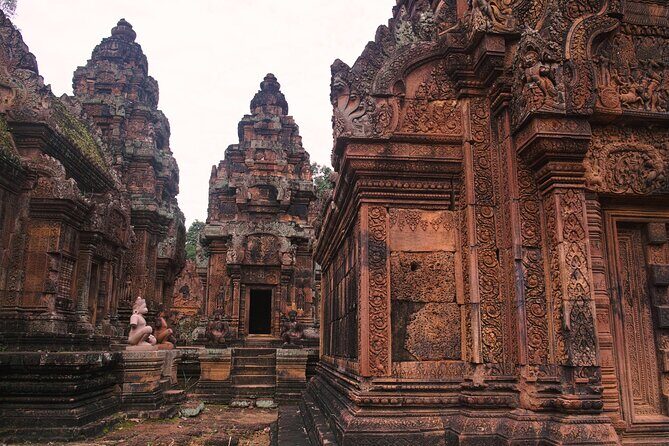
Day four keeps the Angkor momentum going, but it adds a different flavor. Banteay Srei is one of those places that feels delicate and detailed at the same time—pink sandstone, lots of intricate carving, and a scale that’s easier to appreciate up close than the biggest temples.
Then you move to Preah Khan, built in the same general style as Ta Prohm and in a state that tends to help you see how the complex works. After that, the day shifts from stone to daily life with Kampong Phluk floating village.
The experience here matters because it’s not just scenery. You take an ox-cart ride through surrounding countryside and rice fields, then you stop for a fresh coconut drink. It’s one of the best “only-here” experiences in the region because the living environment and how people adapt to water isn’t something you can fake on a photo.
Hanoi: museums, mausoleum area, pagodas, and water puppets
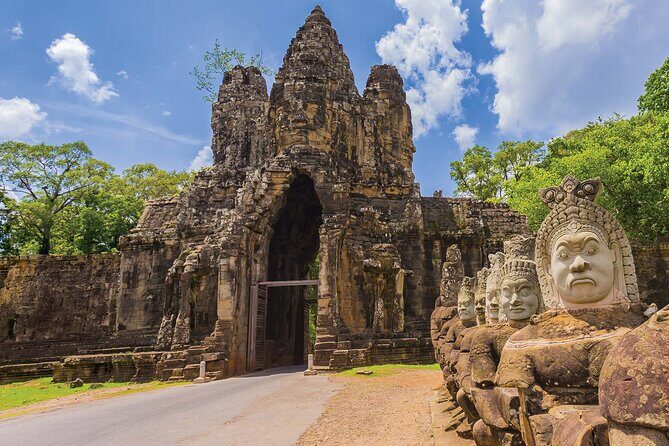
After leaving Cambodia, the tour lands you in Hanoi at a full-city day scale. Day five is a tour of meaning: Vietnam’s education history, its colonial traces, and major parts of modern national memory.
You start at the Ho Chi Minh Complex area and Ba Dinh Square, then continue to the Temple of Literature (linked to Confucius and the Imperial Academy / first national university). The Vietnam Museum of Ethnology is a strong mid-day anchor because it helps you understand Vietnam as more than one culture.
The route then brings you into city atmosphere with the Hanoi Opera House drive-by and the Hoa Lo Prison museum stop. After that, you head to Tran Quoc Pagoda by West Lake, then do a cyclo ride through the Old Quarter’s 36 Streets. The day ends with a traditional water puppet performance, a very North Vietnam style art form that connects to rural life and folklore.
Practical note: this is a lot of indoor and outdoor time on one day. If you dislike museum-heavy days, you might find the pace tight. Still, the sequence is useful: you learn, you walk, you ride, and then you end with a cultural show.
Other private tours in Phnom Penh


Ha Long Bay overnight: the cruise value is time, not just scenery
Ha Long Bay is famous. What matters on an overnight cruise is how you use the hours. Day six is a one-night cruise, meaning you get to experience the bay beyond just a single daytime tour window.
You’ll head northeast from Hanoi, then start the cruise on a traditional-style ship. The experience continues the next morning with a morning view and breakfast time in the fresh air, plus a visit to Vung Vieng fishing village via a rustic rowboat. Meeting people in the village setting adds context to the scenery—you see how work and water connect here.
If you’re deciding whether an overnight is worth it, this is the logic: you gain more than a night’s lodging. You gain morning light, less “rush-tour” timing, and a more relaxed rhythm.
Hoi An: Japanese bridge, old houses, river views, and the night show
Hoi An is calmer than Hanoi in feel, but it’s still a full-day experience. Day eight focuses on the UNESCO world heritage old-town texture and the living details.
You visit the Japanese Covered Bridge, then walk through older private spaces like the Old House of Phun Hung and the Tan Ky House. You also see Chinese-influenced architecture at the Fukian Assembly Hall (Phuc Kien), which helps explain why Hoi An built a reputation as a trading port.
The tour then shifts to water again with a riverboat ride along the Thu Bon River and a visit to a boat-building village. After lunch, you get some free time to explore on your own, which I appreciate because Hoi An rewards wandering.
In the evening there’s the Hoi An Memories Show. It’s a cultural wrap-up—less about quiet temple wonder and more about performance and storytelling, which can be a relief after a long day of walking.
Hue’s imperial sites and a Perfume River cruise
Hue is where the trip slows in tone even if the sightseeing stays full. Day nine focuses on royal tombs and the imperial city structure.
You visit the Tomb of Tu Duc, then Tomb of Khai Dinh, each with its own architectural style and mood. After lunch, you explore the Hue Imperial City (Citadel)—and you’ll ride there by private pedal-powered cyclo, which is a clever way to cover ground without turning the day into a pure endurance test.
Day ten continues with the spiritual and scenic side of Hue. You visit Thien Mu Pagoda, then cruise along the Perfume River and see the boats that keep moving there. After that, you visit the Mausoleum of Emperor Minh Mang, set amid lush hills by the river.
Then you fly to Ho Chi Minh City. That’s an important transition day: it helps you keep your schedule efficient, but it also means you’ll trade one kind of pace for another—Hue’s slower rhythm for Saigon’s speed.
Saigon and Cu Chi: major landmarks plus the war museums
In Ho Chi Minh City, day eleven is a strong mix of French colonial-era structures, modern landmarks, and war-related history.
You start with Cu Chi Tunnels, exploring the underground chambers that go three stories deep. The point isn’t just to see “tunnels.” It’s to understand what survival and strategy looked like underground.
After lunch, you visit the Saigon Notre Dame Cathedral, then the Central Post Office—an architectural standout with mixed Gothic, Renaissance, and French influences. Next is the Reunification Palace (Independence Palace), tied to the end of the Vietnam War era.
You then go to the War Remnants Museum, described as a call for peace and a reminder of the war’s horrors. After that, you shift to lighter city energy with stops like Ben Thanh Market and a stroll around Ho Chi Minh Square.
This day is long, but it works because it has emotional range. You’re not just sightseeing; you’re connecting the city’s structures to its history.
Mekong Delta: My Tho and Cai Be from boat to lunch
Day twelve is the trip’s final big “water life” chapter. You start in the My Tho area, then transfer to the Cai Be jetty.
A key detail here is that you’re on a Cai Be Princess Sampan for a leisurely cruise. The vibe is more relaxed than the museum-heavy days because the focus is the river rhythm—passing through the delta environment and seeing how the area lives off the water.
The cruise ends at Le Longanier Restaurant, set in a colonial-style villa with tropical garden surroundings. It’s a good ending: you’ve done intense history and temple days, and now you get a slower meal in a place that feels like it belongs in the region’s story.
Hotels, guides, and what the included services actually buy you
This tour includes stays across Cambodia and Vietnam in named hotels (or similar), with one night onboard the Dragon Legend Cruise and multiple nights at hotels like the iRoHa Garden Hotel, Golden Temple Hotel, La Siesta properties, and Azerai La Residence Hue, plus Mai House Saigon Hotel in Ho Chi Minh City.
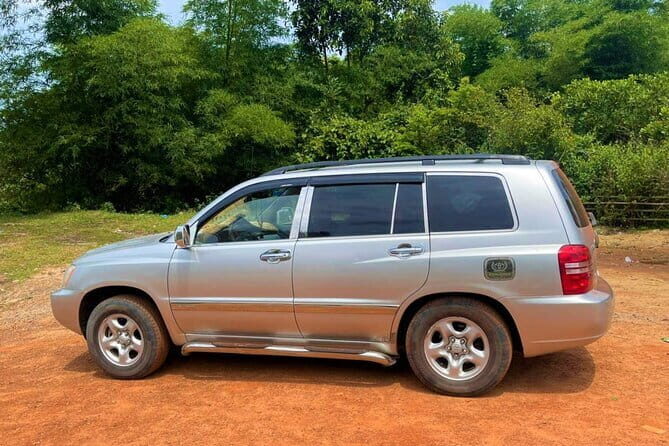
To me, the big value isn’t just the hotel names. It’s that your daily breakfast is covered, you get a set number of lunches and one dinner, and you have private transportation with a modern air-conditioned vehicle and a safe driver. That means your day-to-day logistics stay handled while you focus on sights.
The tour also includes all entrance fees for the places listed, plus three bottles of mineral water per person per day. On a long itinerary like this, those small “included” items add up.
The other service factor: your coordinator and team keep everything connected. In past experiences with this company, I’ve seen strong emphasis on airport handoffs and staying in touch, including notes around Mr. Ann personally coordinating and meeting people after flights.
Price and logistics: is $4,360 per person good value?
At $4,360 per person for 13 days, you’re paying for a full private structure: hotels across multiple cities, entrance fees, a guided program with a licensed English-speaking guide, and most importantly, the flight legs that connect Phnom Penh → Siem Reap → Hanoi → Da Nang → Hue → Ho Chi Minh City.
If you were to assemble this yourself, the costs that often surprise people are:
- domestic flights across multiple countries and cities
- entrance fees at major sites
- private guides timed to temple opening schedules
- one-night cruise costs
- private vehicle time wasted when you don’t know where you’re going
Here, you’re buying “time saved” and “stress reduced.” The tour is priced like someone planned the path for you, not like you’re only paying for sightseeing.
The trade-off is flexibility. This schedule is packed. If you want lots of personal detours, you’ll need to build that in during any free time windows, or you’ll feel the squeeze.
Who should book this private tour (and who should skip it)
This is a great fit if you want:
- a private, guided experience with smooth transfers
- a big highlights route across Cambodia and Vietnam
- lots of UNESCO sites plus water-based experiences like Ha Long Bay, the Perfume River, and Mekong cruises
It’s less ideal if you hate long days or you get cranky when flights break up your rhythm. If you love slow travel, you may prefer fewer cities and more nights in fewer places.
Also, if history-focused mornings tire you out, note that the Phnom Penh and Cu Chi days are heavy in subject matter. You can still do it—just plan your energy.
Should you book this 13-day private Cambodia and Vietnam tour?
I’d book it if you want a well-run route that hits the big landmarks and still gives you real river-and-village time. The combination of Angkor depth, Ha Long Bay overnight timing, and Hue’s imperial sites makes the itinerary feel like a coherent journey rather than separate stops.
Don’t book it only if you’re chasing total freedom and a relaxed pace. This is efficient. If that matches your travel style, it’s a strong value for what’s included—and it’s the kind of trip where good planning makes the difference between seeing everything and just trying to keep up.
FAQ
How does Cambodia visa work on this tour?
On day one, after you arrive at Phnom Penh Airport, the plan includes obtaining your Cambodia visa, then clearing Immigration and Customs before continuing to the next parts of the itinerary.
Are entrance fees included?
Yes. All entrance fees for the listed sights are included in the tour price.
What meals are included?
Daily breakfast is included. The tour also includes 6 lunches and 1 dinner, plus any meals shown as included in the itinerary.
Are flights included between Cambodia and Vietnam?
Yes. The tour includes domestic flights across the route, including Phnom Penh to Siem Reap, Siem Reap to Hanoi, Hanoi to Danang, and Hue to Ho Chi Minh City.
What types of hotels are included?
The tour includes specific hotels by name (or similar), including stays such as iRoHa Garden Hotel, Golden Temple Hotel, La Siesta properties (Hoi An and other nights), Azerai La Residence Hue, Mai House Saigon Hotel, and an overnight cruise cabin onboard the Dragon Legend Cruise.
What happens if I cancel?
The policy states you can cancel up to 6 days in advance for a full refund. For a 50% refund, you must cancel 2–6 days before the start time. If you cancel less than 2 full days before the start time, the amount you paid will not be refunded.