REVIEW · PHNOM PENH
Phnom Penh & Kirirom National Park Birds Tour
Book on Viator →Operated by Vana Adventure Travel · Bookable on Viator
Waking before dawn for birds pays off. This two-day tour out of Phnom Penh is built around early sunrise birdwatching and a real shot at high-quality sightings across lotus fields, rice paddies, cultivation, and forest edge habitats, often where bird activity is at its best. I love how the route stays grounded in the Cambodian countryside, not just quick stops.
My favorite part is the guiding style. Thong leads with calm confidence, good English, and a knack for tracking birds by following their calls, which is exactly what you want when species can be hard to see. I also really enjoyed the pace and the included breakfast, which made the early start feel worth it.
One thing to consider: this is moderate birding with some very tricky species, and it runs on an early schedule (pick-up around 5:30am). Lowland conditions can be humid with occasional rain showers, so you’ll want to be comfortable getting a little damp and moving at an easy walking pace.
In This Review
- Key highlights worth knowing before you go
- Phnom Penh to the countryside: why this bird tour feels different
- Price and what you actually get for $350
- Day 1 in the Mekong region: Chambok Home Stay and the lotus-lake bird rhythm
- Day 2 at Kirirom National Park: sunrise forest birds at an easy pace
- The bird targets: what you might see across habitats
- Meals, homestay, and the Cambodia countryside feel
- Logistics that actually matter in the field
- Who this tour is best for (and who should skip it)
- Should you book this Phnom Penh & Kirirom Birds Tour?
- FAQ
- What time does the tour start?
- How long is the Phnom Penh & Kirirom Birds Tour?
- What is the price per person?
- Is pickup included?
- Is the homestay included?
- Are entrance fees and dinner included?
Key highlights worth knowing before you go
- Small group (max 8 travelers) for a less hectic, more eyes-on-birds experience
- Thong’s call-tracking approach helps you find species you’d otherwise miss
- Two habitat days: lotus/rice farmland on Day 1 and forest birds in Kirirom on Day 2
- Photographic opportunities are good, especially at sunrise when birds are active
- Includes one night homestay at Chambok Community Based Ecotourism, plus key meals
Phnom Penh to the countryside: why this bird tour feels different
Birding tours can fall into two buckets: big, fast, and a little generic—or small, slow, and focused on actually locating birds. This one lands in the second bucket, which is a big deal if you care about seeing more than just a couple of obvious species.
You’re not just chasing a checklist. You’re moving through habitats where birds naturally feed and call: lotus fields and paddy rice country on the first day, then lower-elevation forest on the second day. That mix matters because many Cambodian birds are habitat-specific, and the guide’s job is to put you in the right places at the right times.
The group stays small, and the early start is purposeful. Sunrise birdwatching in humid lowlands often means birds are vocal and visible, and you get better odds with shy species that don’t show well later in the day.
If you're still narrowing it down, here are other tours in Phnom Penh we've reviewed.

Price and what you actually get for $350
At $350 per person for roughly two days, the value comes down to what’s included and what you’re paying for. This isn’t a self-guided trip where you’re on your own with a map. You’re paying for a local birding guide, an additional local guide, an air-conditioned vehicle, and a guided homestay experience.
Included in your cost:
- Local birding guide and local guide
- Air-conditioned vehicle
- One night homestay at Chambok Community Based Ecotourism
- Two lunches and two breakfasts
Not included:
- Dinner and the entrance ticket fee at Chambok Ecotourism Community (listed as $7 USD)
- Miscellaneous personal expenses and tips
- Travel insurance
That lunch-and-breakfast structure is helpful because it reduces decision fatigue early in the morning. You also get a night in a community-based setting, which usually means you’re supporting local ecotourism rather than only passing through.
One practical thing: the tour is priced for a small group, which helps quality, but it also means you should be ready to commit when you book. This experience also depends on good weather, and the provider notes you’ll either be offered a different date or a full refund if weather cancels it.
Day 1 in the Mekong region: Chambok Home Stay and the lotus-lake bird rhythm
Your day starts early—your pick time is 5:30am—and that timing isn’t random. Dawn is when birds are most vocal, and the farmland edges around Chambok start to wake up.
You begin with a ferry crossing of the Mekong River. That short water crossing can be more than scenic; it also signals a different kind of trip than city-only sightseeing. After the ferry, you drive to your birding side and arrive at a natural lake area where local farmers grow lotus, paddy rice, and other vegetables.
This is farmland and wetland country, and the birding style here tends to be a mix of scanning and listening. The habitats are exactly what you want for birds that move between open fields, watery edges, and cultivation. Based on the tour’s habitat focus, expect a strong chance at birds tied to lowland activity—things that feed in open areas and then retreat to cover.
What I like about this day is that it sets up tomorrow. Day 1 teaches you what the birds do in farmland habitats—when they call, where they perch, and how the light changes over fields. Then Day 2, in the national park, feels like a different room of the same house.
There is one Day 1 trade-off: it runs about 9 hours, and it’s a long, early day. If you’re not used to sunrise starts, you’ll feel it. But if you can handle the morning grind, the payoff is better than trying to bird later when movement slows.
And for the homestay side: you’re staying at Chambok Community Based Ecotourism for one night. Even with limited details on the exact homestay setup, the point here is that you’re part of an ecotourism community experience rather than checking in at a standard hotel and leaving immediately.
Day 2 at Kirirom National Park: sunrise forest birds at an easy pace
Day 2 begins with sunrise birdwatching in Kirirom National Park, and the plan is refreshingly clear: you walk around at an easy pace. The focus is on forest birds, and the route is designed for steady eyes-on-birds time rather than long, punishing treks.
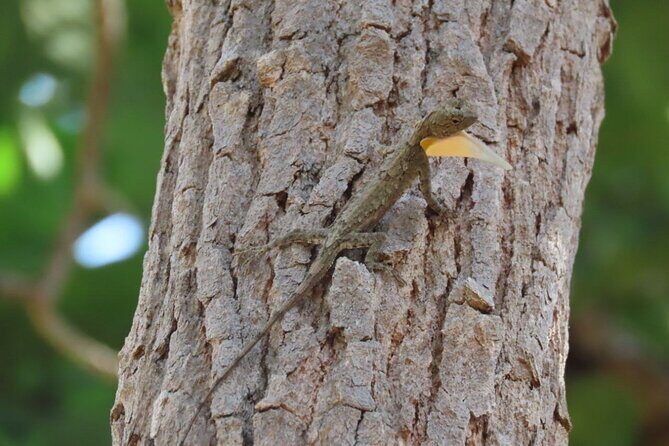
Among the birds specifically highlighted for this day are Greater Racket Tailed, Forest wagtail, White rumped Shama, Red-whiskered Bulbul, and Puff-throated Babbler. Those names are your hint that this is not just a drive-by stop. You’re meant to be in the habitat, listening for cues, then scanning perches and understory edges.
This is also where photographic opportunities can shine. In forest settings, birds can appear as brief flashes—so having early light and a guide who knows where to look makes a bigger difference than fancy gear.
The habitat shift from lotus and paddy fields to lowland broad-leaved and tropical moist forest is what makes the species variety feel real across the two days. You’re not repeating the same scenery and hoping for different outcomes.
Like Day 1, this is a 9-hour day. Keep your expectations realistic: “easy pace” helps, but you’ll still be outdoors, moving, and focusing for hours. If rain shows up, the humid conditions can make things feel slower, so bring a calm mindset and treat it as part of the natural rhythm.
The bird targets: what you might see across habitats
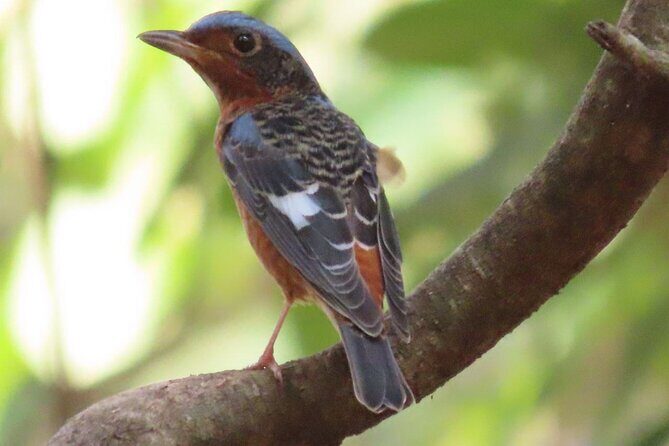
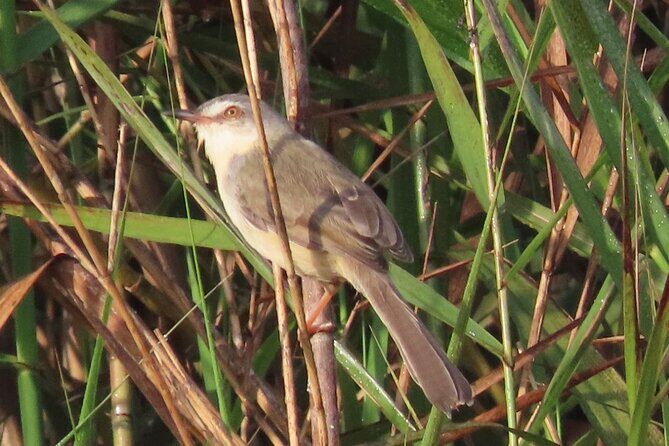
The tour’s goal is to see top birds such as Cambodian Tailorbird, Oriental Pratincole, Brown Shrike, Collared kingfisher, Asian brown flycatcher, Green bee-eater, Grey headed canary flycatcher, Blue bearded bee-eater, White-throated Rock Thrush, Ashy Drongo, Chinese Francolin, Common Flameback, Black-naped Oriole, Greater Racket Tailed, Forest wagtail, White rumped Shama, Red-whiskered Bulbul, Puff-throated Babbler, White-crested Laughingthrush, Dark-necked Tailorbird, Blue-eared Barbet, Black-naped Monarch, and Mountain Imperial-pigeon.
The tour notes species from 50 to 80, which is a solid range for a two-day experience in the kinds of habitats you’re visiting. The “moderate” birding difficulty is also important. Some species are tricky—often because they’re quiet, high in trees, or blend into cover. This is where Thong’s call-following approach matters.
I also appreciate that the tour name includes both Phnom Penh and Kirirom, because it reflects the broader ecology. The habitats listed—lotus fields, woodland, cultivation, rice fields, and lowland tropical moist forest—are not just filler. They explain why you can plausibly see so many different birds without running across the country.
If you’re a beginner, this kind of tour can be a fast education. You learn what birds sound like, which behaviors matter (perching vs. feeding vs. moving), and how guides decide where to stand. And because photography opportunities are good, you’re not stuck only listening—you can practice seeing and capturing quickly in changing light.

Meals, homestay, and the Cambodia countryside feel
A surprising amount of birding quality is about energy. This tour helps you keep that energy up with two included breakfasts and two lunches. That matters on long days when you’re trying to stay alert and not start making tired decisions.
Your homestay night at Chambok Community Based Ecotourism is the other big piece. This is one of those choices that can shape your whole trip experience. You get closer to the local rhythms of lotus and rice country rather than spending your time bouncing through shops and city blocks.
A helpful mindset here: treat Day 1 like a countryside immersion with birding as the main activity. The point is to enjoy the landscape you’re walking through while your guide puts you on birds. When you’re outside early, watching fields and listening to birds, the whole day clicks.
Logistics that actually matter in the field
This trip includes pickup offered, and it runs early. Starting around 5:30am means you should plan to be ready to go without drama. The vehicle is air-conditioned, which is a lifesaver on hot approaches and long drives.
The group size is capped at 8 travelers, which usually translates into less crowding at viewing spots and easier repositioning when birds move.
You’ll also have a mobile ticket, which is practical in a region where things can change quickly. If you like low-fuss travel tech, this is a good sign.
Weather is listed as humid in the lowlands with occasional rain showers, and the tour depends on good weather. That doesn’t mean you’ll never go if it’s cloudy. It does mean you should pack for damp conditions and be ready for adjustments if rain gets stubborn.
Who this tour is best for (and who should skip it)
Best fit:
- You want a guided birding experience with a strong focus on finding birds, not just walking around and hoping
- You like sunrise activity and can handle a very early start
- You want both farmland/wetland birds and forest birds in one tight loop
- You’re a beginner who wants help learning birds by sound and behavior
Less ideal if:
- You dislike early mornings and long outdoor days
- You need highly structured, classroom-style bird identification and don’t want any uncertainty about sightings
- You’re not comfortable with moderate walking in humid conditions
Also, if you care about ecotourism quality and local conservation support, you’ll likely appreciate the Chambok community-based framing. It’s part of why the tour avoids the “only tourist spots” feeling.
Should you book this Phnom Penh & Kirirom Birds Tour?
I’d book it if your goal is to see a strong range of birds in two contrasting habitats with real guiding skill. The tour is built for bird-finding: small group size, a professional guide (Thong), sunrise timing, and listening tactics that help you locate birds you wouldn’t spot on your own.
Be realistic about the day length and the field conditions. You’re paying for a guided experience, not for comfort-first travel. If you can handle the early wake-up and humid mornings, you’ll get a lot out of the homestay night, the countryside route, and the forest bird focus in Kirirom.
FAQ
What time does the tour start?
The tour start time is 5:30am.
How long is the Phnom Penh & Kirirom Birds Tour?
It’s listed as 2 days (approx.).
What is the price per person?
The price is $350.00 per person.
Is pickup included?
Pickup is offered.
Is the homestay included?
Yes. One night homestay at Chambok Community Based Ecotourism is included.
Are entrance fees and dinner included?
Dinner is not included, and the entrance ticket fee at Chambok Ecotourism Community is not included (listed as 7 USD).