REVIEW · PHNOM PENH
Full-Day Phnom Penh City Tours
Book on Viator →Operated by Royal Phnom Penh Tours · Bookable on Viator
Phnom Penh packs beauty and trauma into one day. This full-day route threads together ornate landmarks like the Royal Palace and quiet spiritual stops, then pulls you straight into Cambodia’s Khmer Rouge era at the Killing Fields and S-21.
I really like how the day runs with easy logistics: hotel pickup and drop-off plus a private, air-conditioned vehicle keeps you moving without the hassle of figuring out transport on your own. I also appreciate what you get for the price, because entrance fees are handled for you and the tour is led by a private English-speaking guide.
One thing to think about before you book: this is a long 6 to 7 hour schedule, and the genocide museum and killing sites are emotionally heavy. Add that lunch and drinks aren’t clearly included, and you’ll want to plan how you’ll refuel during the day.
In This Review
- Key highlights worth knowing before you go
- A one-day route that balances Royal Phnom Penh with Khmer Rouge reality
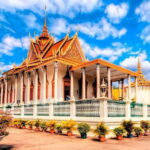
- Royal Palace and Silver Pagoda: the “wow” start, with real context
- Wat Phnom: a short visit that helps you understand the city’s spiritual scale
- Choeung Ek Genocidal Center: where the landscape becomes testimony
- Tuol Sleng Genocide Museum (S-21): the former school turned Security Prison 21
- Norodom Sihanouk Memorial and Independence Monument: Phnom Penh after the trauma
- Russian Market: a practical souvenir stop with real life energy
- Price and value: why $83 can work well for this kind of day
- Timing tips: 6 to 7 hours, heat, and why an early start helps
- Who should book this tour, and who might want a different style
- Should you book this Phnom Penh city tour?
- FAQ
- How long is the Full-Day Phnom Penh City Tours experience?
- What are the main stops on the tour?
- Is hotel pickup and drop-off included?
- Is this a private tour?
- What does the tour price include?
- Is lunch included?
- Will the Royal Palace and Silver Pagoda always be visited?
- Does the tour depend on weather?
- What cancellation option is available?
Key highlights worth knowing before you go
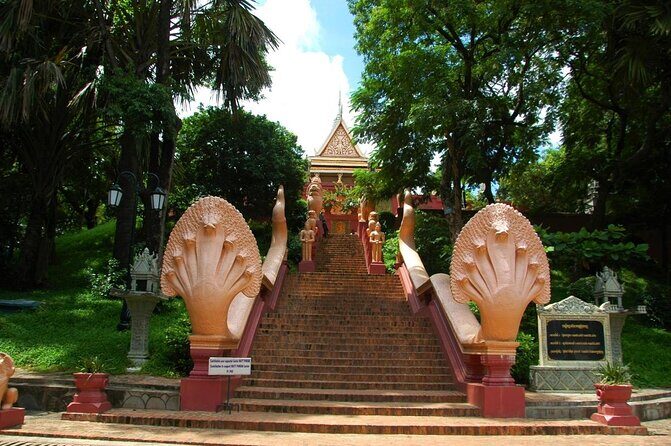
- Royal Palace details: built in 1866 by the predecessors of King Norodom, plus Silver Pagoda’s floor of 5,000+ silver tiles
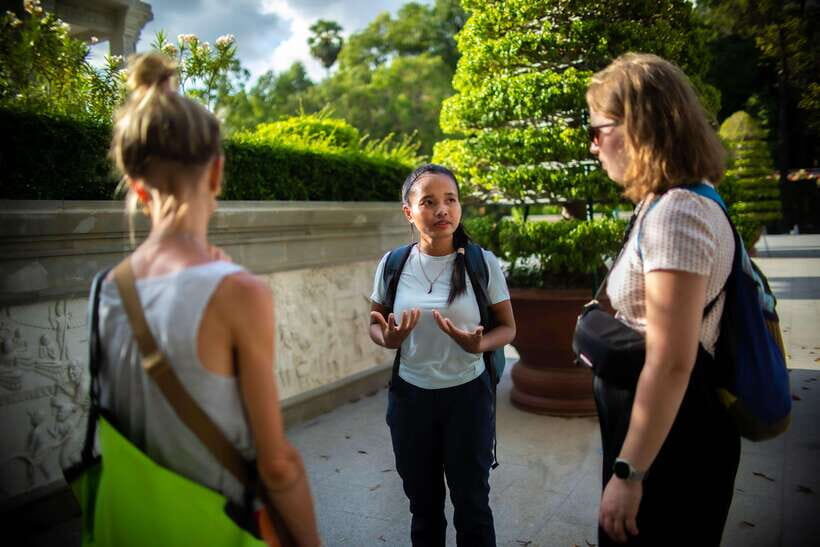
- A private English-speaking guide: the storytelling and clear explanations are a major reason people rate this so highly
- Wat Phnom with skyline views: a temple built in 1372, rising about 27 meters above the ground
- Choeung Ek Genocidal Center: a former orchard and mass grave tied to 1975 to 1979, about 17 km south of Phnom Penh
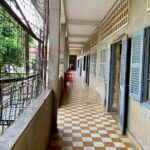
- Tuol Sleng Genocide Museum (S-21): a former secondary school used as Security Prison 21, presented through photos and artifacts
- Markets and monuments: Russian Market for souvenirs and short stops at major memorials like Norodom Sihanouk and Independence Monument
A one-day route that balances Royal Phnom Penh with Khmer Rouge reality
If you only have one day in Phnom Penh, this tour makes sense because it groups the city’s “postcard Phnom Penh” with its “hard history Phnom Penh.” You’ll start with the royal and religious highlights people come to see, and then the day turns heavier at Choeung Ek and Tuol Sleng.
What makes it practical is that your guide connects the dots: why the Royal Palace and Wat Phnom matter culturally, and how the Khmer Rouge period shaped the country’s trauma in very specific places. That guidance is also why the day doesn’t feel like a checklist. It’s more like a guided story, with stops that match the story’s tone.
The other plus is simple: you get round-trip transport from your hotel, so you’re not spending mental energy on directions, waiting for rides, or negotiating prices.
Other Phnom Penh city tours we've reviewed in Phnom Penh
Royal Palace and Silver Pagoda: the “wow” start, with real context
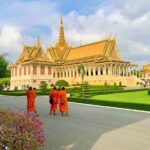
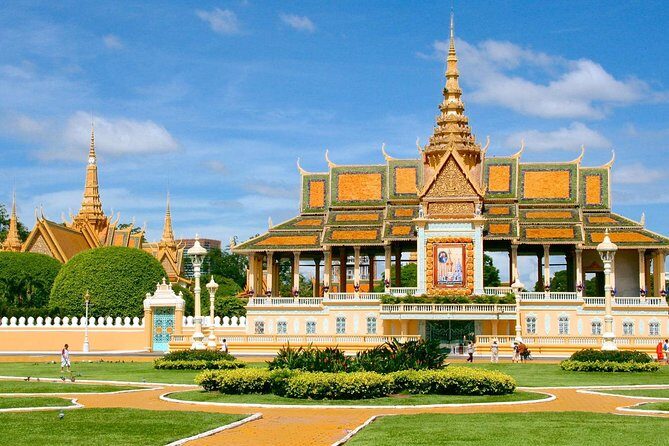
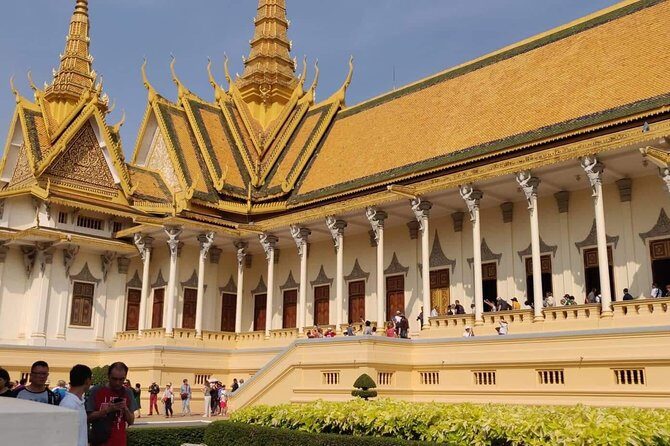
The day begins at the Royal Palace, and you’ll get about 1 hour 30 minutes there. This is not just one building. It’s a complex built in 1866 by the predecessors of King Norodom, so you’re seeing a full royal setting rather than a single photo stop.
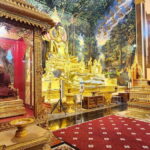
One detail I’d plan around: the Silver Pagoda is part of the Royal Palace grounds area, and its floor is made from more than 5,000 silver tiles. That’s the kind of specific visual fact that helps you appreciate why people linger here. The stop is about 30 minutes, so you’ll want to look at it with intention, not rush past.
You’ll also hear that the Silver Pagoda is associated with the Emerald Buddha temple concept (the Emerald Buddha is described as being housed here), and the complex has an official name you may hear used in descriptions. The point for you is: your guide can translate the names and meanings so you’re not just walking from hall to hall.
Watch-out: on public holidays, major sites can be closed. One documented example was New Year’s Day, when the Royal Palace and Silver Pagoda were skipped and the tour shifted to a museum instead. If you’re traveling during a holiday season, it’s smart to stay flexible about what you’ll see at the palace grounds.
Wat Phnom: a short visit that helps you understand the city’s spiritual scale
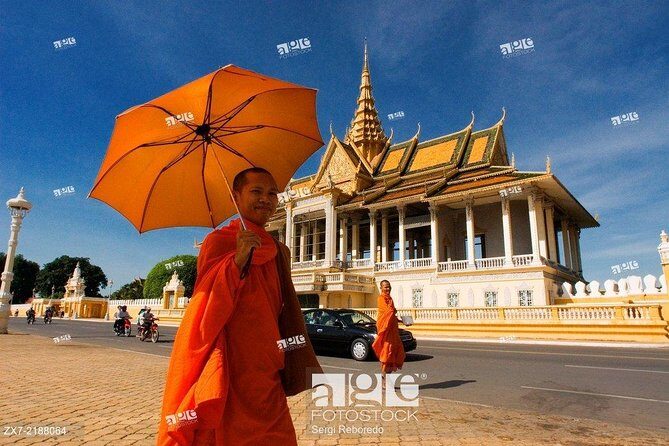
Wat Phnom is a classic stop, but it’s not just a quick look. You’ll have about 30 minutes, and the temple is described as built in 1372—then rising to roughly 27 meters above the ground, making it the tallest religious structure in the city.
That vertical scale matters because it changes the way the temple “reads” in Phnom Penh. From ground level, it feels like a landmark; from within the complex, it feels like a place people return to across generations.
This is also a good break point in the day. After the heavier history that comes later, you’ll want at least one calm, spiritual stop early on. Wat Phnom fits that role nicely, with enough time to see what’s special without turning it into a long detour.
Choeung Ek Genocidal Center: where the landscape becomes testimony
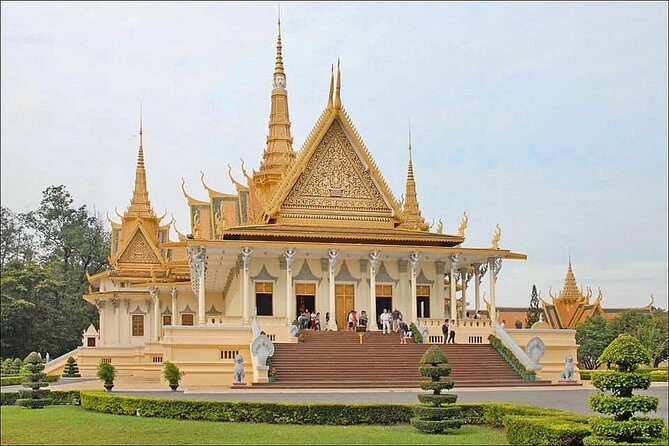
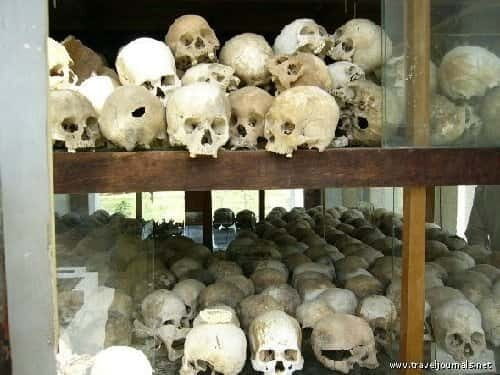
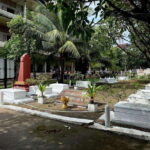
Choeung Ek is scheduled for about 1 hour 15 minutes, and it’s one of the most important stops on this itinerary. The site is described as a former orchard and mass grave of victims killed between 1975 and 1979, about 17 kilometers south of Phnom Penh.
This is not the kind of place where you “speed through” for photos. The value of having a guide here is that they help you understand what you’re looking at and why the site exists as a memorial and educational center. People often come in with the general idea of the Khmer Rouge, but the specific dates and the site’s former orchard history make the story concrete.
A practical tip: pace yourself. You’ll likely feel a heavy mix of shock and sadness. If your guide offers to answer questions during the visit, take the ones you can handle. This is a day where “more information” is not always the same as “more helpful.”
If you’re sensitive to intense memorial sites, plan ahead for how you’ll cope. Bring water, and don’t treat the stop like another item on the list.
Tuol Sleng Genocide Museum (S-21): the former school turned Security Prison 21
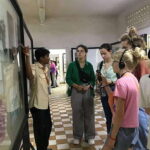
Tuol Sleng Genocide Museum is another cornerstone stop, with about 1 hour 15 minutes scheduled. The museum chronicles the Cambodian genocide, and the site is described as a former secondary school used as Security Prison 21 (S-21).
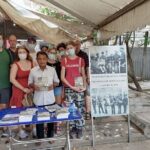
Here’s what makes the visit especially impactful: you’re not only hearing explanations. You’re seeing the museum’s presentation of the prison system through displays and photos. One account notes that the museum includes hundreds of photos and that during the Pol Pot regime, nearly 20,000 Cambodians were imprisoned, tortured, and killed at the site.
This is why people rate guides so highly on this route. The English explanations help you connect details you’d otherwise miss—like what S-21 was, why this school became part of the machinery of terror, and how it fits into the wider timeline of the period.
Give yourself permission to pause. Even when the experience is well paced, it can feel relentless emotionally. If you need a breather, ask your guide where you can step back and recover your focus.
Other city tours we've reviewed in Phnom Penh
Norodom Sihanouk Memorial and Independence Monument: Phnom Penh after the trauma
After the genocide sites, the tour shifts tone with monuments and public spaces. This matters because it helps you leave the day with a sense of place, not only pain.
The Norodom Sihanouk Memorial is included as a stop. It’s described as a monument commemorating former King Norodom Sihanouk, with a bronze statue about 4.5 meters tall, housed under a 27-meter high structure.
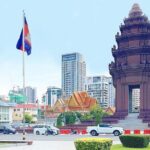
Then there’s the Independence Monument in Phnom Penh. It was built in 1958 to memorialize Cambodia’s independence from France in 1953, and it sits at an intersection on Norodom Boulevard and Sihanouk (as named in the tour description). This short stop helps you understand how Cambodia marks political turning points in public space.
You won’t need long here to feel the symbolism. The value is timing: these stops come after Tuol Sleng and Choeung Ek, when your mind has already been anchored in the past. Monuments give you a way to see what the country chooses to remember publicly.
Russian Market: a practical souvenir stop with real life energy
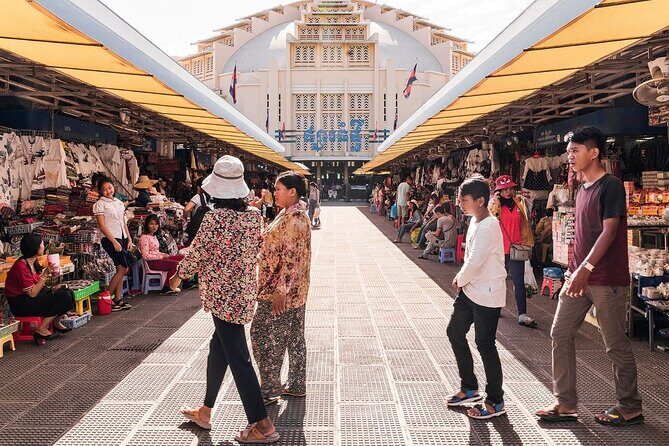
Russian Market is included with about 20 minutes scheduled. You’ll find vendors selling souvenirs, clothing, and other goods, plus food.
This is a useful “reset” in the day because it’s quick and functional. If you want small gifts, postcards, or something to bring home, this time window is enough to browse without eating up your main sightseeing hours.
One thing to keep in mind: it’s a market, so expect noise, foot traffic, and bargaining culture. If you’d rather keep it simple, focus on a short loop, buy what feels right, and don’t let the bustle drain you before the day’s end.
Price and value: why $83 can work well for this kind of day
At $83 per person, this tour looks like it costs less than you might expect for a full day that includes both major royal sites and two heavy, high-demand memorial stops. The value part is what you get bundled:
- Hotel pick-up and drop-off
- Private English-speaking tour guide
- Private comfortable/AC transportation
- Cold bottle of water during your trip
- Cold hand towels during your trip
- Entrance fees are included for the listed sites
That bundle matters in Phnom Penh. Memorial sites and major attractions usually require advance planning, and figuring out transport can easily eat up your time. By handling transport and entrances, the day becomes a smoother use of your limited hours.
What’s not clearly included is lunch and drinks. So you should plan for meals and snacks yourself. If you like having a full lunch without worrying, budget for it before or during the day. Also note that insurance, gratuities, and personal expenses aren’t included.
Timing tips: 6 to 7 hours, heat, and why an early start helps
The tour runs about 6 to 7 hours. That’s long enough that pacing and comfort really matter, especially because part of the day is emotionally intense.
One helpful tip that comes straight from experience: start early, around 8 a.m., if you can. That’s when you’re more likely to beat some crowds and the worst heat. Since the route includes outdoor and sun-exposed areas, early timing is one of those small decisions that can make the day feel easier.
You’ll also get cold drinks in the vehicle and cold towels for hands during the trip, which helps on a hot Phnom Penh day. Still, I suggest you bring a small personal snack if you think you’ll get hungry. The schedule doesn’t mention lunch time clearly, so having a backup prevents stress later.
Also, this experience requires good weather. If weather turns poor, the tour may be rescheduled or refunded, so keep an eye on day-of conditions.
Who should book this tour, and who might want a different style
This is best for you if:
- You’re in Phnom Penh for a short time and want both royal highlights and Khmer Rouge sites in one structured day
- You prefer a private, English-speaking guide who explains what you’re seeing
- You want a clearer narrative than you’d get on your own
It might be less ideal if:
- You’re looking for a light, purely relaxed sightseeing day
- You don’t handle difficult historical content well for long stretches
- You need a clearly planned lunch break with meals provided
If you fall in the first category, this tour earns its strong ratings because the guides focus on clarity and explanation. In particular, names like Jan Lee and Jenny have been highlighted for strong English and the way they bring Cambodia’s royal history and S-21 and Killing Fields stories into focus. Other guides such as Sam and Sophat have also been praised for making the day feel organized and meaningful.
Should you book this Phnom Penh city tour?
I’d recommend booking if you want a one-day plan that actually covers the essentials: Royal Palace and Wat Phnom in the morning, then Choeung Ek and Tuol Sleng when the facts are strongest and the history can’t be ignored. The inclusion of entrances, water, and hotel transport adds real value for the price.
I would think twice only if you’re sensitive to genocide memorials or if you strongly need lunch and drinks included. Otherwise, this is a well-structured day that gives you both context and access, without leaving you to figure out logistics mid-journey.
FAQ
How long is the Full-Day Phnom Penh City Tours experience?
It runs about 6 to 7 hours.
What are the main stops on the tour?
The tour includes the Royal Palace and Silver Pagoda, Wat Phnom, Choeung Ek Genocidal Center, Tuol Sleng Genocide Museum (S-21), plus stops that include the Norodom Sihanouk Memorial and Independence Monument, and a visit to Russian Market.
Is hotel pickup and drop-off included?
Yes. The tour includes hotel pick-up and drop-off.
Is this a private tour?
Yes. It’s a private tour/activity, and only your group participates.
What does the tour price include?
Entrance fees for the listed sites are included, along with a private English-speaking tour guide, private air-conditioned transportation, and cold bottled water (plus cold hand towels) during the trip.
Is lunch included?
Lunch and drinks are not clearly mentioned in the program, so you should plan to cover meals yourself.
Will the Royal Palace and Silver Pagoda always be visited?
They are part of the plan, but closures can affect the route. One documented case was New Year’s Day when those sites were skipped because they were closed and the tour shifted to another museum instead.
Does the tour depend on weather?
Yes. The experience requires good weather. If it’s canceled due to poor weather, you’ll be offered a different date or a full refund.
What cancellation option is available?
Free cancellation is available. You can cancel up to 24 hours in advance for a full refund. If you cancel less than 24 hours before the experience’s start time, the amount paid is not refunded.