REVIEW · PHNOM PENH
Learn about a dark period of Cambodian history by expert guide
Book on Viator →Operated by Phnom Penh Tours · Bookable on Viator
Tuk-tuks and tragedy, all in one morning. This Phnom Penh tour is interesting because it threads Cambodia’s royal and spiritual heart right into the Khmer Rouge years, then carries you to the sites where that story became mass death. I like the way the route pairs Royal Palace and Choeung Ek so history doesn’t stay in a textbook.
I also love the pacing for real people: a maximum group size of 15, hotel pickup, and an English-speaking license guide who can keep the day moving while still answering the questions that pop up. In particular, guide An is noted for strong English and tailoring the route to what you want to focus on.
One thing to consider: the main monuments’ entrance tickets are not included in the $29 price, so your total will be higher once you add the Royal Palace, Tuol Sleng, and Killing Fields fees. And yes, this is emotionally heavy, since the stops cover genocide and executions.
In This Review
- Key highlights you’ll actually feel
- Timing and logistics: what 8:15 means for your day
- Royal Palace and Silver Pagoda: seeing power, then spirituality
- Stop 1: Royal Palace
- Stop 2: Silver Pagoda (Wat Ubaosoth Ratanaram)
- Tuol Sleng (S-21): a former school built for punishment
- What you’ll learn here
- Practical reality check
- Choeung Ek Killing Fields: history measured in names and numbers
- The guide makes the difference
- The tuk-tuk ride to the killing fields: why it matters
- Price and value: what $29 really buys you
- Who this tour fits best (and who should think twice)
- Should you book this Phnom Penh tour?
- FAQ
- How long is the Phnom Penh tour?
- What time does the tour start?
- Does the tour include hotel pickup and drop-off?
- Are the entrance tickets included in the $29 price?
- How much are the entrance fees?
- What transport is provided during the tour?
- What’s the maximum group size?
- Is free cancellation available?
- What happens if weather is poor?
Key highlights you’ll actually feel
- Royal Palace with the right context: built between 1866 and 1870 after King Norodom moved the capital from Oudong to Phnom Penh, on the Banteay Keo citadel site.
- Silver Pagoda and its formal identity: Wat Ubaosoth Ratanaram (also known as Wat Preah Keo Morakot), linked with the Emerald-Crystal Buddha tradition.
- Tuol Sleng used to be a school: the infamous S-21 interrogation center, now Tuol Sleng, with 14,000 to 17,000 detained and tortured there.
- Choeung Ek’s layers of history: once an orchard and Chinese cemetery, later transformed under Pol Pot into execution and burial sites.
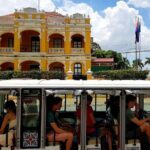
- A tuk-tuk ride that changes the mood: short, local-feeling transport to Choeung Ek, plus an air-con minivan for parts of the day.
- Small group, big questions: up to 15 travelers, so the guide can respond instead of rushing you along.
Timing and logistics: what 8:15 means for your day
Your day starts early, around 8:15 am, with hotel pickup and then straight into Phnom Penh’s major landmarks. The full tour runs about 5 hours 15 minutes, which is just enough time to see a lot without feeling like a marathon.
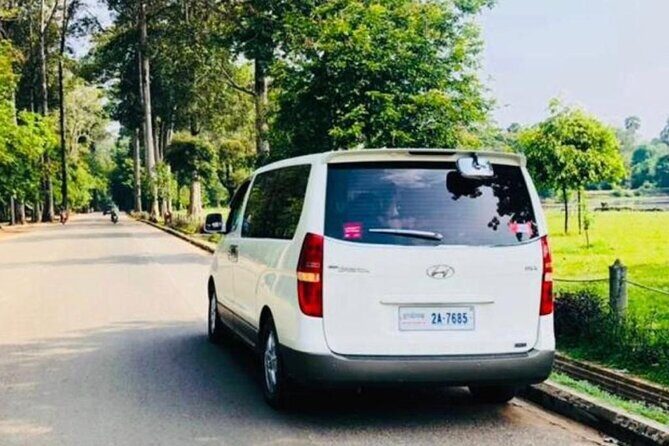
The best practical part is that you don’t have to solve transportation or meeting points. You get hotel pickup and drop-off, plus a mix of tuk-tuk and minivan with air-conditioning. That matters in Phnom Penh because the heat can turn “one more stop” into a bad plan fast.
You’ll also want to remember that this is a small group tour (maximum 15). For a day like this, that’s not a luxury. It means your questions can land, and you’re less likely to get buried in a big crowd’s noise.
Other guided tours in Phnom Penh

Royal Palace and Silver Pagoda: seeing power, then spirituality
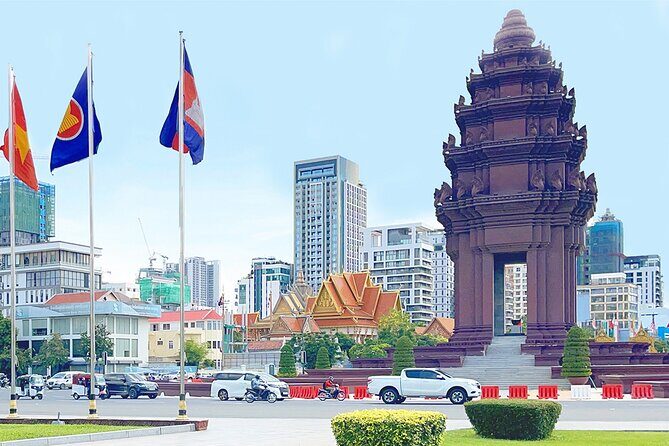
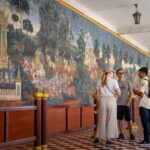
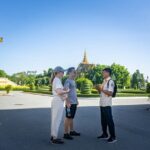
The tour builds your understanding in a sensible order. You start with the Royal Palace area, then move to the Silver Pagoda. Even if you’ve seen photos of these places, they make more sense once you know where they sit and why they were built.
Stop 1: Royal Palace
The Royal Palace was constructed between 1866 and 1870, after King Norodom relocated the royal capital from Oudong to Phnom Penh. The palace was built atop an older citadel called Banteay Keo, and its placement matters: it faces roughly east and sits near Chaktomuk, the cross-division where the Tonle Sap and Mekong waterways meet.
That geography detail helps you read the city. Phnom Penh isn’t just a backdrop here. It’s positioned as a hinge between water routes and political power, and the palace location shows that.
Good to know: the Royal Palace admission fee is not included. Plan on paying $10 per person at the site.
What could slow you down: the palace stop is about 1 hour, so if you like to read every plaque and stop for photos often, you might feel a little time pressure.
Stop 2: Silver Pagoda (Wat Ubaosoth Ratanaram)
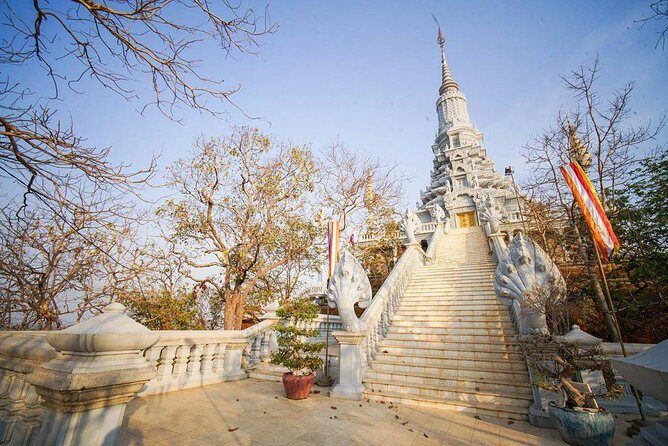
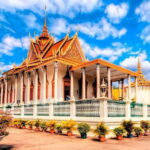
Right beside the palace complex is the Silver Pagoda, officially named Wat Ubaosoth Ratanaram and also known as Wat Preah Keo Morakot. It’s commonly linked to the Emerald-Crystal Buddha tradition, often shortened to Wat Preah Keo.
This stop is valuable because it shifts the frame from government power to religious meaning. You’re still in a royal setting, but now the tone is different—less about authority as an institution, more about spiritual authority and Cambodian religious culture.
Good to know: the Silver Pagoda admission fee is also not included (the tour lists a single set of fees overall: Royal Palace $10, Tuol Sleng $5, and Killing Fields $3). You’ll pay on arrival.
How to get the most out of the hour: take a moment to notice how many layers are present in one complex—courtyards, worship areas, and the sense that rituals have long outlasted regimes.
Tuol Sleng (S-21): a former school built for punishment
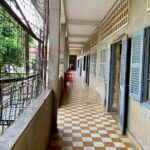
After the palace and pagoda, the tour turns hard. The next stop is Tuol Sleng Genocide Museum, the site of S-21—once one of the Khmer Rouge’s most notorious interrogation centers.
Tuol Sleng was housed in a former school. That detail alone makes the place hard to process: brick cells were built in what used to be classroom spaces. The tour explains the human mechanics of the system, not just the final outcome.
Other historical tours in Phnom Penh
What you’ll learn here
Between 14,000 and 17,000 prisoners were detained and tortured at Tuol Sleng. It’s described as one of Cambodia’s “interrogation center” networks, and Tuol Sleng is the one most people visit because it’s so direct in showing the process.
This stop is about understanding what the regime did to ordinary people. The guide’s job here is crucial. Without interpretation, the museum can feel like a list of horrors. With a strong explanation, you start to see how fear, forced confession, and bureaucracy worked together.
Practical reality check
You’ll spend about 1 hour 30 minutes at the later killing field stop, but Tuol Sleng itself is listed at 1 hour 30 minutes in the route pacing section (with the museum visit time included in the day’s overall structure). Either way, treat this as slower than sightseeing. If you want to “power through” for photos, you’ll miss the point—and you’ll likely feel worse after.
Good to know: Tuol Sleng’s admission fee is not included. Budget $5 per person.
Choeung Ek Killing Fields: history measured in names and numbers
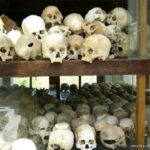
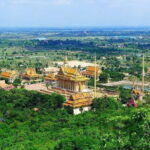
Then you go to Choeung Ek Genocidal Center, about 9 miles south of Phnom Penh. This is where the story reaches its most visible form: the killing fields and mass burial sites.
The tour shares an important timeline. The Khmer Rouge, led by Pol Pot, transformed the area from an orchard and a Chinese cemetery into the execution and burial grounds that became known as the killing fields. The number the tour gives for killings here is about 20,000 victims, and it also notes that, across the country, mass deaths were far larger—stating 2.5 million people massacred and buried over roughly three years.
Even if you already know the headline numbers, this place changes how you hold the information in your head. The setting is physical, not abstract. You can see the scale and feel the distance between Phnom Penh’s normal life and what happened here.
The guide makes the difference
At Choeung Ek, you’ll get the “how and why this became a system” explanation that turns a site from a photo op into a lesson. The guide’s interpretation helps you connect the dots between Tuol Sleng’s interrogation logic and Choeung Ek’s mass killing function.
Good to know: the Killing Fields admission is not included, and the listed fee is $3 per person.
Emotional note (useful, not dramatic): don’t plan anything after this tour that depends on good energy. I’d keep the rest of your day light.
The tuk-tuk ride to the killing fields: why it matters
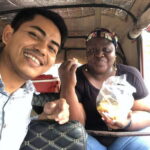
You ride tuk-tuk as part of the route to Choeung Ek. That sounds like a fun add-on, but here it does something more interesting: it keeps the travel grounded in local reality.
A tuk-tuk isn’t just a vehicle. It keeps you moving through normal streets and the rhythm of Phnom Penh, which makes the contrast sharper once you arrive at the killing fields. You’re not teleporting from museum to museum. You’re traveling like a real person in the city.
Because the tour also includes an air-con minivan, you’re not stuck outdoors the whole time. That balance is part of why this tour can work as a single half-day plan.
Price and value: what $29 really buys you
The base tour price is $29 per person, and it includes several things that normally cost extra: hotel pickup and drop-off, tuk-tuk/minivan transport, an English-speaking license tour guide, and cold water.
But the biggest value question is the entrance fees. The tour lists these as not included:
- Royal Palace: $10 per person
- Tuol Sleng: $5 per person
- Choeung Ek Killing Fields: $3 per person
So your direct ticket add-ons come to $18, making a realistic total of about $47 per person once you pay on site.
Is it worth it? For me, the answer hinges on one thing: you’re paying for context. These are not random monuments. They’re the key places for understanding Cambodia’s royal era and then the Khmer Rouge genocide system. When you add a competent English guide, that’s what turns the day from “places visited” into “meaning understood.”
Also, the group is small (up to 15). That’s part of the value. In a crowded tour, you’d lose time and attention in hard places like Tuol Sleng.
One more practical note: this tour is commonly booked ahead, with an average booking lead time listed at 153 days. If you’re traveling in a busy stretch, don’t wait until the last minute.
Who this tour fits best (and who should think twice)
This is a strong fit if you want a structured, guided route that covers both sides of Phnom Penh’s story: the ceremonial heart (Royal Palace and Silver Pagoda) and the darkest chapter (Tuol Sleng and Choeung Ek).
It’s also a good option if you like small groups and want an English guide who can keep the day coherent across very different locations. The maximum 15 travelers helps a lot with that.
Who should think twice? If you’re not emotionally ready for genocide sites, you might find this too intense for a single morning. Also, if you hate paying entrance fees separately, you’ll want to budget up front because the $29 base doesn’t include the big-ticket monument access.
Should you book this Phnom Penh tour?
I’d book it if you want the most important Phnom Penh sites in one efficient, guide-led route, and you’re ready for serious history. The Royal Palace and Silver Pagoda give you the cultural setting, and Tuol Sleng and Choeung Ek explain what happened when Cambodia’s political machine turned murderous.
Skip it only if you’re seeking light sightseeing today, or if you know you’ll struggle with the emotional weight of genocide memorials. For the right mindset, this is the kind of tour you remember for clarity, not just photos.
FAQ
How long is the Phnom Penh tour?
The tour runs for about 5 hours 15 minutes.
What time does the tour start?
It starts at 8:15 am.
Does the tour include hotel pickup and drop-off?
Yes. Hotel pickup and drop-off are included.
Are the entrance tickets included in the $29 price?
No. Royal Palace, Tuol Sleng, and Choeung Ek entrance fees are not included.
How much are the entrance fees?
The Royal Palace fee is $10 per person, Tuol Sleng is $5 per person, and Choeung Ek is $3 per person.
What transport is provided during the tour?
You’ll use a tuk-tuk and also a min van with air-conditioning as part of the day.
What’s the maximum group size?
The tour has a maximum of 15 travelers.
Is free cancellation available?
Yes. You can cancel up to 24 hours before the experience for a full refund.
What happens if weather is poor?
The experience requires good weather. If it’s canceled due to poor weather, you’ll be offered a different date or a full refund.