REVIEW · PHNOM PENH
Killing field and Toul Sleng genocide museum Tour
Book on Viator →Operated by Phnom Penh Tours · Bookable on Viator
Few places in Phnom Penh hit as hard as this. You’ll connect the dots between the Khmer Rouge’s killing system at Choeung Ek and the prison-and-torture system at Tuol Sleng, with an English-speaking guide to translate what you see.
What I really liked is the focus on understanding, not just sightseeing. You get guided context and translation so the exhibits make sense fast, even if history class never stuck for you.
One thing to budget for: the main admissions fees are not included. Choeung Ek is $3 and Tuol Sleng is $5, per person, plus the usual local tipping style if you want to show appreciation.
In This Review
- Key things to know before you go
- Phnom Penh in one stark story: Choeung Ek and Tuol Sleng together
- Price and value: what $19 covers, and what to add in your head
- Choeung Ek Genocidal Center: orchard grounds turned into evidence
- Tuol Sleng Genocide Museum (S-21): the former school that processed prisoners
- Guides and translation: the difference between reading facts and understanding them
- How the logistics help you stay present (instead of stressed)
- Who this tour suits best in Phnom Penh
- Should you book the Killing Fields and Tuol Sleng tour?
- FAQ
- How long is the Killing Fields and Tuol Sleng tour?
- What does the $19 price include?
- Are the museum and memorial admission fees included?
- Is hotel pickup available?
- Will the guide translate the exhibits?
- What’s the group size limit?
- Is bottled water provided?
- Does the tour depend on weather?
- Can I get a free cancellation?
Key things to know before you go
- Two heavy hitters, one half-day: Choeung Ek (about 2 hours) plus Tuol Sleng S-21 (about 2 hours).
- Your guide translates the exhibits so you’re not just reading labels in isolation.
- Air-conditioned transport and bottled water are included, which matters because the day can feel long.
- Admission is extra: $3 for Choeung Ek and $5 for Tuol Sleng.
- Small group size (up to 20) helps keep the experience orderly and questions from getting lost.
- No audio-headset setup is part of what you should expect; you’ll rely on your guide’s explanations.
Phnom Penh in one stark story: Choeung Ek and Tuol Sleng together
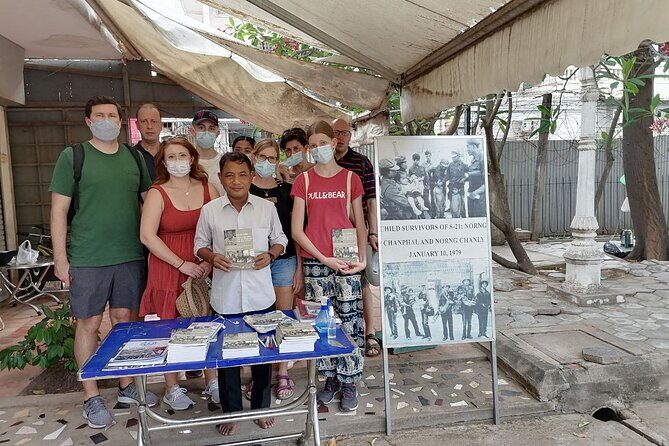
This tour is built around a simple idea: you’ll see how the Khmer Rouge ran genocide as both a process and a system. At Choeung Ek you’re dealing with mass execution and burial. At Tuol Sleng (S-21) you’re seeing how people were detained, interrogated, and recorded before they were sent away.
You’ll be out for about 4 hours 15 minutes, which is long enough to feel like you learned something real, but short enough that you’re not wrecked by the end. The schedule is two blocks of about 2 hours each, and that pacing helps you avoid that weird museum fatigue where everything starts to blur.
Pickup is offered, and you’ll ride in a clean, safe air-conditioned vehicle. There’s bottled water in the mix too, which sounds like a small thing until you’re standing and walking on-site for long stretches.
Other Killing Fields tours we've reviewed in Phnom Penh
Price and value: what $19 covers, and what to add in your head
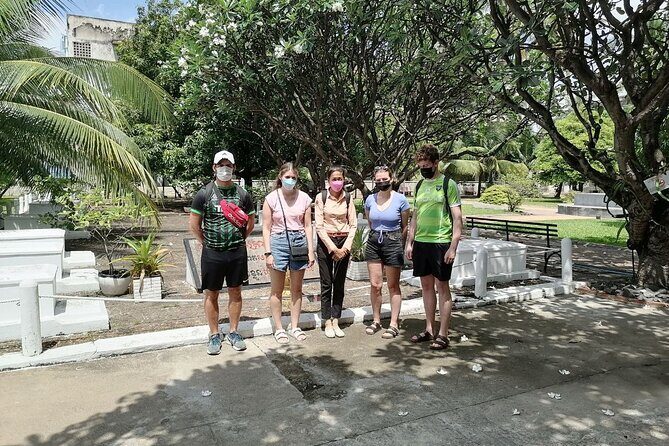
At $19 per person, this is a solid deal for Phnom Penh if you care about guidance and not just transport. The price covers a licensed English-speaking guide and driver, plus cool water and hygienic, safe transportation in an AC vehicle.
But the tour price doesn’t include site entry. You should plan for $3 for Choeung Ek and $5 for Tuol Sleng, for $8 total per person. So your all-in amount is closer to $27 before tipping.
That extra $8 is normal for these two specific sites. What makes the value feel fair is that you’re not paying just to get dropped off. You’re paying for translation and interpretation, and for help making sense of what you’re looking at while you’re there.
Also, this runs with strong performance stats: a 4.9 rating and a 98% recommended score. That doesn’t mean the subject matter is lighter, but it does suggest the operation is doing the basics well.
Choeung Ek Genocidal Center: orchard grounds turned into evidence
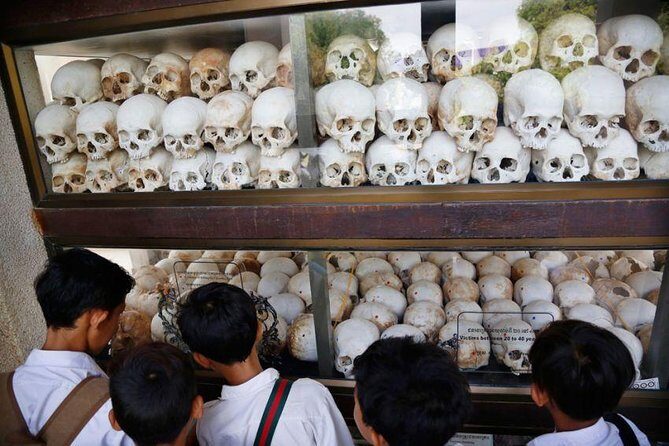
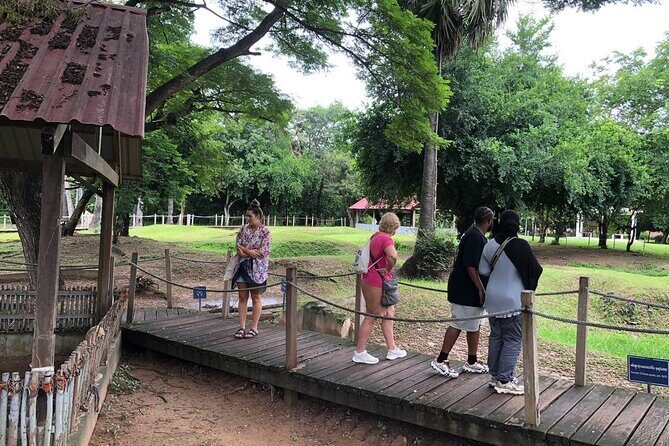
Choeung Ek is about 9 miles south of Phnom Penh, and the drive itself is part of the setup. You’re heading from a modern city into a place where the ground holds history, literally.
At Choeung Ek, you’ll learn how the Khmer Rouge transformed the area. It was once an orchard and a Chinese cemetery, then the Khmer Rouge, led by Pol Pot, turned it into what became known as the killing fields. You’ll hear figures like around 20,000 victims tied to executions there, and a broader estimate of 2.5 million people massacred and buried over roughly three years under the Khmer Rouge program.
The site isn’t asking for polite attention. It asks for full attention. You’ll spend about 2 hours here, which is enough time to take in the major memorial elements and the explanations without rushing so hard that nothing lands.
A practical note: wear shoes that handle walking on uneven ground. If you’re sensitive to intense imagery, prepare yourself before you arrive. This is not a tour where you can safely skim and move on.
Tuol Sleng Genocide Museum (S-21): the former school that processed prisoners
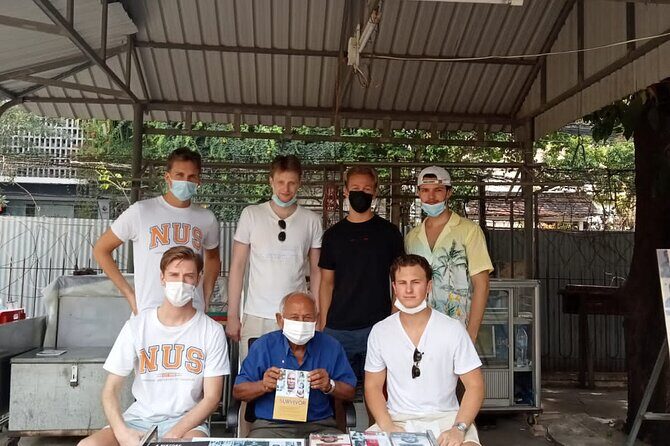
After Choeung Ek, you’ll return to Phnom Penh and visit Tuol Sleng, also known as S-21. The name points to the hill it sits on, described as the meaning hill of the poisonous trees.
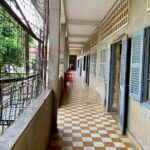
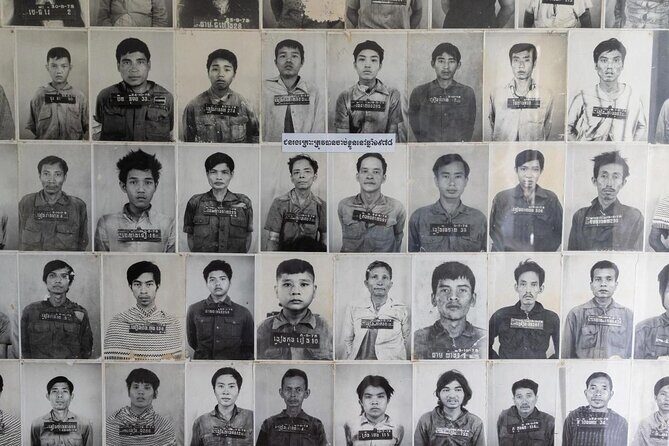
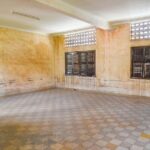
Tuol Sleng is housed in what used to be a school. The Khmer Rouge turned it into a high-security prison for political prisoners, where people were interrogated and tortured. The numbers given here are chilling: between 14,000 and 17,000 prisoners detained, tortured, and kept in harsh conditions.
What you’ll notice is that Tuol Sleng feels more like a system than a single event. You’ll see primitive brick cells built in former classroom spaces. The physical layout helps you understand how people were handled day after day: a place built for control, paperwork, and processing.
Your guide’s translation of displays matters a lot here. Labels alone can be readable, but they don’t always explain what you’re meant to feel or why certain details are there. With an English-speaking guide, you’ll get context that makes the exhibits click without you needing to be a historian first.
Guides and translation: the difference between reading facts and understanding them
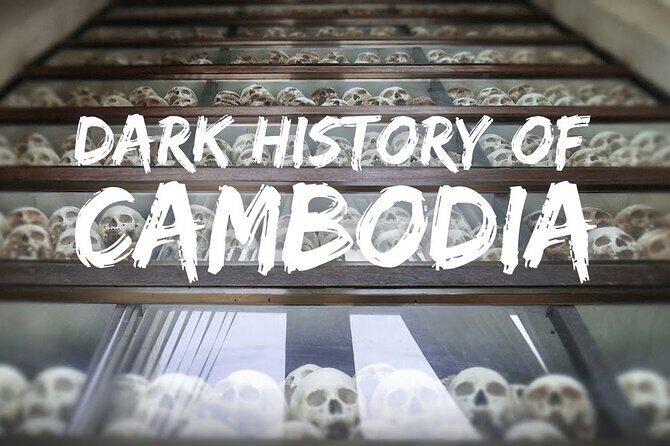
This tour is heavily guided, and that’s the point. The tour description promises translation, and the best part is how much that changes your experience in both museums.
In English, you can miss meaning if you only skim. With translation and live explanations, you can follow the storyline: how the regime targeted people, how prisons like S-21 fit into the broader plan, and why memorials look the way they do.
From the guide examples attached to this tour, it’s clear that some guides bring personal perspective. People named Makara, Darian, Ron, Rouan, Chamroeun, Neang, Ohm, Om, and Sammy show up as standout guides in the feedback provided. A few of them shared firsthand links to the era, including childhood experience during the Khmer Rouge period.
Now, don’t assume that’s guaranteed. But it tells you something important: the company is putting people in front of you who can tell the story with clarity and seriousness. That’s what you’re paying for.
One more practical detail: you might notice the pace can feel brisk, depending on the guide’s speaking style. If you want to ask questions, do it early. A good guide will keep answering in a way that helps you connect what you’re seeing to what you just heard.
Other Tuol Sleng (S-21) tours we've reviewed in Phnom Penh
How the logistics help you stay present (instead of stressed)
The tour runs with a maximum of 20 travelers, which is a meaningful detail for places like this. Smaller groups help you move through exhibits without getting herded so tightly that you lose your own sense of time.
You also get bottled water and a reliable vehicle setup. That sounds mundane until you realize you’re going to be outside, walking, and standing for long stretches. Having water and AC reduces the “travel discomfort” layer so the topic remains the main thing.
Pickup and drop-off are tied to a specific starting point: Amanjaya Pancam Hotel. If pickup is offered for you, the driver will take you to both sites and return you back near the meeting point after the tour.
There’s also a mobile ticket format noted. Bring your phone and keep it charged, especially if your connection is unstable.
And about audio: one practical heads-up is that you shouldn’t expect the usual audio-guide setup. Your best tool is the guide sitting next to you with translation and explanations.
Who this tour suits best in Phnom Penh
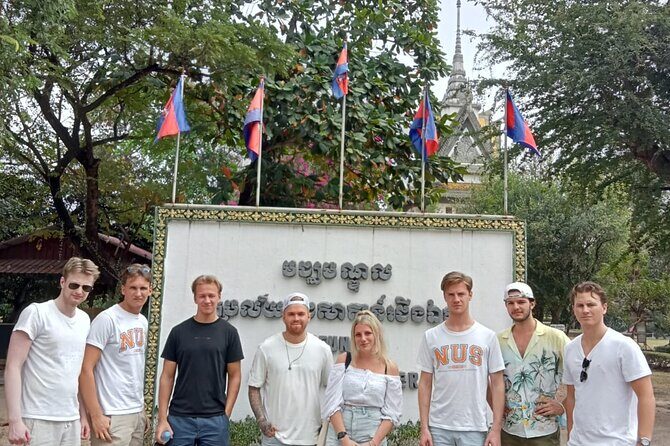
This is a great pick if you want a clear, guided understanding of Cambodia’s recent history and the mechanics of the Khmer Rouge genocide. If you’re the type who likes to ask why and how, this format fits.
It’s also a strong choice if you only have limited time in Phnom Penh. You get both sites in one organized block, so you don’t have to puzzle out logistics across town.
What it won’t be is a light cultural day. The subject is confronting. Even with a good guide, you should expect to feel heavy afterward. If you want something gentler, you might choose a lighter museum or a memorial visit with more breathing room. But if you’re here specifically to understand this chapter, this hits the target.
If you’re traveling with kids or older relatives, think carefully. The tour includes a historical and memorial focus, and the content is emotionally intense. The tour data says most travelers can participate, but that’s about general participation, not emotional readiness.
Should you book the Killing Fields and Tuol Sleng tour?
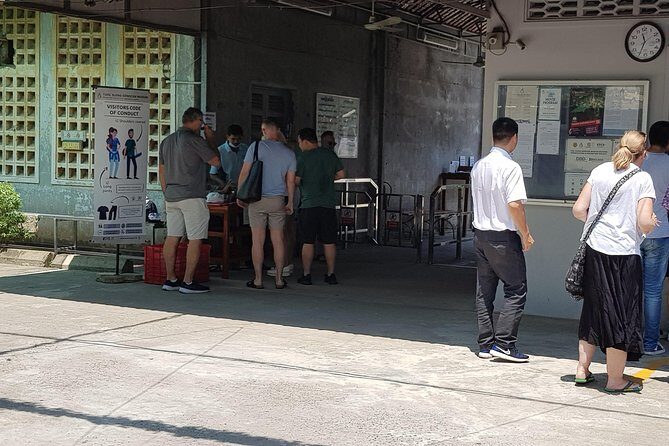
Book it if you want one guided half-day that links two of Phnom Penh’s most important sites into a single story. The value is real at $19 because you’re not just getting transportation—you’re getting licensed guidance, translation, and structure, plus AC and water.
You should also book if you care about making the exhibits make sense in real time. The translation promise is the key. It turns what could be a list of grim facts into an organized understanding of how the regime worked.
I’d skip this tour if you’re on the edge emotionally, because the content is harsh and unavoidably real. Also, budget the extra $8 in admission fees so you’re not surprised halfway through the day.
Overall, this tour is for people who want respect, clarity, and context, not a quick photo run. If that’s you, it’s one of the most important things you can do in Phnom Penh.
FAQ
How long is the Killing Fields and Tuol Sleng tour?
It runs for about 4 hours 15 minutes (approx.), with around 2 hours at each site.
What does the $19 price include?
The price includes a professional English-speaking tour guide (license) and driver, air-conditioned transportation, and bottled water.
Are the museum and memorial admission fees included?
No. Admission is extra: Choeung Ek Genocidal Center is $3 per person, and Tuol Sleng Genocide Museum is $5 per person.
Is hotel pickup available?
Yes, pickup is offered, and the tour ends back at the meeting point.
Will the guide translate the exhibits?
Yes. The tour description says your guide will translate displays so you get more out of what you’re seeing.
What’s the group size limit?
The tour has a maximum of 20 travelers.
Is bottled water provided?
Yes, bottled water is included.
Does the tour depend on weather?
Yes. It requires good weather, and if it’s canceled due to poor weather, you’ll be offered a different date or a full refund.
Can I get a free cancellation?
Yes. There is free cancellation, and you can cancel up to 24 hours in advance for a full refund.