REVIEW · PHNOM PENH
From Phnom Penh: Angkor Wat, Bayon, and Ta Prohm Day Trip
Book on GetYourGuide →Operated by Cambodia Taxi Driver · Bookable on GetYourGuide
Angkor Wat in one long day is a big deal. This trip is built for speed without feeling rushed: you get Angkor Wat, Bayon, and Ta Prohm all in the same visit, explained by an English-speaking guide at the temples. I especially like how the day pairs temple history with practical pacing, plus the private driver handles the 5.5-hour stretches so you can focus on the sights. The only real drawback is simple: it’s a 14-hour day, with an early start and plenty of walking in heat.
A private transfer from Phnom Penh also means less friction than trying to coordinate buses and tickets on your own. Still, you should go in with the right expectations: entrance fees to the Angkor Archaeological Park and lunch are not included, so your final budget will be a bit higher than the headline price.
In This Review
- Key takeaways before you go
- Phnom Penh to Angkor: the road part you should actually plan for
- Angkor Wat at first light: five towers, two religions, and huge scale
- Bayon Temple’s smiling faces: what those 216 heads might mean
- Ta Prohm: the Tomb Raider temple where the jungle writes the script
- Outer grounds and extra temples: how to use the last hours wisely
- Price and value: $179 plus entrance fees is the real math
- The biggest strengths: drivers, guide storytelling, and photo help
- Who this day trip suits best (and who should skip it)
- Before you go: comfort checklist that actually matters
- Should you book this Phnom Penh to Angkor Wat day trip?
- FAQ
- What’s the total duration of the trip from Phnom Penh?
- How long is the drive each way?
- What’s included in the price?
- What are the main things not included?
- What temples will I visit during the day?
- What language is the tour guide?
- Are entrance fees included for Angkor Archaeological Park?
- Is lunch included?
- What should I bring and wear?
- Can I use flash photography inside the temples?
Key takeaways before you go
- Start early to beat heat and crowds at Angkor Wat, when the temple feels most atmospheric
- A guide at the temples matters for understanding why Angkor Wat, Bayon, and Ta Prohm look the way they do
- Ta Prohm’s jungle setting is real photo fuel, especially if you like dramatic architecture
- Private car comfort helps on the road, and many drivers build in coffee and bathroom stops
- Flash photography is off-limits, so bring your camera skills and patience for low-light shots
- You’ll still do real walking, so plan for comfortable shoes and sun protection
Phnom Penh to Angkor: the road part you should actually plan for
This is one of those days where the drive is half the experience. You leave Phnom Penh early for the roughly 5.5-hour journey to Siem Reap, and you’ll do the return drive the same way later. The good news: it’s done in an air-conditioned vehicle with a private driver, and your pickup is handled from your hotel lobby with nameplate meeting.
One detail I really appreciate for a long-haul day trip is that the tour provides cold bottled water, and people consistently describe their drivers as calm, attentive, and focused on safe travel. Several drivers are repeatedly praised for being early, keeping the ride smooth, and checking in about stops. If your driver happens to be someone like Vuthy Ket, Heng Thearak, Vannack (John Black), or Om, that pattern tends to show up: proactive stops and a comfortable pace.
You should still mentally budget the energy drain. Even if you sleep in the car, you’ll be on your feet at temples under bright sun. Bring more than water in your head: bring water on your body, plus a hat and sunscreen (these are explicitly recommended). And yes, the day can feel long, which is exactly why the private setup helps. You aren’t waiting on other groups, and you can keep moving with less hassle.
Other Angkor Wat day trips from Phnom Penh

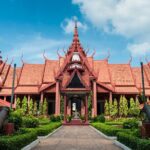
Angkor Wat at first light: five towers, two religions, and huge scale
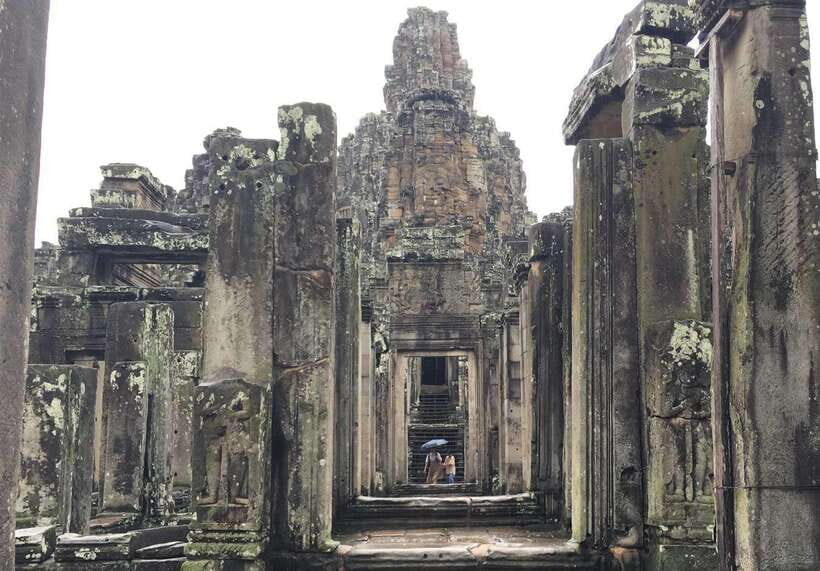
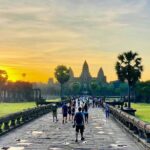
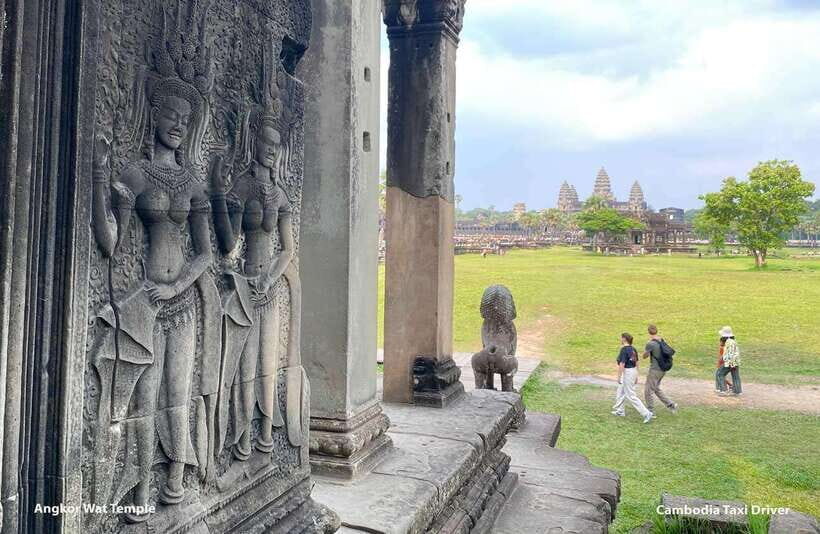
Angkor Wat is the kind of place that changes your sense of scale. It’s the largest religious monument in Cambodia, and it’s also one of the best examples of how Angkor’s rulers used architecture like a language.
At this stop, you start with the basics that make the whole visit click:
- It was built in the 12th century as a Hindu temple.
- Later, it became a Buddhist temple.
- The design includes five towers that represent the Hindu cosmic mountain.
Walking through Angkor Wat with an English guide gives you more than captions. You start noticing how the layout supports the idea of a sacred journey: approaches, courtyards, and the way key views open up as you move. Even if you have seen photos before, the real value here is understanding the reasoning behind what you’re looking at. When someone explains what the towers symbolized and how the religious shift changed the interpretation, the temple stops feeling like a carved backdrop and starts feeling like a story in stone.
Practical tip: Angkor Wat is also where you’ll want your best footwear. Temple floors can be uneven, and you’ll be climbing stairs and crossing long corridors. The tour is clear about dress respect and modesty, so plan clothes that cover appropriately and still let you move comfortably.
Also note the camera rule: flash photography is not allowed. That’s not a dealbreaker, but it does mean you should be ready to shoot with natural light settings and accept that some areas will be darker. In practice, that pushes you toward steady framing and timing—often a better approach than blasting flash anyway.
Bayon Temple’s smiling faces: what those 216 heads might mean
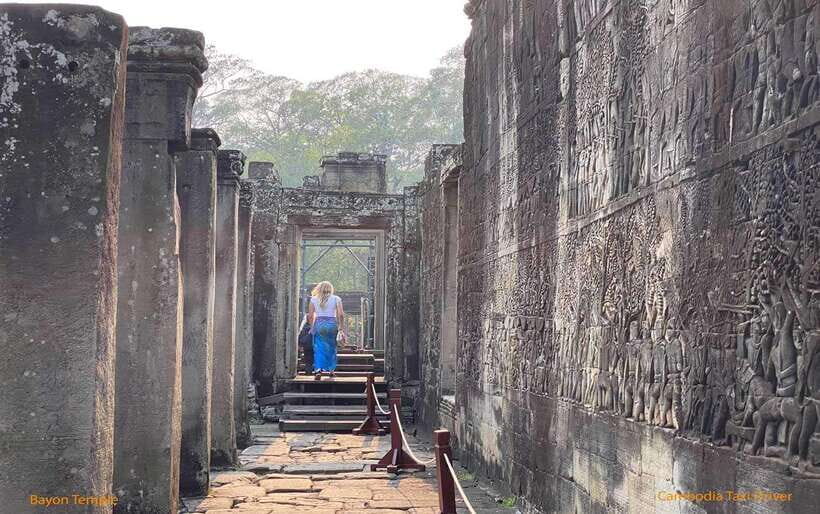
After Angkor Wat, you head to Bayon Temple, famous for serene stone faces. This stop is a balance of intensity and calm: the faces are unmistakable, but the experience comes from moving through the temple’s structure—narrow corridors, staircases, and viewpoints that change as you climb.
Bayon was completed in the late 12th or early 13th century, and it’s described as the last state temple built at Angkor. The number that stands out is its 216 faces. Your guide will explain that these faces are thought to represent either the bodhisattva Avalokiteshvara or the king himself. That matters because it changes how you read the expression: you start looking for the intention in the symmetry and placement, not just the novelty of the sculptures.
What you get here that you might not get on a quick self-guided stop is orientation. A good guide helps you understand why you’re going to certain staircases and why some angles feel more satisfying than others. If your assigned guide is someone like Siyan (a name that shows up often in successful bookings), you’ll likely also get extra help with photo spots, timing, and how to frame the faces without getting blocked by other people.
The corridors can feel tight, and you’ll likely move through sections at a steady pace. That’s normal. Go slow where you need to, take water breaks, and don’t force extra climbs if your legs are already tired from Angkor Wat.
Ta Prohm: the Tomb Raider temple where the jungle writes the script
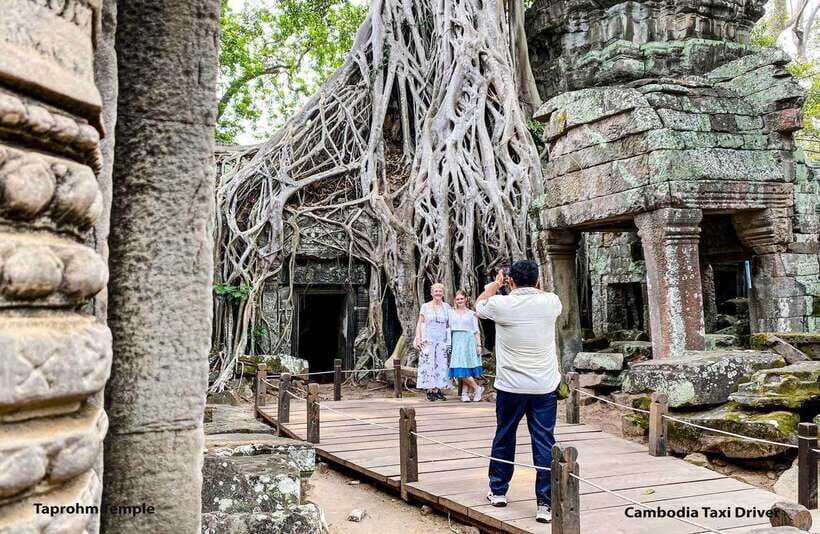
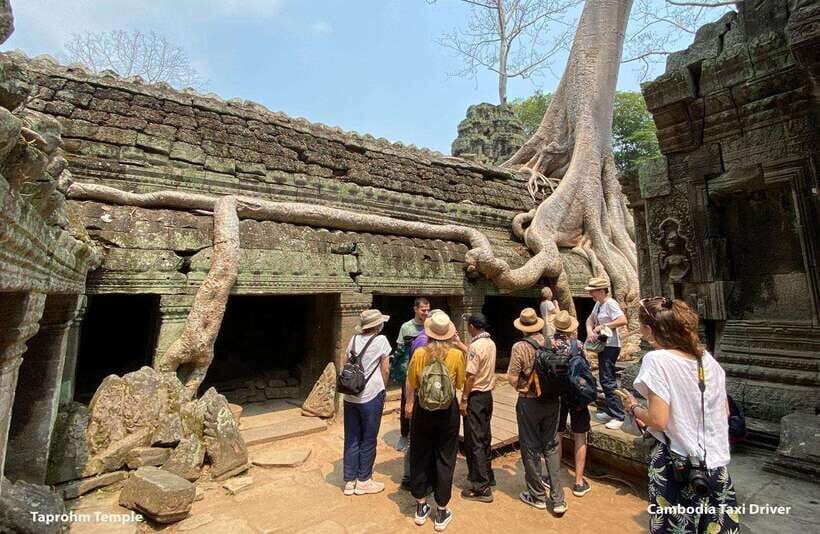
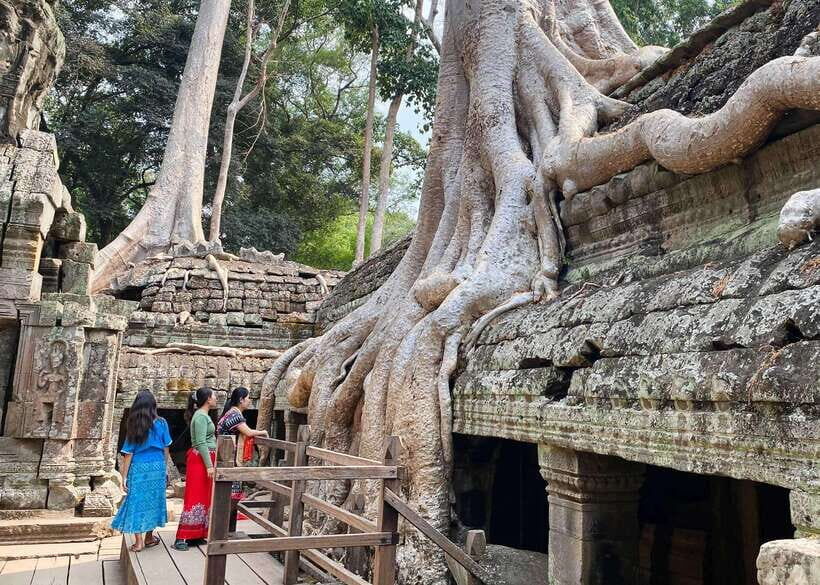
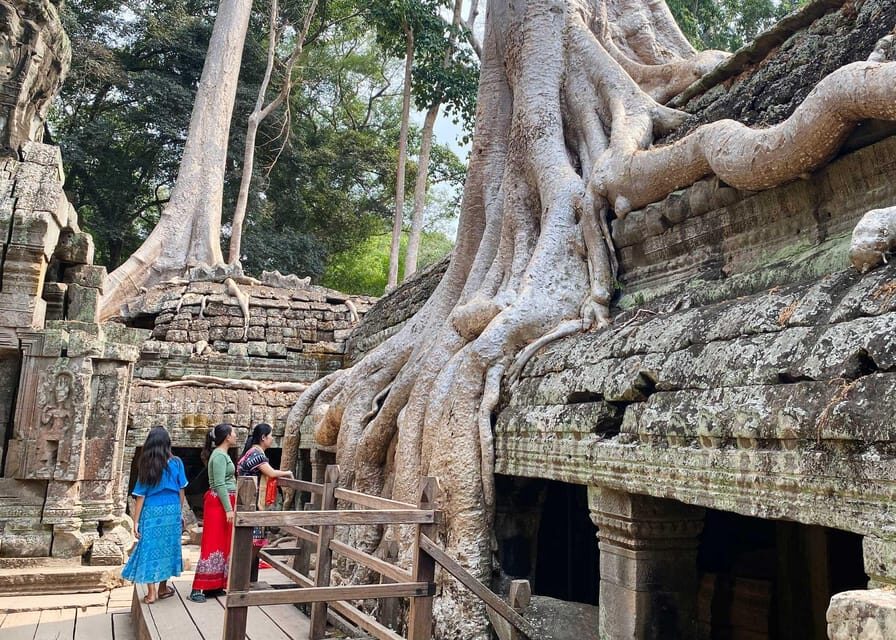
Then comes Ta Prohm, the temple people talk about because it looks like the jungle grabbed it and refused to let go. You’ll hear it called the Tomb Raider temple, and there’s a reason: Ta Prohm was built in the late 12th century as a Buddhist monastery and university, but it’s been left largely unrestored. Nature is part of the design now, creating the dramatic visual effect you see in photos.
At Ta Prohm, I love how the atmosphere changes from the more “perfectly framed” feeling of Angkor Wat. Here, the vegetation and roots create texture everywhere—on columns, on walls, around doorways. It’s visually busy in the best way. You can stand still and keep discovering details, even in areas that at first glance look chaotic.
The best way to enjoy Ta Prohm is to let your guide point out what you’re actually seeing. Without context, it’s easy to treat it like scenery for photos. With context, it becomes an example of how time, climate, and preservation decisions affect what visitors experience today. That’s also why the tour does more than rush between the big three. You’ll get a sense of each site’s role in the larger Angkor story.
Since flash is not allowed, Ta Prohm can be a little trickier for indoor shots or shaded areas. Bring camera patience. If you get a guide who takes photos well (multiple bookings describe guides being strong at photographing guests), you’ll probably appreciate the help with positioning and timing.
Outer grounds and extra temples: how to use the last hours wisely
Before leaving Siem Reap for the return trip, you’ll spend time exploring the outer temples and grounds of the Angkor Archaeological Park. This part can be underrated, because people focus only on the headline temples. But the outer areas are where you often get a calmer rhythm, space to walk without the same intense concentration, and a chance to catch architectural details you might miss at the main stops.
The tradeoff is that you need to manage fatigue. By this point, you’ve already seen Angkor Wat, climbed Bayon, and worked through Ta Prohm’s jungle zones. If you’re feeling sore, prioritize viewing points and walk at your own pace. The tour is private, so you can slow down without the same pressure of a bus full of strangers.
If you want souvenirs, this is also the moment that tends to work best, because you’re already on-site. One booking even mentions fitting in souvenir shopping by special request, which tells me there’s often some flexibility at the end if timing allows.
A few more Phnom Penh tours and experiences worth a look





Price and value: $179 plus entrance fees is the real math

The price listed is $179 per person for a 14-hour private day trip with a private driver and an English guide at the temples. That includes:
- Private driver from Phnom Penh
- Transportation to and from Phnom Penh
- Cold bottled water
- Live tour guide, plus a local guide at the Angkor temples
Not included:
- Entrance fees to the Angkor Archaeological Park (37 USD per person)
- Lunch at a local restaurant
- Personal expenses
So your likely day budget is about $179 + $37 = $216 per person before you add lunch. For some people, that feels steep. For others, it’s a bargain compared with anything that involves extra nights, more complex logistics, or multiple hires.
Here’s the value logic I’d use: you’re paying for (1) a private, long-distance transfer, (2) guide time on-site, and (3) an efficient route that hits the most iconic temples. You’re not just buying tickets—you’re buying someone to explain what you’re seeing and someone to handle the drive so you don’t spend your limited vacation time scheduling and re-scheduling.
If you’re staying in Phnom Penh and you don’t want to fly or you can’t spare an overnight in Siem Reap, this is often the practical way to make Angkor happen. If you already have plans to be in Siem Reap for multiple days, you may prefer splitting Angkor into slower days rather than compressing everything into one long push.
The biggest strengths: drivers, guide storytelling, and photo help
This tour tends to win people over for very specific reasons, and they show up repeatedly in booking experiences.
1) Drivers who keep the day calm
Many praised drivers describe early pickup, clean comfortable cars, safe driving, and well-timed stops. Some even describe extra comfort features like massage-function seating. Even if your car doesn’t have that, the pattern is consistent: the road feels manageable, not chaotic.
2) Temple guides who connect the dots
The guides are described as passionate and tuned to the site, and that matters because Angkor is easy to misunderstand. With a guide, Angkor Wat becomes more than a dramatic skyline; Bayon becomes more than faces; Ta Prohm becomes more than jungle rubble. The explanation gives you a lens to read the architecture.
3) Strong photo positioning
Several bookings specifically mention that guides help with photo spots and even iPhone photography. This isn’t just vanity. Good photo timing also means less wasted time circling, fewer missed angles, and better use of the changing light.
If your guide is someone like Siyan, Woo, or Sam Neng (names that appear in successful bookings), you can expect this style: storytelling, patience with questions, and practical suggestions for where to stand and when.
Who this day trip suits best (and who should skip it)
This is a private group tour, which can be ideal if you want flexibility and a calmer pace than group bus tours. It also matches well with travelers who only have Phnom Penh time and want Angkor without the hassle of flying and hotel logistics.
That said, the tour is not suitable for:
- Children under 8
- People with heart problems
- Wheelchair users
It’s also a long day for anyone with mobility limits, because the temples involve walking, stairs, and uneven surfaces. If you’re going, go in with a realistic plan: comfortable shoes, water, a hat, and breaks when you need them.
Before you go: comfort checklist that actually matters
You already know to bring a camera and sunscreen, but I’d add a few priorities based on how the day plays out.
- Comfortable shoes first. You’ll do a lot of walking and stairs across multiple temples.
- Hat and sunscreen because you’re outdoors for long stretches.
- Water plus the provided cold bottle is helpful for staying steady.
- Camera without flash. Plan your settings for natural light.
- Modest clothing for temple respect, while still letting you move.
One more small but important mindset shift: start early and expect the heat to build. The early hours help you see Angkor when it feels more alive and less crowded, but you still need to pace yourself as the day heats up.
Should you book this Phnom Penh to Angkor Wat day trip?
I’d book this trip if you want Angkor Wat plus Bayon and Ta Prohm in a single day and you’re staying in Phnom Penh. The private driver cuts the stress of long-distance logistics, and the temple guide time turns three famous sites into a connected story instead of just snapshots.
I wouldn’t book it if you hate long days, walking in heat, or stair climbing. It’s also not the best fit if you’re already planning a multi-day stay in Siem Reap, because you could spread these temples out more comfortably.
If your schedule is tight and you want a worry-free, structured route with real interpretation, this is a smart way to make Angkor happen.
FAQ
What’s the total duration of the trip from Phnom Penh?
The trip runs for about 14 hours, including the drive to Siem Reap and the time at Angkor Wat, Bayon, and Ta Prohm.
How long is the drive each way?
The drive is about 5.5 hours one way between Phnom Penh and Siem Reap.
What’s included in the price?
Included are a private driver from Phnom Penh, transportation to and from Phnom Penh, cold bottled water, and a live English tour guide plus a local guide at the Angkor temples.
What are the main things not included?
Entrance fees to the Angkor Archaeological Park (37 USD per person) and lunch at a local restaurant are not included.
What temples will I visit during the day?
You’ll visit Angkor Wat, Bayon, and Ta Prohm, and you’ll also spend time exploring the outer temples and grounds within the Angkor Archaeological Park.
What language is the tour guide?
The live tour guide is listed as English.
Are entrance fees included for Angkor Archaeological Park?
No. Entrance fees are listed as 37 USD per person and are not included in the tour price.
Is lunch included?
No. Lunch is not included, and you’ll stop at a local restaurant during the day.
What should I bring and wear?
Bring comfortable shoes, a hat, sunscreen, a camera, and water. Dress modestly for temple sites.
Can I use flash photography inside the temples?
No. Flash photography is not allowed.