REVIEW · PHNOM PENH
Phnom Penh: The Killing Fields & Tuol Sleng Genocide Museum
Book on GetYourGuide →Operated by The Killing field and Toul Sleng genocide museum S21 Tour · Bookable on GetYourGuide
Two hours can change how you see Cambodia. This half-day tour links the Khmer Rouge years to the places where people suffered and died, using a guide’s presentation on the drive out and plenty of time on site to ask questions. I especially like the respectful pacing and the fact that you’re not just reading plaques—you’re hearing context, then being given time to look, reflect, and pay respects. One consideration: this is emotionally heavy, and you will see bones and clothing rags left by victims.
If you’re making room for one somber, meaningful activity in Phnom Penh, this pairing makes sense. You start at the Killing Fields area (Choeung Ek), then head back into the city to see the Tuol Sleng site (S-21) through the Genocide Museum displays—plus a chance to hear survivor stories.
In This Review
- Key things I’d plan around before you go
- How the tour fits a 4-hour Phnom Penh timeline
- Pickup, van comfort, and the guide’s on-the-road briefing
- Choeung Ek Killing Fields: how to pace your visit respectfully
- Tuol Sleng Genocide Museum (S-21): small rooms that hit hard
- Meeting survivors: the part that changes the meaning
- Price and value: what $19 gets you (and what costs extra)
- Who this tour is best for in Phnom Penh
- Practical notes so you’re comfortable during a heavy day
- Should you book this Killing Fields and Tuol Sleng tour?
- FAQ
- How long is the tour?
- Which sites are included?
- Are entry tickets included in the price?
- What’s included in the tour price?
- Do I need to cover my shoulders and knees?
- What language is the tour guide?
- Can I get a refund if I cancel?
Key things I’d plan around before you go
- A guide-led ride that sets context before you even reach the sites
- Time to move slowly at Choeung Ek, including the memorial stupa and mass graves
- Tuol Sleng’s small cells and rooms, shown with explanation so it connects to the bigger story
- Survivor stories are part of the experience (you get a chance to meet them)
- Air-conditioned transport and water keep the day manageable in Phnom Penh heat
How the tour fits a 4-hour Phnom Penh timeline
This is a true half-day: you’re looking at about 4 hours total from pickup to return. The schedule is built around getting you out of the city without rushing the key parts. In practical terms, that matters because both stops take emotional energy. Rushing would make it harder to understand what you’re seeing.
You start with pickup from a long list of Phnom Penh-area hotels (or you meet at a stated address if your hotel isn’t on the list). Then you head out by air-conditioned van, where the guide provides a presentation on Pol Pot and the Khmer Rouge regime (1975–1979). That matters because the sites aren’t just “history stops.” They’re places tied to a very recent, very specific system of control.
Once you reach the sites, the timing breaks down roughly into about an hour at Choeung Ek and about two hours at Tuol Sleng / the Genocide Museum, with driving time before and after. You’ll end back at the meeting point, guided to the correct drop-off location.
Other Killing Fields tours we've reviewed in Phnom Penh
Pickup, van comfort, and the guide’s on-the-road briefing
Even though this is a somber day, the logistics are handled in a way that helps you focus. You get pickup and drop-off, travel in an air-conditioned van, and there’s water included. That small comfort feature is not fluff. Phnom Penh’s heat and humidity can wear you down quickly, and you’ll want your energy for the sites.
The briefing on the drive is a big part of why this experience works. Instead of arriving cold (emotionally or historically), your guide gives you a clear presentation about the regime and what happened during those years. Then, when you step into the memorial space, you’re already able to connect names, policies, and places.
Communication matters too. If your hotel is in the pickup list, you typically wait in the hotel lobby until the guide arrives. If it isn’t, you’re told to use Grand River Sports Bar as the meeting point, with set times for the morning and afternoon departures. Either way, the operator asks you to provide a WhatsApp number so they can confirm details before the tour starts. It’s a simple step that helps the day run smoothly.
One more practical note: dress matters here. You’re specifically asked to cover your shoulders and knees as a sign of respect at the sites.
Choeung Ek Killing Fields: how to pace your visit respectfully
Choeung Ek is one of those places where your brain tries to protect you by going numb. The guide’s job (and the tour’s value) is to slow you down enough to understand what you’re seeing without turning it into a checklist.
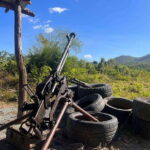
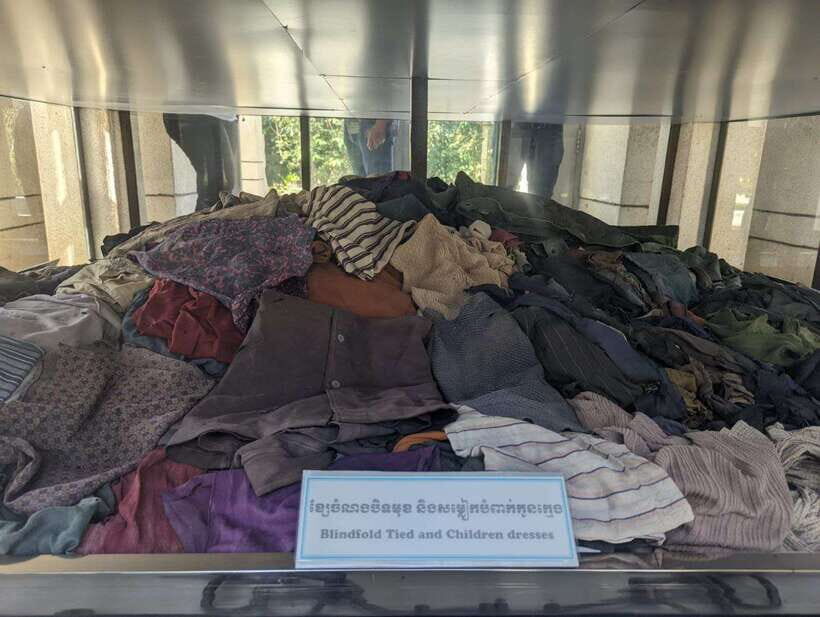
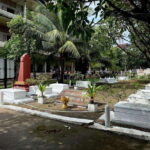
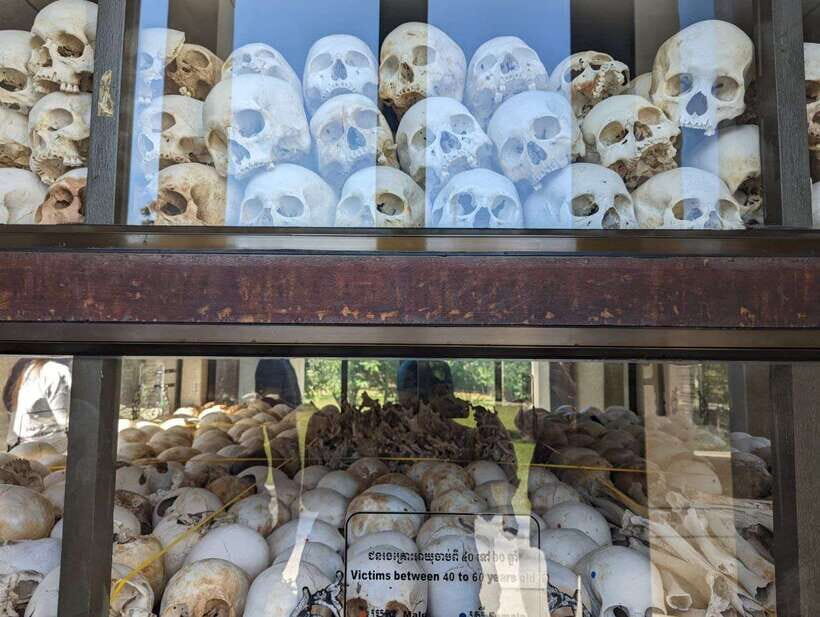
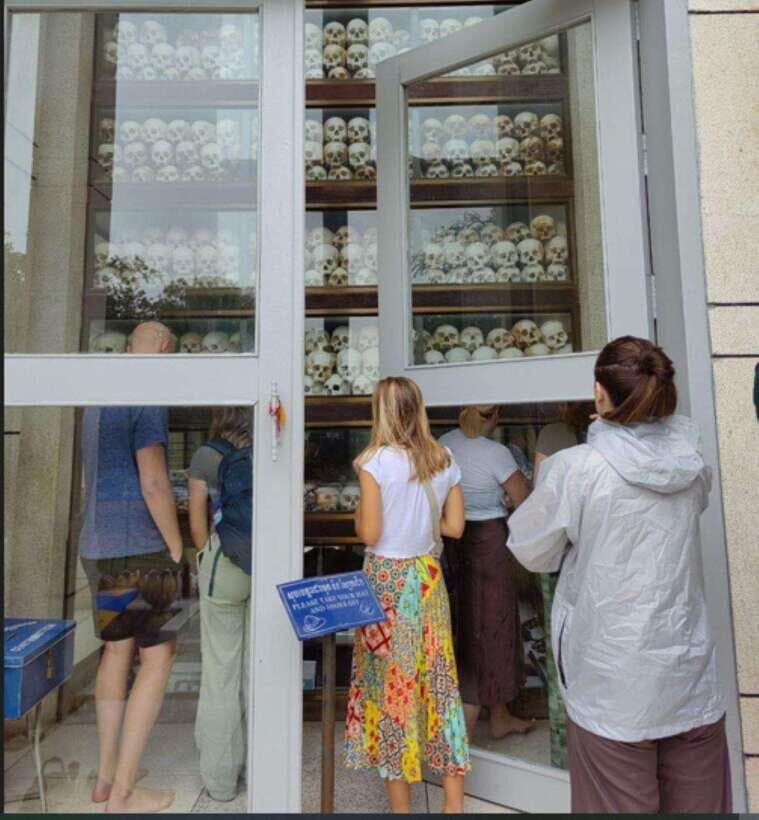
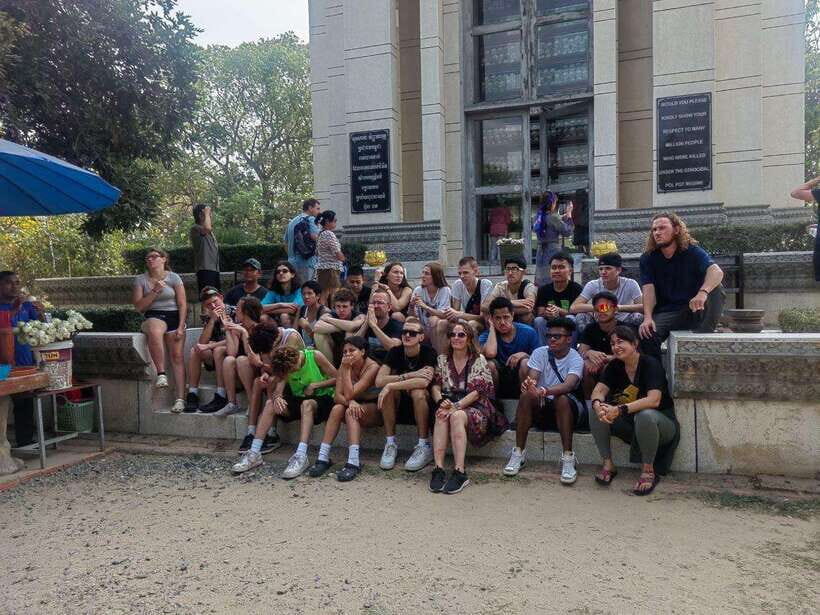
At Choeung Ek, you spend about an hour exploring. You’ll see mass graves, a memorial stupa, and remains left behind, including bones and clothing rags. That combination is important. The site isn’t only a memorial structure; it also shows the physical evidence of what happened. The memorial stupa is where you have time to pay your respects, and the mass graves help you understand the scale in a way that posters and textbooks can’t.
What I appreciate about this tour format is that it doesn’t shove you along. You get time to look at key areas, and you can ask your guide questions. That means you can follow your own pace. If something feels confusing—like how the system worked, or how people were processed—you’re not left guessing.
Just know: this stop is heavy. Even if you think you’re prepared, you’ll likely feel it in your body—quiet, tight, reflective. That’s not a reason to skip it. It’s a reason to go with intention, water in you, and no big plans afterward.
Tuol Sleng Genocide Museum (S-21): small rooms that hit hard
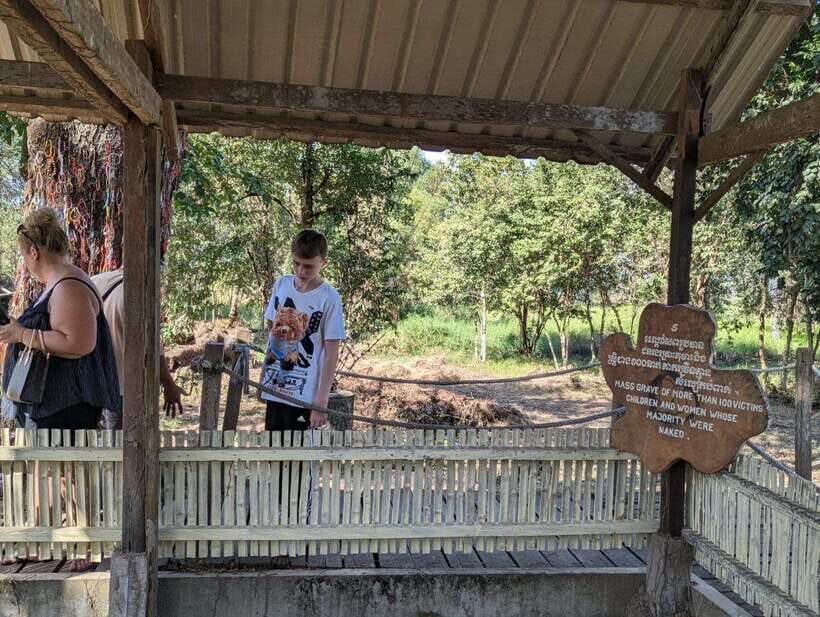
After Choeung Ek, you head back toward the city to visit the Genocide Museum, connected to Tuol Sleng (S-21). This portion runs about two hours, which is the right amount of time to take in the rooms and displays without feeling rushed.
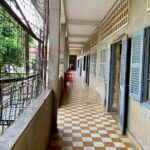
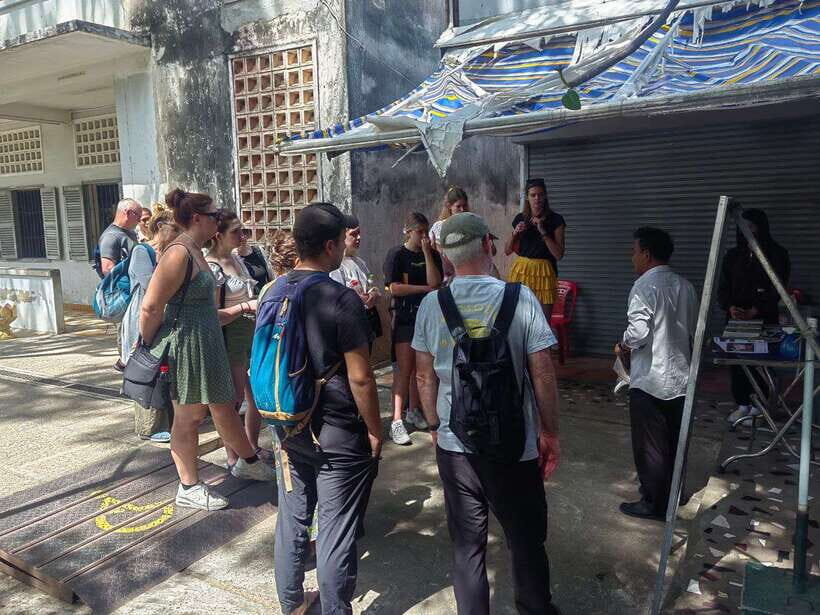
Here, the tour shifts from outdoors memorial space to something more claustrophobic in your mind. You’ll learn about the Khmer Rouge regime’s prison system. You can expect to see relics recovered from the time, along with displays that include photos and explanations. The museum shows small rooms and cells where prisoners were kept, giving the experience a concrete, human-sized reality.
A powerful part of this visit is how your guide turns the museum from objects into stories. In the feedback around this tour, guides are often praised for handling the topic with sensitivity and for being able to answer questions on the spot. In other words, you’re not stuck with an audio track that tells you what to feel. You can ask why something matters, or how to interpret what you’re seeing.
And yes—this is an S-21 setting, so it can include imagery and details that are hard to take in. The tour doesn’t hide that. It gives you context and control: you can take your time, stop to read, and speak with your guide when you need clarity.
Meeting survivors: the part that changes the meaning
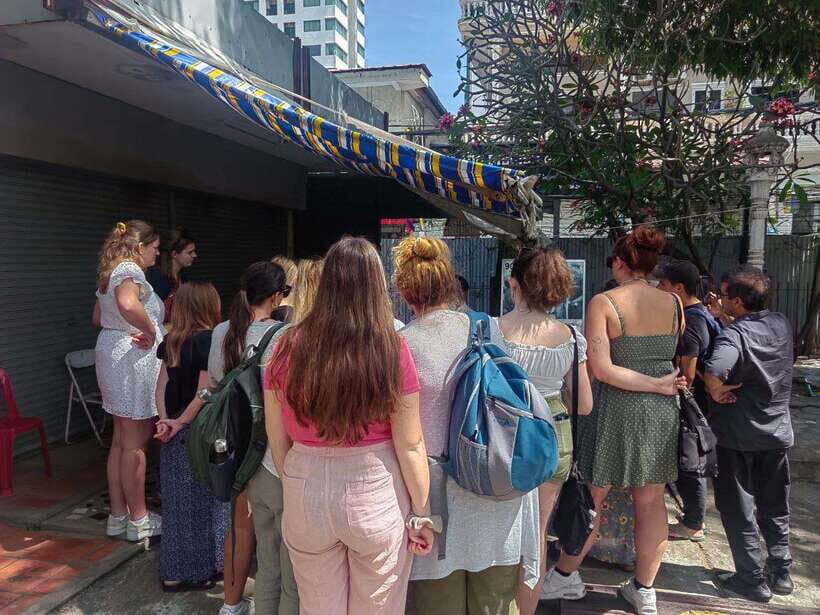
One of the most moving elements of this tour is that you get a chance to meet some survivors. That transforms the experience from “learning about the past” into “understanding what it did to real lives.”
In a place like Phnom Penh—where you can still see daily life moving forward—survivor stories carry extra weight. They bring a kind of moral math to the day: yes, the history is horrific, but the fact that survivors remain gives the story a different ending than total erasure.
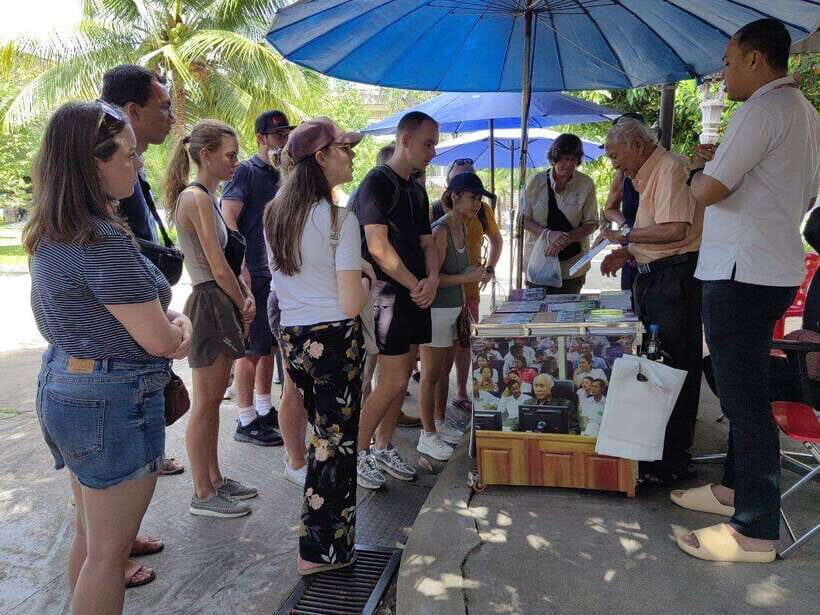
If you’re wondering whether to bring questions: do it. The tour explicitly allows you to ask your guide questions at any point, and survivor interactions are the moment when personal clarity matters most. Keep your questions respectful and simple. Ask what helps you understand, not what just creates shock.
Also, be prepared for the emotional whiplash. You may feel tearful or unsettled at one moment, then steadier a few minutes later. That’s normal. This isn’t a light sightseeing block. It’s a human encounter with history.
Other Tuol Sleng (S-21) tours we've reviewed in Phnom Penh

Price and value: what $19 gets you (and what costs extra)
The activity price is listed at $19 per person, and the included items are practical: pickup and drop-off, an air-conditioned van, a tour guide, and water.
Entry tickets are not included. You should budget separately for $3 for the Killing Fields and $5 for the Genocide Museum. So if you’re doing simple math, your on-the-ground ticket total comes to about $8, bringing your likely total closer to $27, before food.
Here’s the value angle: tours like this are often either expensive or under-informed. This one tends to justify the cost with three things you can feel during the day:
- The guide’s presentation on the drive, so the history doesn’t start only after you arrive.
- The time allocation (around 1 hour at Choeung Ek and 2 hours at Tuol Sleng), which gives you room to process.
- The quality of the experience hinges on sensitivity and explanation, and the guides associated with this tour have a strong pattern of being described as respectful, warm, and able to handle harrowing material carefully.
You’re also paying for a smoother logistics layer. Pickup, transport, and water mean you’re not juggling directions or heat while trying to absorb heavy information.
Who this tour is best for in Phnom Penh
This tour is best for you if you want more than a quick stop. Choose it if you’re the type of traveler who likes to understand the why behind what you see, and who can handle difficult material with respect.
You’ll also appreciate it if you care about good explanation. Many guides tied to this activity are praised for delivering the story with empathy and for answering questions clearly in English. Some are noted for speaking with warmth and seriousness, including guides such as Baboon and Sum Cheath in the feedback shared.
You might want a gentler alternative if you feel overwhelmed by graphic remnants, or if you know you struggle with emotionally intense museum experiences. This is not a casual “culture and coffee” outing.
Still, for many people, this is the one Phnom Penh activity that makes the rest of Cambodia feel more understandable. It gives context for the country’s modern life—without trying to water down the past.
Practical notes so you’re comfortable during a heavy day
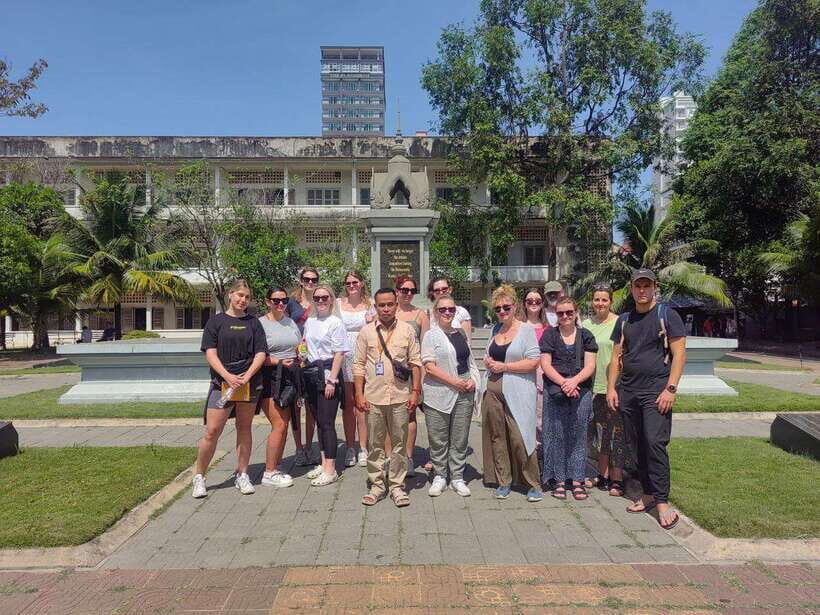
A few things can make a real difference here:
Bring water awareness. Water is included, but it’s still smart to drink regularly. You’ll likely walk, stand, and read in heat.
Dress respectfully. The operator asks that you cover shoulders and knees. It’s easy to comply and it sets the tone for the day.
Plan for no hard schedule afterward. This tour ends back near your meeting point, but you’ll still be carrying the experience. Give yourself time to decompress before dinner plans.
Use your guide. At each site, you can ask questions. If you’re confused about the regime, the prison system, or why certain displays exist, ask. The whole point is to connect what you’re seeing to the larger story.
Should you book this Killing Fields and Tuol Sleng tour?
Book it if you want a half-day in Phnom Penh that’s structured, guided, and respectful—and you’re ready for the emotional reality of Cambodia’s recent past. The guide-led drive briefing, the time on site, and the chance to hear from survivors make it more meaningful than a self-guided route.
Skip it only if you know you’re not up for an intense visit. This isn’t built to be light or distance yourself from the subject. It’s a serious day, and that seriousness is exactly what makes it worthwhile.
If you can handle hard history with care, this is one of the most important experiences you can fit into a Phnom Penh itinerary.
FAQ
How long is the tour?
The duration is about 4 hours.
Which sites are included?
You visit the Killing Fields area at Choeung Ek and then the Tuol Sleng Genocide Museum.
Are entry tickets included in the price?
No. Entry tickets are listed as $3 for the Killing Fields and $5 for the Genocide Museum.
What’s included in the tour price?
The tour includes pickup and drop-off from a meeting point, an air-conditioned van, a tour guide, and water.
Do I need to cover my shoulders and knees?
Yes. You’re advised to dress properly by covering your shoulders and knees to respect the victims.
What language is the tour guide?
The tour is conducted in English.
Can I get a refund if I cancel?
Free cancellation is available up to 24 hours in advance for a full refund.