REVIEW · PHNOM PENH
Guided Phnom Penh Heritage Tour
Book on Viator →Operated by Phnom Penh Heritage · Bookable on Viator
The city starts speaking the moment you board.
This guided Phnom Penh Heritage Tour uses a digital tablet plus headphones to turn a short ride into a long story, with 19 stops and videos that include vintage photos and historical anecdotes. You’ll cover everything from how Phnom Penh became the capital to French protectorate planning, Art Deco tastes, royal power, and the hard years of the Khmer Rouge.
I like two things a lot: the multilingual tablet videos (10 languages) that show what places looked like before, and the way the guide, Oliver, keeps the flow friendly and clear. I also appreciate that it’s designed to work even if you don’t have hours to walk around on your own.
One thing to plan for: this is a “see-and-decide” circuit, not a full museum day. A few major places are outside the tour time, like parts of Wat Phnom and the inside visits to the National Museum and Royal Palace.
In This Review
- Key highlights to know before you go
- A tablet-and-headphones tour that turns Phnom Penh into a timeline
- Price and time value for a 2.5-hour heritage circuit
- The route: small group pacing, Oliver’s style, and how to keep up
- French protectorate to royal capital: the high-impact first stops
- Stop 1: Phnom Penh overview
- Stop 2 and 3: Cambodia Post Office and Palais de la Poste
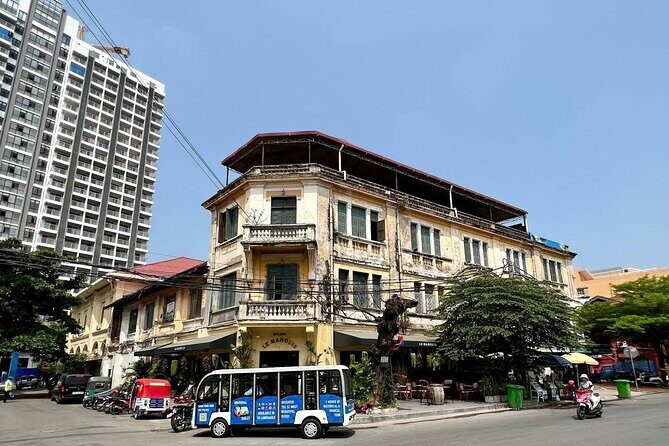
- Stop 4: Le Manolis (early hotel chapter)
- Stop 5: Old municipal police commissariat
- Stop 6: Governor’s house roots (Council for Development of Cambodia)
- Stop 7: Chinese house and Hokkien temple (Minshing Middle School area)
- Stop 8: Naeggas Bridge
- Stop 9: Wat Phnom (and the part you won’t enter)
- Art Deco, elite life, and photo rules around embassies
- Stop 10: Country club area linked to the U.S. Embassy
- Stop 11: National Library (possible inside visit if open)
- Stop 12: Railway Station (tablet story stop)
- Stop 12 (continued) / Stop 16: Central Market segment
- Raffles, No Problem Villa, and the creative student stop that takes extra time
- Stop 11 (again, timing-wise): Raffles Hotel Le Royal (quick architecture moment)
- Stop 13: Hyatt Regency Phnom Penh (old No Problem Villa)
- Stop 14: Royal University of Fine Arts (the long stop)
- Stop 15: National Museum (inside not included)
- The mansion under renovation, UNESCO, and ending at Street 240
- Stop 16: FCC Phnom Penh (old mansion, under renovation cover)
- Stop 17: UNESCO Cambodia house
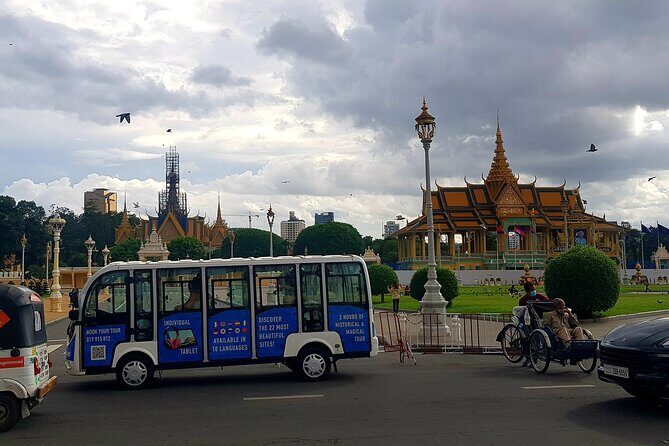
- Stop 18: Royal Palace (inside not included)
- Stop 19: Residence of the British Ambassador on Street 240 (end point)
- Practical tips so the tour feels easy, not exhausting
- Should you book the Phnom Penh Heritage Tour?
- FAQ
- How long is the Phnom Penh Heritage Tour?
- What’s included in the tour price?
- Are admission tickets included for all stops?
- Can I enter any places during the tour?
- How many stops does the tour include, and how is it guided?
- Is transportation provided privately?
Key highlights to know before you go
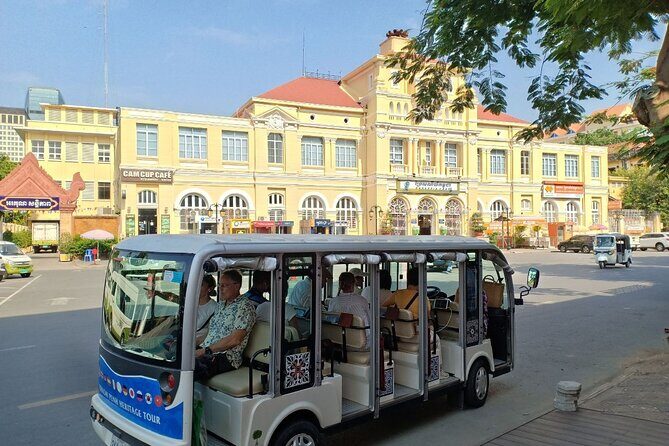
- 19 stops, 2.5 hours: fast enough to fit into a busy day, paced so it doesn’t feel like you’re sprinting.
- Tablet + headphones in 10 languages: you can follow the story without hunting for explanations.
- Virtual access to select buildings: the guide lets you virtually enter some spots that are otherwise hard to reach.
- Small group max of 10: you’re not swallowed by a crowd.
- Guided photo time from the route: you’ll get chances to stop for pictures without turning it into an all-day photo marathon.
- Oliver helps you get oriented quickly: in a busy area, he makes it easy to find your bus and stay on track.
A tablet-and-headphones tour that turns Phnom Penh into a timeline
Phnom Penh can feel like a collage—new streets alongside old walls, and big history hiding in plain sight. This tour leans into that feeling. You’re handed a digital tablet with headphones, and the video guide steps you through the meaning of each stop, using films, vintage images, and plain talk about what happened there.
The big win is how the tour connects the dots. You don’t just see buildings—you get context for why they exist. The stories cover how a fishing village shifted into a capital, the first urban layout modeled on the French way of planning, a wave of Art Deco style, how social life and institutions were organized, the royal family’s role, and the brutal contrast of the Khmer Rouge era.
You’ll also run into one of the more clever features: virtual entry for certain buildings. It’s not the same as a real ticket and a slow walk inside, but it helps when some places are not meant for public access.
Other guided tours in Phnom Penh


Price and time value for a 2.5-hour heritage circuit
At $24.36 per person, this sits in the “good deal” zone for a city overview—especially because you’re not just paying for narration. You’re paying for a guided route that covers a lot of important ground in about 2 hours 30 minutes, with bottled water included and a live guide with you.
Here’s what you should measure for value: how much planning you avoid. On your own, you’d need to decide which French-era buildings to prioritize, which areas match the royal story, where the Art Deco influence shows up, and where the Khmer Rouge footprint hits hardest. This tour gives you a map of interests fast, so you can come back later and spend more time where you actually want it.
It’s also booked fairly ahead on average (about 21 days), which usually means people find it useful early in a trip. If you’re trying to squeeze Phnom Penh into a short stay, this tour is one of the most efficient ways to get your bearings.
The route: small group pacing, Oliver’s style, and how to keep up
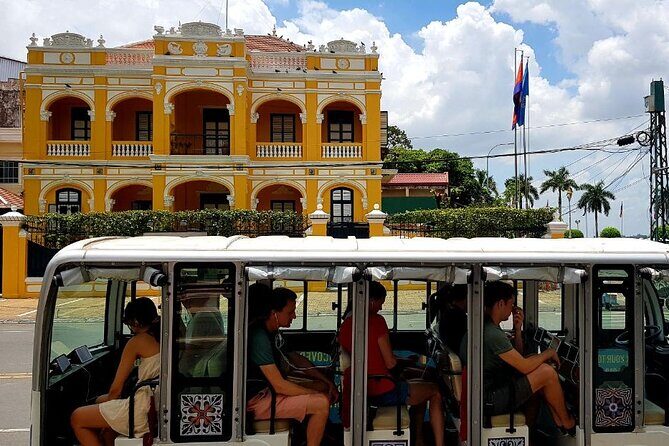
The group size is capped at 10 travelers, which matters more than it sounds. In a big city, small groups mean fewer missed turns, less waiting, and a smoother flow when the route changes pace.
Oliver is part of why the tour feels organized. You’ll get a welcome and be able to ask questions, and he’ll help you identify where you need to be in the meeting area. One practical advantage: the tour takes you by ride for most of the circuit, so you’re not stuck doing long outdoor walks in the heat.
You’ll notice the format too. Many stops are short, with time to watch the tablet video and take pictures. That’s why it works well for first-timers: you get the highlights without committing your entire day to one site.
French protectorate to royal capital: the high-impact first stops
Your tour begins at Corner Street 102 & Street 13. From there, the circuit quickly builds a picture of Phnom Penh’s layered identity.
Stop 1: Phnom Penh overview
This is where the tour gives you the big picture: Phnom Penh as a kingdom capital that evolved fast, with the French protectorate era shaping the city’s early modernization. Think of this as your warm-up scene—once you hear how the city grew, the later stops make more sense.
Other historical tours in Phnom Penh

Stop 2 and 3: Cambodia Post Office and Palais de la Poste
You’ll spend time on the Cambodia Post Office and then the nearby Palais de la Poste area, each paired with short audiovisual segments. These stops focus on the former Indochina bank story, giving you the logic behind the architecture and why the building became such a symbol of the period.
Even if you don’t plan to go inside, it’s worth paying attention to the details the guide points out—this is one of the places where the French-era imprint becomes obvious.
Stop 4: Le Manolis (early hotel chapter)
Le Manolis is the stop that helps you understand how early hospitality and urban life took shape. The video here sets context for what it meant to have the first hotels in a rapidly changing capital.
Stop 5: Old municipal police commissariat
The Commissariat of Phnom Penh Municipal Police stop shifts from “pretty buildings” into how institutions functioned. You get the old police station background through the tablet audio, which is useful if you want the city’s structure, not only its monuments.
Stop 6: Governor’s house roots (Council for Development of Cambodia)
At the Council for the Development of Cambodia, the story points back to the former governor-general’s house. It’s a good moment to notice how power was housed in architecture—who lived where, who governed from where, and how the city organized authority.
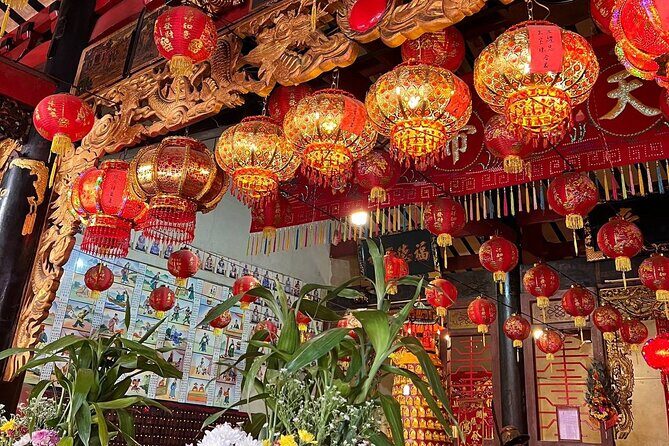
Stop 7: Chinese house and Hokkien temple (Minshing Middle School area)
This stop—關帝古廟(民生中学)—adds the community layers beyond the French narrative. You’ll cover the Chinese house connection and the Hokkien temple story, and you’ll get extra time here compared to many other stops, with a longer audiovisual segment.
If you like cultural mashups (and Phnom Penh is full of them), this is one of the most interesting “side stories” in the whole route.
Stop 8: Naeggas Bridge
The Naga bridge story is brief but memorable. It’s the kind of stop that reminds you Phnom Penh doesn’t only rely on colonial-era history—local symbolism and older legends still matter in the city’s visual identity.
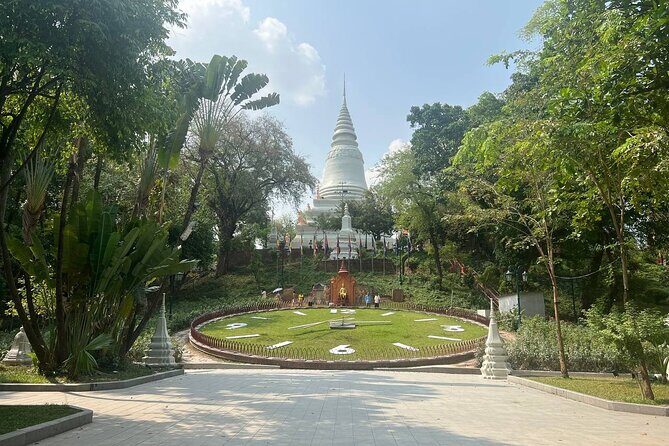
Stop 9: Wat Phnom (and the part you won’t enter)
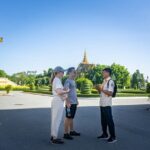
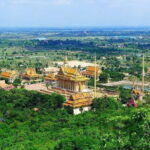
At Wat Phnom, you can take pictures, but the visit to the temple on the hill is not included in the city tour. That’s a key consideration: plan to make a separate stop later if Wat Phnom hill is a must-do for you.
Art Deco, elite life, and photo rules around embassies
After Wat Phnom, the tour starts leaning into the lifestyle chapter—how elite spaces worked, and how the city’s image was shaped.
Stop 10: Country club area linked to the U.S. Embassy
This is the stop connected to the country club where the current U.S. Embassy is located. The big practical note: pictures are not allowed there. That rule is worth respecting so your guide doesn’t have to stop you or correct the group.
Even without photos, the tablet story is useful for understanding why this area matters in the early 20th-century “high life” narrative.
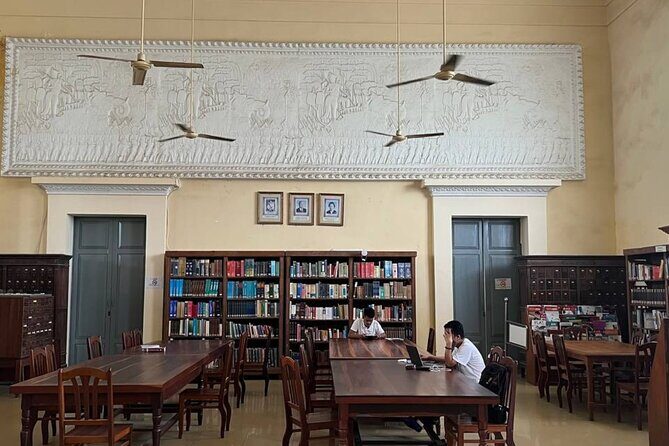
Stop 11: National Library (possible inside visit if open)
The National Library stop includes the chance to visit inside if it’s open. If you’re the type who likes checking details up close, this is one of the “maybe” stops you’ll want to watch carefully as you pass.
Even when you can’t enter, the tablet audio helps you read the building rather than just walk past it.
Stop 12: Railway Station (tablet story stop)
This is where the tour covers the train station history through the audiovisual guide. It’s a quick stop, but it adds another layer: Phnom Penh wasn’t only built by palaces and banks; it was connected by transport and movement too.
Stop 12 (continued) / Stop 16: Central Market segment
The tour includes an audiovisual segment on the Central Market. You generally won’t get a full market wander here, but you do get time and a viewpoint to understand where it fits into everyday city life.
Raffles, No Problem Villa, and the creative student stop that takes extra time
This part of the route is where you start feeling the emotional range: from luxury image to arts and everyday survival.
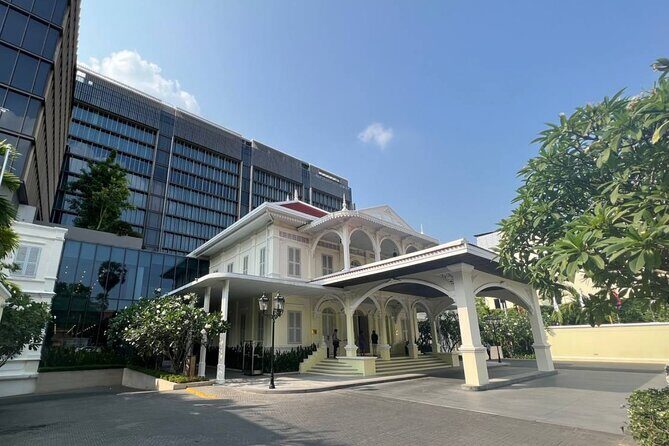
Stop 11 (again, timing-wise): Raffles Hotel Le Royal (quick architecture moment)
Raffles Hotel Le Royal is a short stop with an audiovisual guide. It’s probably best for you if you enjoy architectural context more than long, slow site visits.
Stop 13: Hyatt Regency Phnom Penh (old No Problem Villa)
At Hyatt Regency Phnom Penh, the tour’s audio connects to the old No Problem Villa story. It’s another stop that turns a well-known address into a historical reference point, not just a modern hotel setting.
Stop 14: Royal University of Fine Arts (the long stop)
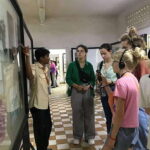
This is one of the most time-rich moments on the route: about 25 minutes. The Royal University of Fine Arts audiovisual guide is paired with a guided visit most of the time, with stories and anecdotes along the way.
A practical plus: you can often see students practicing their art. That gives the tour a real-world present-day feel, not only nostalgia. If you want to balance history with something living, don’t rush past this stop.
Stop 15: National Museum (inside not included)
At the National Museum, the tour does not include the visit inside. If museum time is on your Phnom Penh checklist, treat this as a preview and plan a separate ticket day.
The mansion under renovation, UNESCO, and ending at Street 240
The final stretch brings you closer to the royal zone and the last chapter stops—places you can recognize, even if you don’t enter.
Stop 16: FCC Phnom Penh (old mansion, under renovation cover)
The FCC Phnom Penh stop focuses on an old mansion that’s under renovation, with cover mentioned for 2024/2025. This is one of those moments where what you can see may be limited by the construction state, but the story still gives you the reason the building is important.
Stop 17: UNESCO Cambodia house
Next is UNESCO Cambodia, with its own audiovisual segment. This part helps you connect past and present—how heritage work continues, and why preserving stories matters even when the buildings change around them.
Stop 18: Royal Palace (inside not included)
At the Royal Palace, the tablet audio gives you the background, but the visit is not included during the tour. You’ll get the “read and recognize” value rather than a full palace walkthrough.
Stop 19: Residence of the British Ambassador on Street 240 (end point)
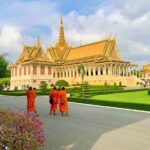
The tour finishes at Oknha Chhun St. 240, near the Royal Palace and Wat Botum area. The final stop covers Street 240 and the British ambassador residence, and wraps up with the epilogue story.
This ending makes sense because it drops you right where you can continue on foot afterward if you want more time around the palace area.
Practical tips so the tour feels easy, not exhausting
- Bring patience for heat: the format is designed to reduce walking, but you still spend time outdoors between stops. Bottled water is provided, which helps.
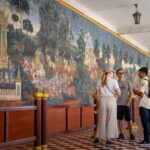
- Use the tablet actively: headphones aren’t just background. If you pause to watch one of the short vintage-photo moments, you’ll understand the building better later.
- Do this early in your visit: you’ll be deciding what to return to. The tour works best as a first orientation step, not as a last-day “I guess I should see something” activity.
- Respect the photo rule near embassies: at the country club area connected to the U.S. Embassy, pictures aren’t allowed. Treat that as a clear boundary.
- Plan separate time for big-ticket interiors: Wat Phnom hill visit, National Museum interior, and Royal Palace interior are not included. You’re getting context, not a full museum/palace day.
Should you book the Phnom Penh Heritage Tour?
Book it if you want a fast, guided introduction to Phnom Penh’s layers—French-era modernization, Art Deco influence, royal context, and the darker Khmer Rouge chapter—without spending your whole trip figuring out what matters. I’d also recommend it if you enjoy audio-visual learning, because the tablet videos are built around history you can actually picture.
Skip or add a different plan if you specifically want long, inside visits at the National Museum or the Royal Palace, or if Wat Phnom hill is a must for you. This tour is a solid starting line. After that, you can choose what deserves your extra time.
FAQ
How long is the Phnom Penh Heritage Tour?
It runs for about 2 hours 30 minutes.
What’s included in the tour price?
The tour includes bottled water, an in-guide person, and a tablet with audiovisual guides in 10 languages. It also uses a mobile ticket.
Are admission tickets included for all stops?
Most stops have admission marked as free. The tour notes that some visits are not included, including the temple on the hill at Wat Phnom, the National Museum interior, and the Royal Palace visit.
Can I enter any places during the tour?
You may be able to visit inside certain spots if they are open, including the old bank (if open), the Hokkien temple, the National Library (if open), and the Royal University of Fine Arts.
How many stops does the tour include, and how is it guided?
The tour covers 19 stops with an audiovisual guide delivered through the tablet and headphones. The guide is available to help and answer questions.
Is transportation provided privately?
The tour indicates private transportation is not included. It also notes you’re near public transportation and that the tour uses a guided circuit rather than a private ride for each traveler.