REVIEW · PHNOM PENH
Cambodia 7 Days Private Tour from Angkor Temples to Coastline
Book on Viator →Operated by About Cambodia Travel & Tours · Bookable on Viator
Seven days in Cambodia, and your camera will suffer.
What makes this trip feel different is the mix: you get major Angkor monuments, then the heavy modern history of Phnom Penh, and finally a real breather on the coast.
I especially like that this is built around a private English-speaking guide and air-conditioned transport, so you’re not stuck figuring out timing or getting lost in the noise. The other big win is the balance: a Tonle Sap floating village boat experience plus days with real downtime in Sihanoukville. One thing to keep in mind: the schedule is packed, and the genocide museums in Phnom Penh are emotionally intense, so you’ll want pacing and breaks.
In This Review
- Key things to know before you go
- Private comfort from Siem Reap to the beach
- Day 1: landing in Siem Reap and getting your bearings
- Angkor Wat and beyond: the big guided temple day in one go
- Tonle Sap and Kampong Phluk: a boat ride that changes your pace
- Siem Reap to Phnom Penh: travel day, then a lighter evening
- Phnom Penh full day: palace grandeur and the weight of Tuol Sleng and Choeung Ek
- Sihanoukville reset: beach time built into the schedule
- Price and value: what you’re really paying for
- Who this tour suits best (and who should think twice)
- Should you book this Cambodia private tour?
- FAQ
- What is the starting point and where do I fly out?
- How long is the Cambodia private tour?
- Is this a private tour or shared group?
- What’s included in the price?
- Are entrance tickets for attractions included?
- Is the floating village experience included?
- What Phnom Penh sights does the tour cover?
- What will I do in Sihanoukville?
- What hotel categories are offered?
- Are tips included?
- What is the cancellation policy?
Key things to know before you go
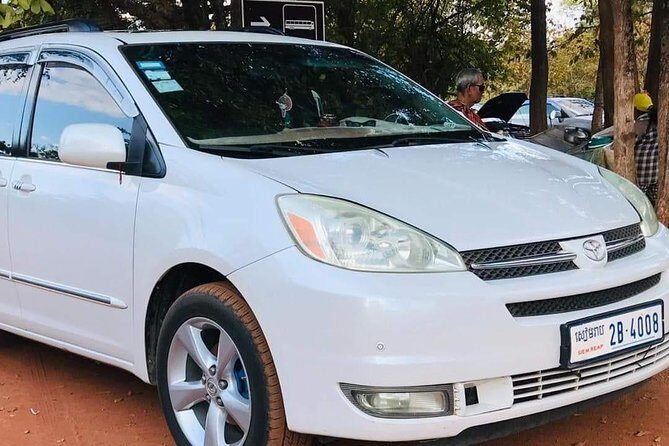
- Private guide, air-conditioned car: you cover long distances without the stress of public transport.
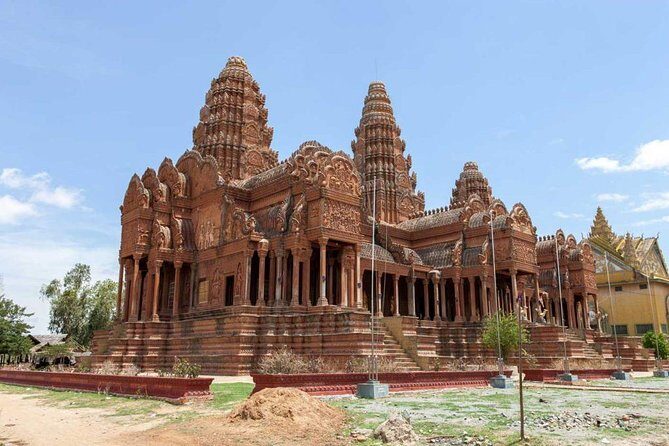
- Angkor in one guided big day: Angkor Wat, Bayon, Ta Prohm, and panoramic Phnom Bakheng get stitched together tightly.
- Tonle Sap by boat at Kampong Phluk: floating homes, schools, shops, and fishing life on the water.
- Phnom Penh with both highlights and hard stops: Royal Palace sights alongside Tuol Sleng and Choeung Ek.
- Sihanoukville reset time: beach days are mostly at your own pace, not rushed sightseeing.
- Many costs handled up front: accommodation, transport, entrance fees, plus the boat trip are included.
Private comfort from Siem Reap to the beach
This is a true private tour, meaning it’s just your group and you follow your guide’s plan instead of moving with strangers. You start in Siem Reap at arrival time, with a guide and driver meeting you at the airport arrivals area. From there, you get hotel check-in days, guided sightseeing days, and then free time when you actually get to breathe.
Hotel quality is flexible. You can choose 3-star, 4-star, or 5-star options, and each day’s stay includes breakfast. In Siem Reap, options include Royal Crown Hotel & Spa (3-star), Regency Angkor Hotel (4-star), or Angkor Paradise Hotel (5-star). In Phnom Penh, it’s Mahasakor Inn Phnom Penh (3-star), Sun & Moon Urban Hotel (4-star), or Sun & Moon Riverside Hotel (5-star). On the coast, you’ll see Otres Beach Hotel (3-star), Won Majestic Hotel (4-star), or Sokha Beach Resort (5-star).
That hotel flexibility matters for value. If you’re spending one week across three different regions, a private tour that includes transport and entrance fees can feel more rational than booking everything separately and then realizing you forgot one big ticket item. The main watch-out is cost level: a private tour stays private, so it can be pricier than a group bus tour unless you have enough people to share the expense.
Other private tours in Phnom Penh

Day 1: landing in Siem Reap and getting your bearings
On day one, you arrive at Siem Reap Angkor International Airport and get a welcome from your guide and driver. After that, the rest of the day is yours. You check in to your hotel and can keep things easy: a walk nearby, a meal, or just resting so you’re ready for Angkor the next day.
I like this approach. Angkor isn’t just a museum visit; it’s a whole-day effort in heat, light, and walking. Giving yourself a free first day means you start the biggest day feeling human, not jet-lagged and cranky.
Angkor Wat and beyond: the big guided temple day in one go
Angkor is usually the reason people come to Cambodia, and this day is built to give you the core set without leaving you wondering what you missed. You’ll go through Angkor Archaeological Park with a licensed English-speaking guide, and entrance fees are included for the stops listed.
You start at Angkor Wat, which is the big visual anchor of the whole complex. Your guide will explain how the temples and the successive capitals show social order inside the Khmer Empire, not just religious symbolism. From there, you continue to Angkor Thom South Gate, then move into the heart of the city-temple zone with Bayon—famous for faces that stare out from multiple angles—and then back into Angkor Thom itself.
What I like about this structure is that you’re not just collecting selfies. The stops are arranged so you get variety in one day: gateways, towers, terraces, and then that special contrast between heavily restored areas and spaces that feel half-tangled in the jungle.
Key stops you’ll spend time on include:
- Terrace of the Elephants and Terrace of the Leper King, where bas-reliefs make the reign of Jayavarman VII feel concrete rather than distant.
- Ta Prohm, the well-known temple where trees and roots are part of the scene. You’ll see how it’s been left largely as it was, with attention to preserving structures and guiding visitors along paths to protect what remains.
- Phnom Bakheng, the temple-mountain that gives the best panoramic views across the Angkor area.
Practical reality check: this is a lot of stone in one day. Wear real walking shoes, bring water, and use your guide’s pacing. If the sun feels brutal, ask for short pauses. The whole point of hiring a guide is not just facts—it’s smart timing so you can enjoy the temples instead of just surviving them.
Tonle Sap and Kampong Phluk: a boat ride that changes your pace
After breakfast, you head to Tonle Sap, described here as the largest freshwater lake in Southeast Asia and a vital ecosystem. Tonle Sap matters because it’s not only scenery. It supports livelihoods for a huge number of Cambodians, and that shows up directly in how the floating communities live.
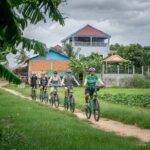
The highlight is the wooden boat trip to Kampong Phluk Floating Village. This is where you see daily life organized around water: homes, schools, and shops floating on bamboo rafts or boats. Your cruise also takes you through natural areas like mangroves, so you get a mix of human life and the lake’s living shoreline.
A boat trip is one of those experiences that sounds simple until you’re actually on the water and everything feels different from the roads you’ve been using. It’s slower, closer to real life, and it gives your week a softer rhythm after temple days.
One note for planning: this is an included excursion, but it’s still a weather-sensitive day. Hot sun plus water movement can feel intense. Bring sunscreen, and be ready for the fact that this day is more about observation than rushing to tick off another monument.
Siem Reap to Phnom Penh: travel day, then a lighter evening
Once the floating village excursion wraps, you return to Siem Reap for hotel check-out and then transfer to Phnom Penh. The timing is described as a private overland journey, so you’re not dealing with lines or chaotic coordination. When you arrive, you check into your hotel and have the rest of the day at leisure.
That “leisure” block is important. Phnom Penh day four is full, and it includes two of Cambodia’s most serious sites. If you spend your evening walking a little and getting food you can handle, day four feels more manageable.
Phnom Penh full day: palace grandeur and the weight of Tuol Sleng and Choeung Ek
Phnom Penh on this tour is not a sightseeing loop. It’s structured like a story: power and symbolism first, then the reality of state violence, then a practical look at everyday city life.
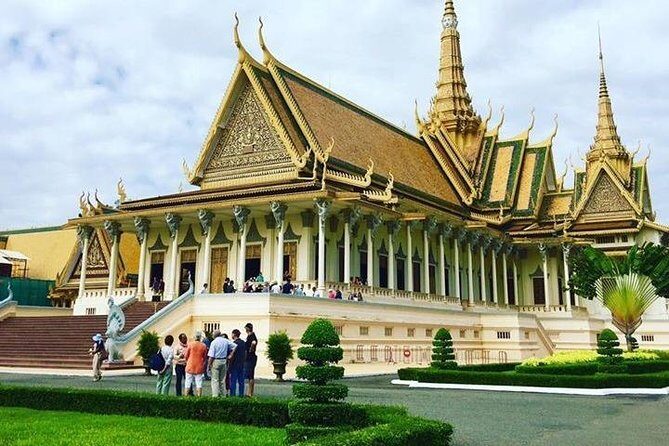
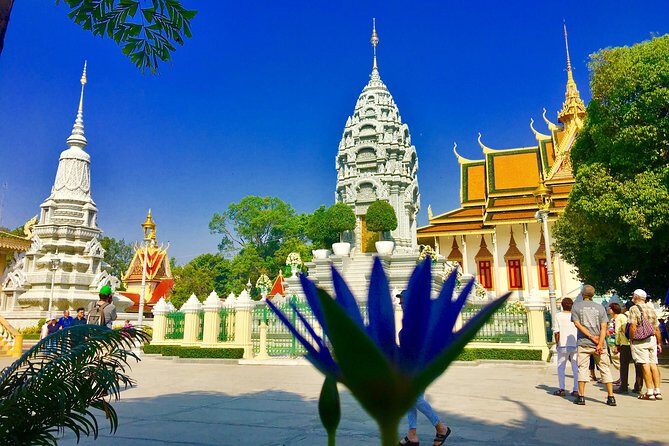
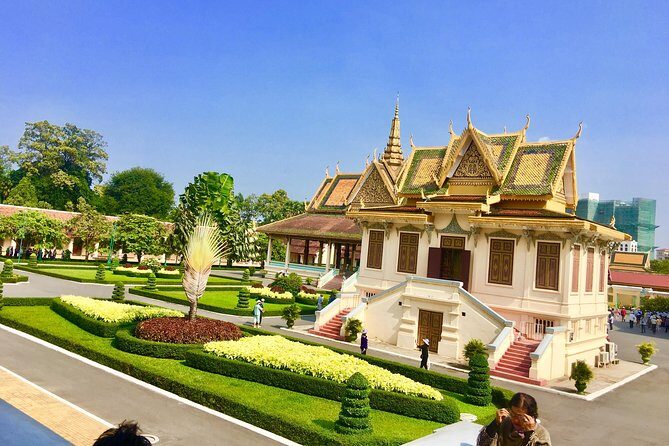
You begin at the Royal Palace, where Cambodia’s official ceremonial spaces show how monarchy and national identity are staged. Next is the Silver Pagoda, right beside it, including garden space and a pagoda interior you’ll be able to see as part of the guided route.
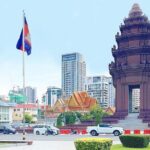
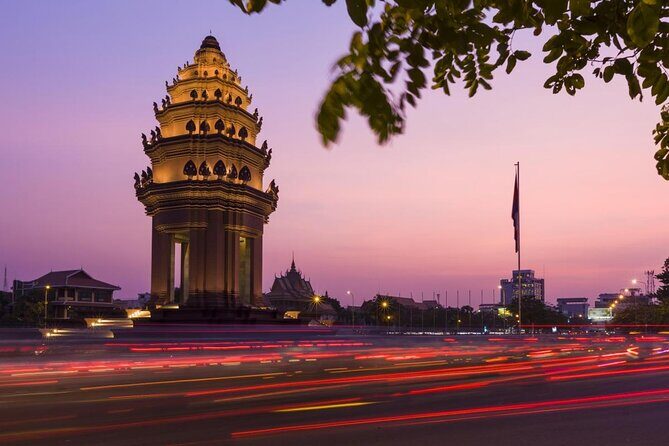
From there, you move to spiritual landmarks like Wat Phnom and Wat Ounalom, then you shift into monuments and commemoration with the Independence Monument and the Norodom Sihanouk Memorial statue. These stops help you understand Phnom Penh as a city of symbols, not just buildings.
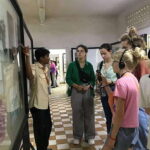
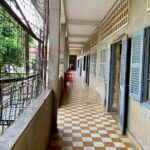
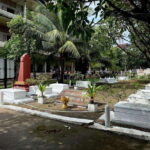
Then comes the part you should approach with care: Tuol Sleng Genocide Museum (Security Prison 21, S-21). This is presented as a former secondary school used as a prison, and the visit is guided and timed at about two hours. After that, you go to Choeung Ek Genocidal Center, described as a former orchard and mass grave site about 17 kilometers from Phnom Penh, with victims killed between 1975 and 1979.
If you’re sensitive to heavy material, build in a mental buffer. Bring tissues if you think you’ll need them. Give yourself permission to pause or step out briefly if your head starts spinning. A good private guide can help you make sense of what you’re seeing without turning it into trivia.
To end on a more ordinary note, you visit Central Market, a market constructed in 1937 in a domed shape with four arms branching into halls. It’s a practical contrast to the earlier sites—less about national trauma, more about how people shop and live day to day.
Sihanoukville reset: beach time built into the schedule
After Phnom Penh’s full day, this itinerary does something smart: it shifts to coast time with breathing room. Day five includes a morning free period, then you transfer to Sihanoukville and check into your beachfront or city hotel. The rest of the day is leisure—pool, beach, and general hanging out.
Day six is even more open, with a full day you can spend at your own pace in Sihanoukville Province. The plan explicitly mentions options like island trips or snorkeling, but it doesn’t force you into a set activity list. That’s a big part of the value here: you’re not paying for the tour and then being told what to do with every hour.
I also like that day seven keeps the ending simple. You get breakfast, some final beach time, then you’re taken to Techo International Airport (KTI) for your onward flight, using a private driver without a guide.
The downside of beach flexibility is obvious: it can be hard to choose. If you want to do island or water activities, you’ll likely need to coordinate locally once you’re there. If you’d rather keep it low-effort, you can do that too—Sihanoukville’s included schedule gives you room to just relax.
Price and value: what you’re really paying for
At $1,282.47 per person, this isn’t a budget “hop-on-hop-off” style deal. You’re paying for a private route that covers major regions: Siem Reap and Angkor, Tonle Sap, Phnom Penh, and then the coast.
Here’s what the inclusion list covers, which helps explain the price:
- Accommodation for the trip, with breakfast included with your stay
- Transport throughout the tour
- Entrance fees for the listed sights
- An English-speaking tour guide
- The boat trip for Tonle Sap and the floating village
That combination adds up quickly if you price it separately. Angkor entrance fees, guided time across multiple temples, internal transfers, and the floating village boat excursion would each be a headache to coordinate on your own. With this tour, you’re buying the structure—someone else handles the sequencing and timing.
The main “cost” not included is tips for your guide and driver. For many people, that’s the only extra they need to budget for beyond meals and personal spending.
Who this tour suits best (and who should think twice)
This is a great fit if you want:
- Private, guided sightseeing with an English-speaking guide
- A clear plan that handles transportation between major regions
- The mix of Angkor and Phnom Penh, followed by real downtime on the coast
- Included entrance fees and a included boat trip
It may not be ideal if you hate long days. Day two in Angkor is intense, and day four in Phnom Penh includes emotionally heavy stops. Also, if you only want a couple of major sights and then would rather freelance, a private route can feel like you’re paying for structure you don’t fully use.
Should you book this Cambodia private tour?
If you want one trip that hits the big Cambodia beats—Angkor temples, Tonle Sap floating life, Phnom Penh’s key sites, and Sihanoukville beach time—this tour is easy to justify. The private transport and included entrance fees reduce the usual stress costs of doing it independently.
I’d book it if you’re okay with busy days and respectful visits, especially in Phnom Penh. If that sounds like the right trade, you’ll likely leave with more than photos—you’ll have a real sense of how Cambodia’s past and present sit side by side, and then how quickly the pace can soften on the water and the beach.
FAQ
What is the starting point and where do I fly out?
The tour starts at Siem Reap Angkor International Airport and ends at Techo International Airport (KTI).
How long is the Cambodia private tour?
It’s listed as 7 days (approx.).
Is this a private tour or shared group?
It’s private. Only your group participates.
What’s included in the price?
The package includes accommodation, transport, entrance fees, an English-speaking tour guide, a boat trip for Tonle Sap and the floating village, and breakfast (6).
Are entrance tickets for attractions included?
Yes. Entrance fees are included for the listed sights.
Is the floating village experience included?
Yes. You get a boat trip on Tonle Sap, including Kampong Phluk Floating Village.
What Phnom Penh sights does the tour cover?
It includes the Royal Palace, Silver Pagoda, Wat Phnom, Wat Ounalom, Independence Monument, the Norodom Sihanouk Memorial statue, Tuol Sleng Genocide Museum, Choeung Ek Genocidal Center, and Central Market.
What will I do in Sihanoukville?
You’ll have leisure time with options like island trips, snorkeling, or relaxing by the beach, plus a full free day in Sihanoukville.
What hotel categories are offered?
You can choose 3-star, 4-star, or 5-star hotels (with daily breakfast included).
Are tips included?
No. Tips for the tour guide and driver are not included.
What is the cancellation policy?
You can cancel up to 6 days in advance for a full refund. Cancel 2–6 days before for a 50% refund, and within 2 days there is no refund.