REVIEW · PHNOM PENH
Udong Old Capital Tour
Book on Viator →Operated by cambodia tour minivan · Bookable on Viator
Udong feels like Cambodia on a hillside. This private tour covers the key royal tombs and pagodas on Phnom Udong, with a tight sequence of stupas and viewpoints that make the old capital feel real instead of distant. I love how the stops are built into a clear walking route (short visits, then on to the next landmark), so you keep moving without feeling rushed in every single spot.
Two more reasons I like this experience: the admission fees are covered for the main sites, and you get a guide who can connect what you’re seeing to the people behind it. The main drawback to plan for is heat—expect sun and uphill walking, and pacing may feel more active than you’re imagining when you book.
In This Review
- Key highlights worth knowing
- Udong Old Capital Tour: why Phnom Udong still matters
- Price and what you actually get for $130 per group
- Pickup, timing, and the heat reality check (5–6 hours total)
- Temple-by-temple route: the stupas that define Udong
- Stop 1: Elephant samporn stupas (Preah Cheychetha 2)
- Stop 2: Preah Ang Duong stupas (built in 1891)
- Stop 3: Preah Sisovath stupa / Four Face Prom
- The common thread across Stops 1–3
- Preah Vihea Adthaross and the monastery pause on Udong hill
- Stop 4: Preah Vihea Adthaross (around 30 minutes)
- Stop 5: Vipassana Dhurak Buddhist monastery (about 30 minutes)
- Stop 6: Preah Sakyamuni chedi and the sculpture talks (around 45 minutes)
- The walk down and the Khmer food store stop (30 minutes)
- Who this Udong tour is best for
- Should you book the Udong Old Capital Tour?
- FAQ
- How long is the Udong Old Capital Tour?
- Is pickup available from Phnom Penh?
- Is the tour private?
- What is the group size limit and price?
- What’s included in the price?
- Is food included?
- Do I need to buy tickets for the main sites?
- What if weather is poor?
Key highlights worth knowing
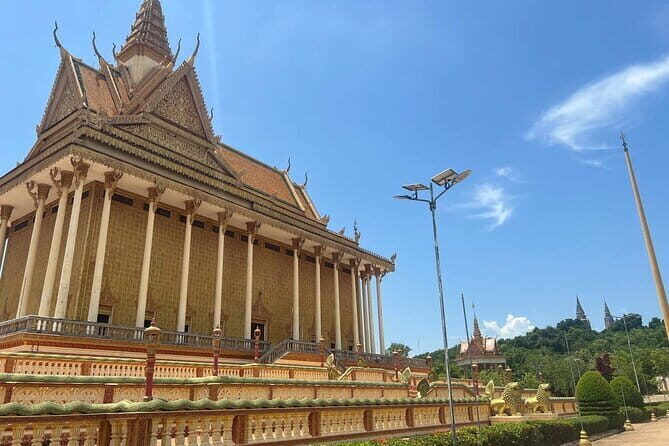
- Royal stupa stops with specific backstories from different reigns and burial purposes
- Free admissions included across multiple temples and monuments
- Pickup + private minivan for up to 6 in your group
- Cool water and soda are provided to help you handle the climb
- A monastery stop on the slopes adds a calmer, spiritual break from sightseeing
Udong Old Capital Tour: why Phnom Udong still matters
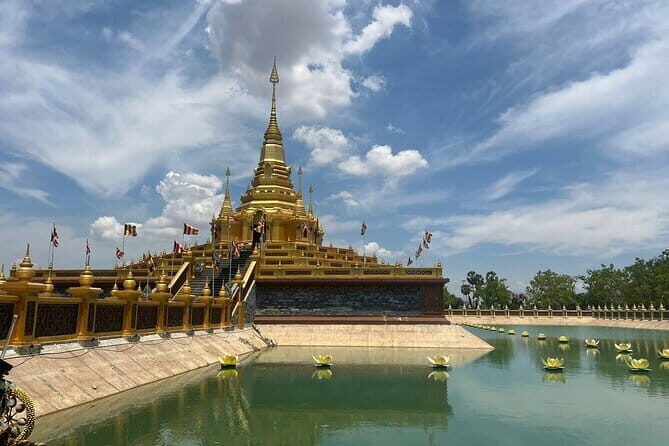
Udong is one of those places where the history is visible in layers. Up on Phnom Udong hill, you’re walking through a mix of royal burial sites, religious structures, and monuments that locals still treat as meaningful. The views over the surrounding countryside are part of the point too; they help you understand how this hill capital positioned power and belief.
What makes this tour appealing is that it doesn’t try to cover everything at Udong. Instead, you hit the biggest named monuments in a sensible sequence. That means you spend your time looking at what you came for: stupas with clear identities and a religious complex that feels active, not just archaeological.
You’ll also get a sense of how Buddhism and monarchy intertwined here. Many of the highlights are royal burial-related—built by rulers or for specific family remains—so the “why” behind each structure is right there as you visit.
If you're still narrowing it down, here are other tours in Phnom Penh we've reviewed.
Price and what you actually get for $130 per group
The price is $130.00 per group for up to 6 people, with private guiding and transport. For a small group, this can be good value because you’re not paying per person just to get to Udong—you’re paying to have a minivan, a guide, and site entries handled in one plan.
This is also the kind of tour where the inclusions matter. You get:
- a tour guide
- cool water and soda
- admission coverage for the included stops
Food is not included, so you’ll want to plan for snacks or a simple meal on your own after the tour. If you’ve ever done day trips where the “cheap” price turns into expensive add-ons at each gate, this setup feels cleaner.
Because admission is covered at the main stops listed, your money mostly goes toward getting there, having a guide, and keeping the schedule tight. If you’re traveling solo, it’s still workable, but the real “value sweet spot” is when you can fill a few seats.
Pickup, timing, and the heat reality check (5–6 hours total)
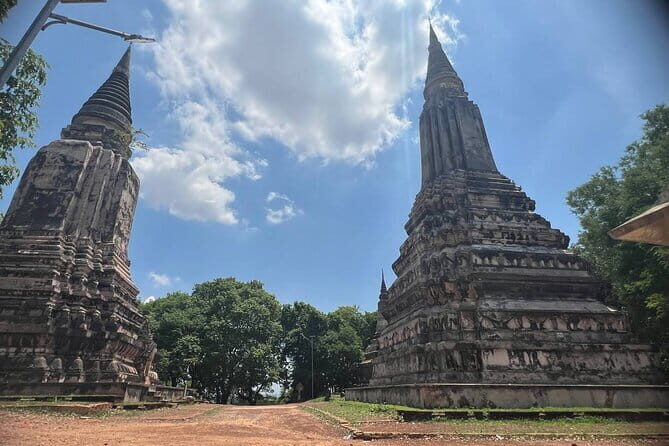
This tour runs about 5 to 6 hours, and that time includes travel. The itinerary is built from short visits—often around 15 minutes at a stupa—then a few longer segments (like 30–45 minutes) for the more complex religious areas.
Here’s the practical challenge: Udong is sunny, and the day can feel hotter than you expect. A lot of the “work” is walking on uneven ground up and across the hill. Even if each stop is short, the total effort adds up.
Bring what helps you last outdoors:
- sun protection (hat, sunglasses, sunscreen)
- comfortable shoes with grip
- water beyond what’s provided, if you run hot
One helpful note from how this tour can play out: if someone in your group needs to cool down, there can be flexibility with staying on the minivan while others continue climbing. Don’t count on it automatically, but it’s worth keeping in mind if you have mixed energy levels.
Temple-by-temple route: the stupas that define Udong

This tour is essentially a guided circuit of major Udong monuments. You’ll start with elephant-themed stupas and move through royal burial structures tied to specific reigns. The short time blocks work because the guide can keep you oriented—when you arrive, you don’t have to guess what you’re looking at.
Stop 1: Elephant samporn stupas (Preah Cheychetha 2)
Your first stop focuses on elephant samporn stupas—named as Preah Cheychetha 2. This complex was built in 1623 for the burial of the person’s father, whose reign is listed as 1600–1618.
Even with a 15-minute visit, the best way to enjoy this is to pause and look closely at the stupa forms rather than treating it like a quick photo stop. Elephant-themed stupas usually hint at how symbolism and identity got built into religious architecture. Let your guide point out the details that explain the naming.
A small consideration: in heat, early stops can feel like a blur because you’re still climbing and settling into the day. I’d aim to see this one with your full attention, not just your camera.

Stop 2: Preah Ang Duong stupas (built in 1891)
Next you visit the Preah Ang Duong stupas, said to have been built in 1891 by Preah Norodom. This stupa area is connected to Preah Ang Duong’s reign, listed as 1848–1860.
This stop is valuable because it keeps Udong’s story anchored in recognizable leadership timelines. You’re not just wandering through old structures—you’re stepping through a sequence of royal eras and their burial choices.
Again, it’s a 15-minute visit. That’s enough time for orientation and appreciation, but not enough time to linger deeply if you’re a slow, detail-first visitor. If you like to read inscriptions or study carvings for longer periods, you’ll want to treat this tour as the overview, then return later for extra time on your favorite spot.
Stop 3: Preah Sisovath stupa / Four Face Prom
Then comes a very “Udong by name” highlight: the Preah Sisovath stupa, also referred to as the Four Face Prom. It was built in 1927 by Preah Sisovath for the burial of his father’s bone.
The four-face idea is the hook here. When a stupa or prom is described as four-faced, you can usually expect symbolism built into the design—different directions, different viewpoints, or a sense of presence from multiple angles. Even if your stop is only about 15 minutes, this is one where your brain can catch up quickly because the feature is obvious.
Practical tip: if you’re visiting in the hottest part of the day, position yourself for shade whenever possible. These kinds of monuments don’t give much cover, so your comfort matters.
The common thread across Stops 1–3
What ties these early stops together is clarity. Each one has a name, a builder, and a date you can keep in your head. That makes the hour feel more structured than typical “we’ll stop at some temples” tours.
You’ll also notice that the tour shifts from identifying royal burial structures to moving toward larger complex areas where the symbolism becomes more communal and religious.
Preah Vihea Adthaross and the monastery pause on Udong hill
After the first set of stupas, the tour shifts to a bigger, more layered segment. This is where the walking can feel more like a hill day and less like a checklist.
Stop 4: Preah Vihea Adthaross (around 30 minutes)
Your time on Preah Vihea Adthaross is listed at about 30 minutes. The information you get is part religious, part historical: it was rebuilt by Preah Norodom and reopened by Preah Sisovath in 1911.
Then the story turns darker. During the Khmer Rouge period (1975–1977), the site was used as a soldiers’ base. That’s heavy context, and it matters because it reminds you that sacred places can also be caught in violent eras.
This stop is included with admission, and it’s worth treating as more than a scenery break. If you want your day trip to feel meaningful (not just scenic), this is one of the best places to listen closely.
Heat note: this is a good time to slow your pace and drink water. The tour includes cool water and soda, but you’ll still feel the sun when you move between areas.
Stop 5: Vipassana Dhurak Buddhist monastery (about 30 minutes)
Next you visit Vipassana Dhurak, described as a major Buddhist monastery on the slopes of Udong. The emphasis here is on a calmer, local way of learning Buddhism and experiencing Cambodian culture.
This stop is a strong “reset” after the more monument-heavy parts of the hill. Monasteries tend to help you lower your volume—visually and mentally. You’ll likely feel the shift in atmosphere as soon as you arrive.
Practical thought: keep expectations realistic for a monastery stop. This isn’t a theme park. Wear respectful clothing, keep your phone use quiet, and let the space set the pace.
Stop 6: Preah Sakyamuni chedi and the sculpture talks (around 45 minutes)
Your last major religious stop is Preah Sakyamuni chedi. The visit includes time to see sculptures and get explanations connected to Buddhism.
You’ll hear specific points, including that Buddha was born in 623 BCE (listed as before the Christian era). The guide also covers that Buddha taught the Dhama lesson, with reference to the south sculpture. The east and other sides are organized as teaching points, so you aren’t just looking at one monument—you’re following a set of visual explanations.
This is one of the best stops on the tour if you like learning. The architecture becomes a kind of lesson plan: different sides, different teaching themes, and a structure you can walk around.
Time is about 45 minutes, which is long enough to feel like you got something from it, not just passed through.
The walk down and the Khmer food store stop (30 minutes)
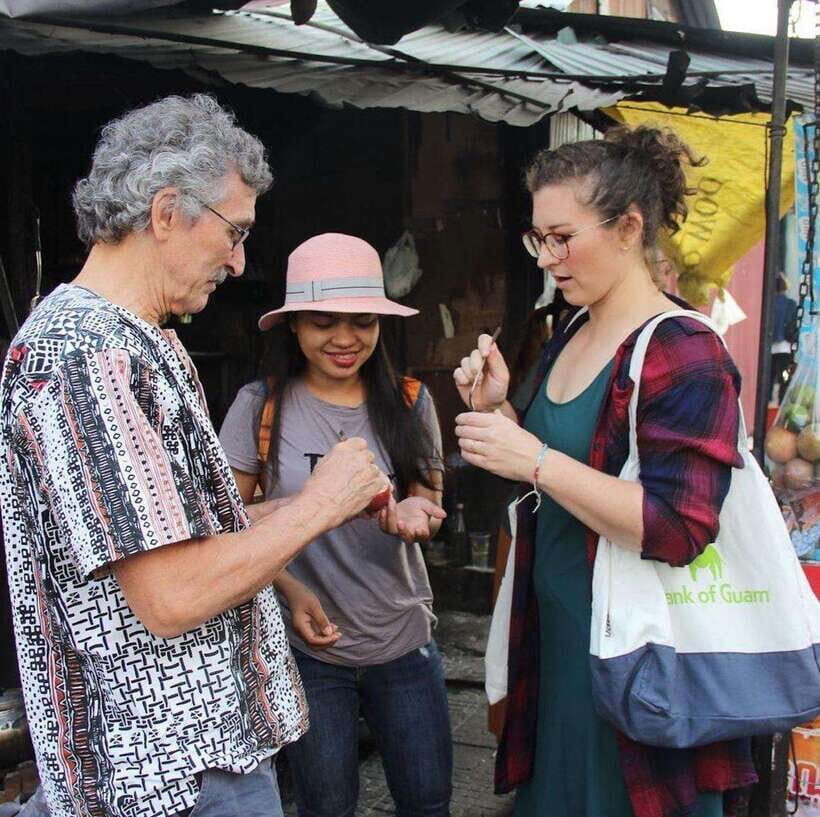
After the main monuments, you end with a walk down and a visit to a Khmer food store. This is scheduled for about 30 minutes.
This part can be surprisingly useful. If you skipped lunch, this is your chance to pick up something simple while still keeping the day’s flow. Even if you don’t buy much, it’s a good “local rhythm” moment before you head back.
Food is not included on the tour, so you’ll want to decide ahead of time if you’re bringing snacks or planning to buy something at the end. Since you’re on a hill, you’ll likely appreciate having a plan rather than hunting for something after.
Who this Udong tour is best for
This tour fits best for people who want a focused highlights route without spending the whole day figuring out what matters.
You’ll probably love it if:
- you enjoy structured sightseeing with short, guided stops
- you want royal tomb context (not just generic temples)
- you like mixing major monuments with a monastery visit
- you’re traveling with a small group and want private transport
You might want to think twice if:
- you’re extremely heat-sensitive or have limited tolerance for uphill walking
- you need long breaks every 10–15 minutes
The private setup helps. Up to 6 people means you can move at a pace that works for your group, especially if someone needs a short rest or wants to take photos slower.
Should you book the Udong Old Capital Tour?
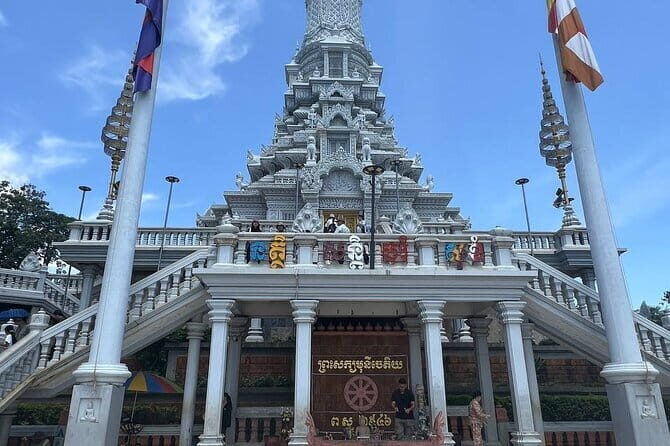
Yes, book this if you’re aiming for a high-value Udong day: private minivan + guide + admission support + water and soda, wrapped into a 5–6 hour plan that hits the most significant named monuments. The “stupa timeline” approach makes it easier to remember what you saw and why it mattered.
Skip it or adjust expectations if you think you’ll want lots of quiet time in each place. The stops are designed to be efficient—great for an overview, less ideal if you’re the kind of visitor who wants to sit and study carvings for hours.
If you’re going, go prepared for sun and walking. With good shoes and a little heat strategy, this is one of the more satisfying ways to experience Phnom Udong without turning your day into a long, unstructured slog.
FAQ
How long is the Udong Old Capital Tour?
The tour lasts about 5 to 6 hours, including travel time.
Is pickup available from Phnom Penh?
Yes, pickup is offered.
Is the tour private?
Yes. It’s a private tour/activity, and only your group participates.
What is the group size limit and price?
It costs $130 per group for up to 6 people.
What’s included in the price?
A tour guide, cool water, soda, and admission are included.
Is food included?
No, food is not included.
Do I need to buy tickets for the main sites?
Admission is included for the stops listed, and the itinerary notes free admission for several segments.
What if weather is poor?
This experience requires good weather. If it’s canceled due to poor weather, you’ll be offered a different date or a full refund.