REVIEW · PHNOM PENH
Phnom Penh’s Hands-On Khmer Cooking Class in the Countryside
Book on GetYourGuide →Operated by Meet The Province · Bookable on GetYourGuide
A ferry at 4 PM sets the tone. This Hands-On Khmer cooking class takes you out of the city and into real village life, with Sophors and her family guiding you from market ingredients to a shared meal.
I especially love the market-to-pan flow—seeing how ingredients are picked in a village market, then using them right away in class. I also like the focus on hands-on cooking: you’re not just watching someone else cook.
One thing to weigh: the schedule involves transport by ferry and tuk-tuk plus some walking around a market/village area, so it’s not suitable if you have back or heart problems.
In This Review
- Key things to know before you go
- Ferry to Areyksat at 4 PM: the start that feels like travel
- Entering the village market: learning ingredients like a local
- Chicken Amok cooking: where the class turns hands-on
- The countryside rhythm: meeting people, not just scenery
- The organic garden tour: included, but timing can be tricky
- Meal time: you eat what you cook (and it’s usually the point)
- Price and logistics: $35 for four hours that include transport and guidance
- What to bring (and what to wear) for comfort
- Who should book this class in Phnom Penh?
- The decision: should you book Hands-On Khmer Cooking in the countryside?
- FAQ
- How much does the cooking class cost?
- How long is the experience?
- Where does the experience start?
- Do I need to buy the ferry ticket?
- What is included in the tour?
- Who will guide the cooking class?
- How many people are in the group?
- What dishes will I cook?
- What should I bring?
- Is hotel pickup available?
Key things to know before you go
- Small group (max 10): more time with your English guide.
- Ferry start from Phnom Penh: a 15-minute river crossing, departing at 4:00 PM.
- Market shopping included: you learn how to choose produce and buy ingredients.
- Chicken Amok is the star: you’ll make it at the start of your cooking session.
- Organic garden tour is included: but in at least one recent case, renovations affected it.
- English-speaking host and family connection: this is the heart of the experience.
Ferry to Areyksat at 4 PM: the start that feels like travel
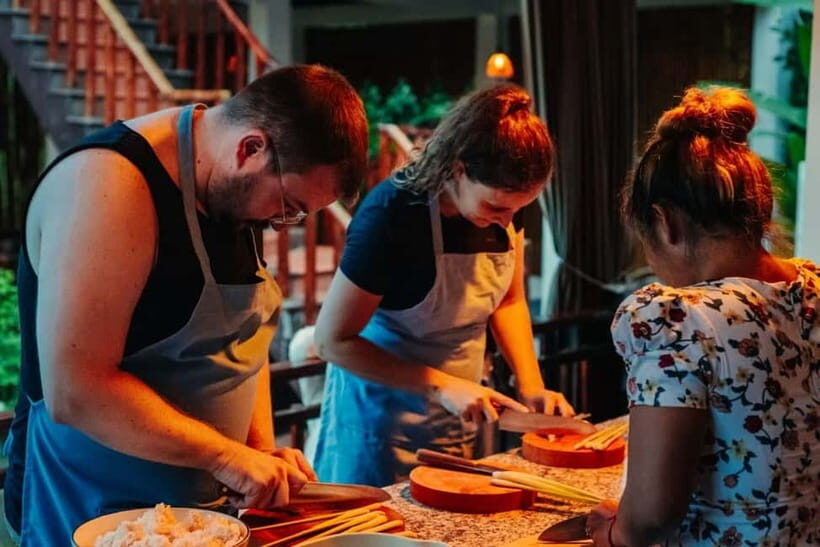
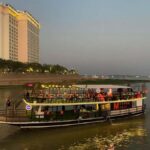
This class doesn’t begin with a hotel pick-up and a clipboard. It begins the way local life often does: with you getting yourself to a ferry dock and riding across the river together. You take the public ferry from Phnom Penh Ferry Station (near NagaWorld Casino) to Areyksat at 4:00 PM. The ferry runs about every 5 minutes, and the crossing takes roughly 15 minutes.
Once you reach Areyksat Ferry Dock, the team meets you on the other side to start the day. After that, you’ll hop into a tuk-tuk to reach the meeting point (the location is listed as Meet The Province). The transport is rated extremely well—100% of participants gave it a perfect score.
Why this matters for value: you’re paying $35, but you’re also getting part of the “how Cambodia works” lesson built into the experience. It’s not just a workshop. It’s a route out into the countryside.
Other Oudong Mountain and countryside tours in Phnom Penh


Entering the village market: learning ingredients like a local
Your first real stop is the market, and it’s designed to keep you out of tourist-only lanes. You’ll go with your guide to a village market that isn’t aimed at visitors. In this market setting, you don’t just browse—you learn how to pick ingredients.
Your guide explains what to look for when choosing local produce. Think of it as practical cooking education: fresher herbs, better-looking vegetables, and the kind of ingredient quality that actually changes the taste of Khmer food. You’ll also buy ingredients for what you cook.
This part is especially useful because Cambodia’s cuisine depends heavily on fresh aromatics and balanced flavors. If you only cook from a recipe list, you miss why certain ingredients matter. But if you’ve just watched how your guide selects them, you’ll understand the logic behind the dish before you even start cooking.
And because the group is small, you can ask questions instead of shouting over a crowd.
Chicken Amok cooking: where the class turns hands-on
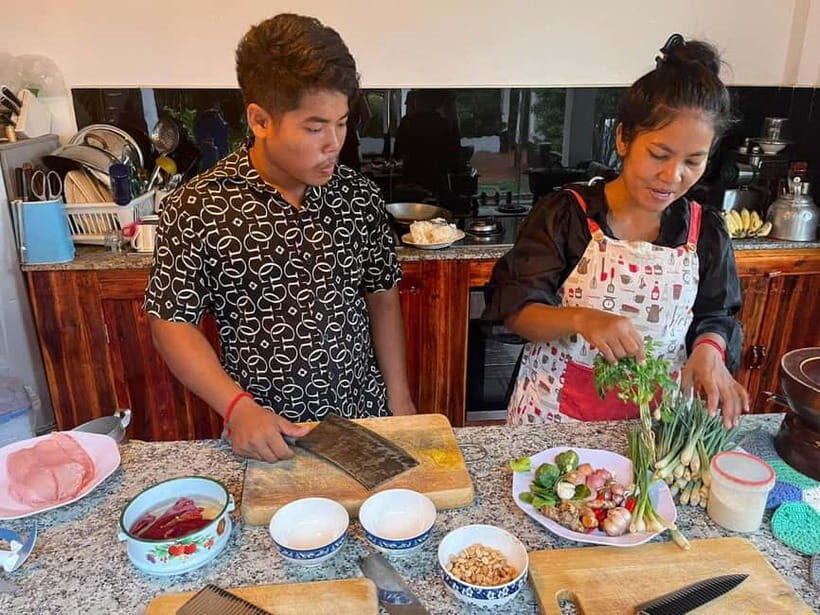
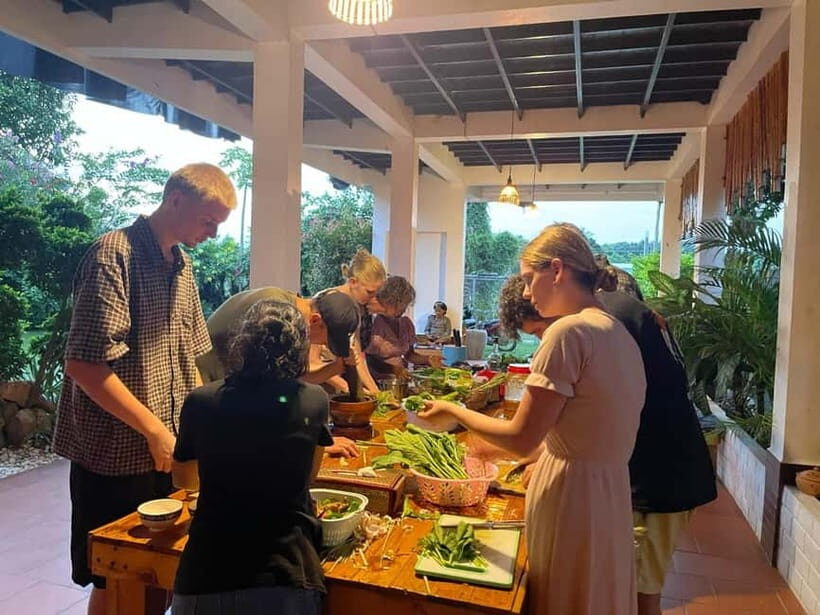
Back at the meeting point, the cooking session kicks off with Chicken Amok, a signature Khmer dish. This is the anchor dish for the class, and it sets expectations: you’ll be doing real prep, not just tasting.
Even if you’ve cooked before, Khmer cooking can feel different. Many of the key flavors come from how herbs, spices, and sauces are combined—often with a careful touch rather than brute force. In class, your guide walks you through the process as you work at your station.
You’ll also learn to cook two more Khmer dishes. In actual menus from recent classes, people have ended up cooking dishes like an eggplant dish and a soup, then sitting down to a full meal. Dessert isn’t guaranteed in the official outline, but at least one recent group meal included a banana dessert. The safe expectation is this: you’ll cook three Khmer dishes, then eat what you made.
Here’s why I think this is one of the strongest values in Phnom Penh: cooking classes are often hit-or-miss when they spend most of the time talking. This one builds time around doing—market work, ingredient handling, dish prep, and then eating together.
The countryside rhythm: meeting people, not just scenery
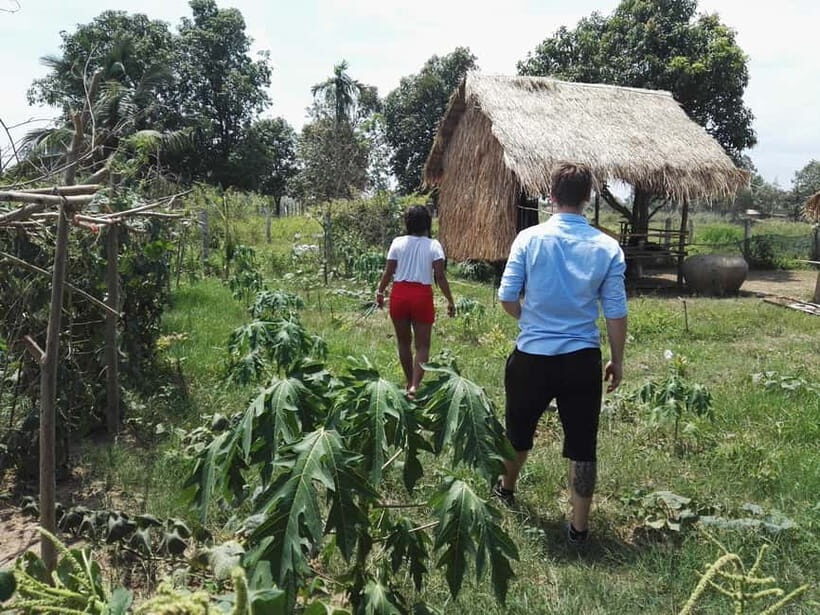
The countryside portion isn’t just decor. You’re guided into a quieter slice of daily life, where food prep and local traditions sit close to home routines. Your guide talks about cuisine and traditions as you cook, which helps you place what you’re making into context.
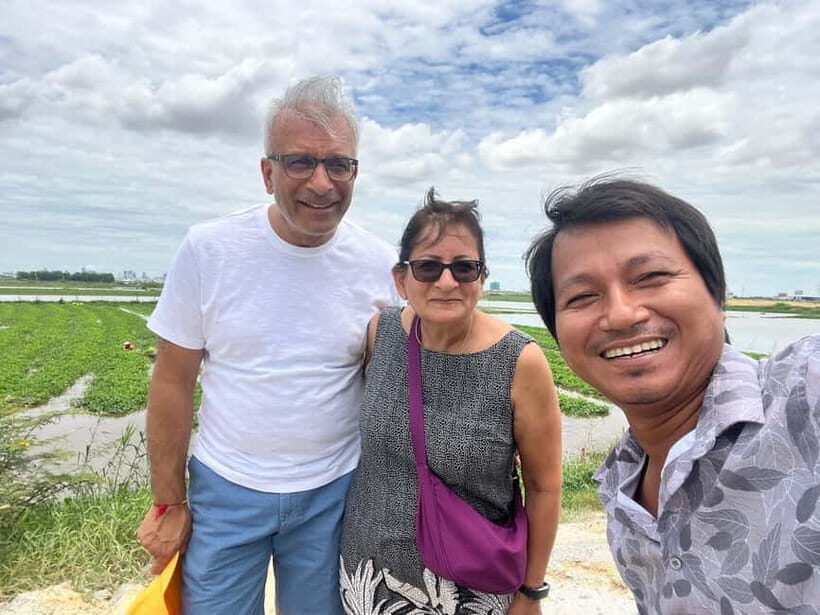
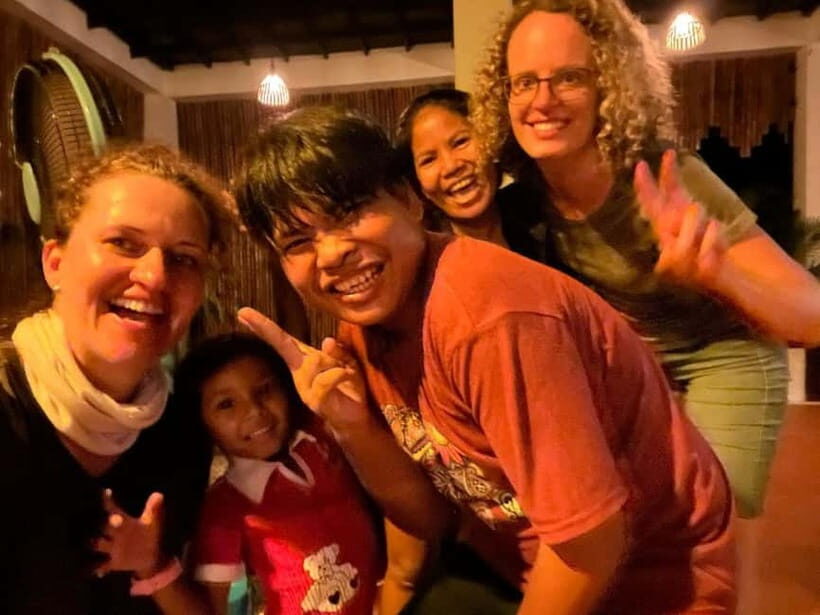
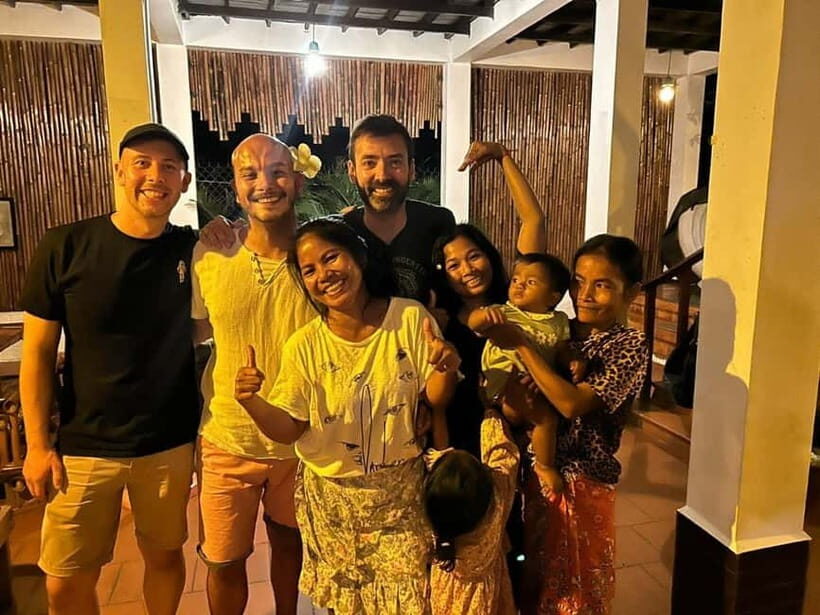
You also spend time in an environment that feels more personal than staged. In recent experiences, host Sophors stood out for how welcoming she and her family are—so welcoming that the class can feel more like being invited into a home than joining a formal activity.
That family connection is a big reason people rate this highly. When a host treats your group like friends—answering questions, adjusting explanations, and sharing small moments—it changes the entire tone. You leave with more than recipes. You leave with a human memory.
The organic garden tour: included, but timing can be tricky
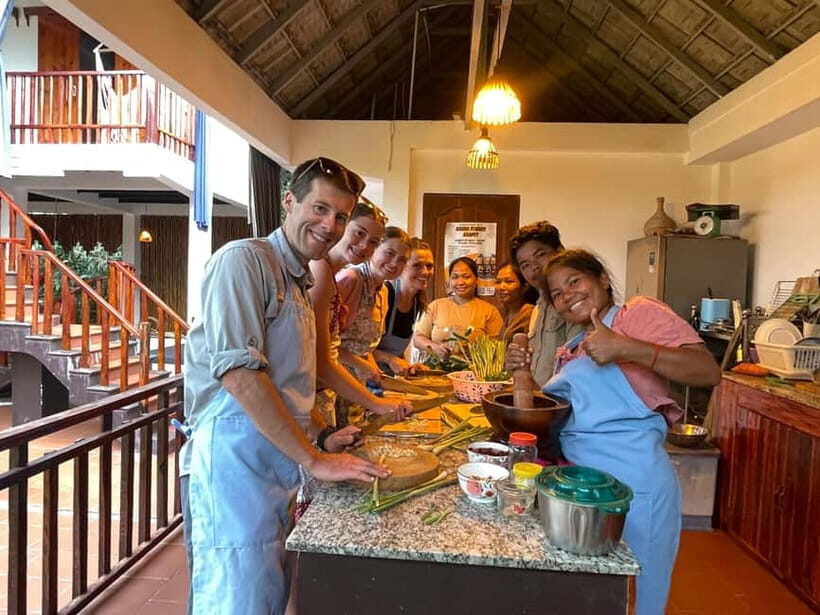
The class includes an organic garden tour, which is a great match for a cooking class. Seeing plants grow (or understanding how they’re used) makes it easier to connect herbs and vegetables to the flavors in your dishes.
One careful note: in at least one recent case, the garden visit didn’t happen due to renovations. That doesn’t mean it’s always an issue, but it does mean you should hold a flexible mindset.
If the garden visit is affected, you’ll still be doing the market and cooking parts (those are central), but you might spend less time on that farm-side ingredient context. If getting maximum “plant-to-plate” context is your top goal, it’s worth asking the provider beforehand about garden access on your specific date.
Other Khmer cooking classes in Phnom Penh

Meal time: you eat what you cook (and it’s usually the point)
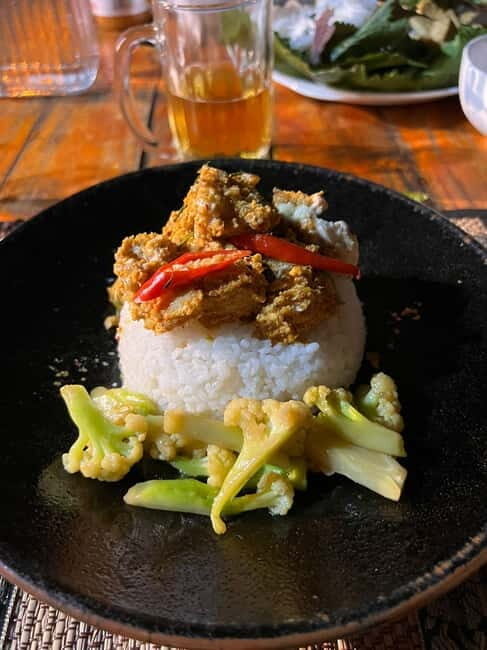
At the end, you sit down and enjoy the meal you cooked. This is not a quick bite. It’s the closing reward, where you can compare what you learned at the market with how it tastes once it’s in a Khmer dish.
Many people highlight the quality of the food—especially how satisfying Chicken Amok is after you’ve made it yourself. Part of that comes from fresh ingredients, and part comes from understanding the steps. When you know what you did and why, the food lands differently.
And because the group is limited to 10, this doesn’t feel like a factory meal. You’ll have time to enjoy the table moment.
Price and logistics: $35 for four hours that include transport and guidance
Let’s talk value the practical way.
Price: $35 per person
Duration: about 4 hours
Included: pick-up at Areyksat Ferry Station, local market tour, organic garden tour, hands-on cooking class, and bottled water
Not included: public ferry ticket ($0.15 per person) and hotel pickup
So you pay for the guide-led market experience and cooking time, plus the countryside component and bottled water. You also get the small-group structure and English support. The ferry ticket is minor in cost, but it’s still your responsibility.
Logistics matter here because there’s no hotel pick-up. You’ll need to get to Phnom Penh Ferry Station yourself before 4:00 PM. If you’re staying in the city and you like a plan that’s simple but not complicated, this works well. If you want everything handled start-to-finish, you may prefer another class with hotel collection.
A small practical tip: bring cash, because you’re expected to buy ingredients at the market.
What to bring (and what to wear) for comfort
You don’t need special clothes, but you do want to dress for comfort and movement. The basics:
- Comfortable clothes
- Camera
- Cash
Even though the class isn’t described as a hiking day, the activity includes market walking and village-area time. Comfortable shoes help more than you might think, especially if surfaces are uneven or you end up standing while ingredients get explained.
Who should book this class in Phnom Penh?
This is a great fit if you:
- Want Khmer cooking that starts with real ingredients from a market.
- Prefer a small group experience where you can ask questions.
- Like cultural learning tied directly to food, not just a lecture.
You may want to skip it if:
- You have back problems or heart problems. The schedule includes ferry and tuk-tuk transport plus physical movement around a market/village setting.
If you’re traveling solo, this class can be a social win without becoming chaotic, thanks to the small group size and the family-centered hospitality.
The decision: should you book Hands-On Khmer Cooking in the countryside?
If you’re deciding between yet another city cooking class and a countryside food experience, this one tilts clearly toward the second option. You get a ferry crossing, a market tour with ingredient selection lessons, a garden stop (when access allows), and then hands-on cooking with Chicken Amok as the centerpiece. Most importantly, the host experience—especially Sophors and her family—has a warm, personal tone that makes the food feel like the final chapter of a story, not just a product.
Book it if you want your Khmer cooking experience to include people, place, and process—and you’re okay handling your own ferry arrival. Pass if you need hotel pick-up or you can’t comfortably handle a few hours of movement.
If you go, show up a little early, bring cash, and bring curiosity. Your reward is a meal you helped make and a slice of countryside hospitality that doesn’t feel staged.
FAQ
How much does the cooking class cost?
The price is $35 per person.
How long is the experience?
It lasts about 4 hours.
Where does the experience start?
You’ll take a public ferry to Areyksat at 4:00 PM, then the team will meet you at Areyksat Ferry Dock. You then travel by tuk-tuk to the meeting point at Meet The Province.
Do I need to buy the ferry ticket?
Yes. The public ferry ticket is not included and costs $0.15 per person. The rest of the pick-up at Areyksat Ferry Station is included.
What is included in the tour?
Included are pick-up at Areyksat Ferry Station, a local market tour, an organic garden tour, a hands-on cooking class, and bottled water.
Who will guide the cooking class?
You’ll have a live English tour guide.
How many people are in the group?
It’s a small group limited to 10 participants.
What dishes will I cook?
You’ll cook three Khmer dishes, including Chicken Amok.
What should I bring?
Bring cash, comfortable clothes, and a camera.
Is hotel pickup available?
No. Hotel pickup is not included. You’ll need to get to the ferry station on your own.