REVIEW · PHNOM PENH
Remnants of a Khmer Rouge Era
Book on Viator →Operated by Asian Trails LTD · Bookable on Viator
Two prisons in one half-day can hit hard. I like that the tour connects Tuol Sleng S21 with Cheung Ek, so you understand the chain of events in the Khmer Rouge system. I also like the hotel pickup and entrance fees bundled in, which keeps this from turning into a scavenger hunt.
Go in ready for emotion and rules. The dress code is real and strict, and entry can be refused if you don’t dress properly. If you’re traveling with kids under 12, this isn’t a great match.
In This Review
- Key things I’d bank on before you go
- A half-day that traces survival to execution
- Getting into Tuol Sleng Genocide Museum (S21)
- What Cheung Ek Killing Fields shows you
- How a guide turns facts into a story
- Time, value, and how the 4 hours add up
- Dress code, camera care, and emotional prep
- Who this tour fits best
- Should you book the Tuol Sleng and Cheung Ek tour?
- FAQ
- How long is the tour?
- Is hotel pickup included?
- What’s included in the price?
- Do I need to pay for entrance fees?
- Is there a dress code?
- Is this tour suitable for children?
- What if I cancel?
Key things I’d bank on before you go
- You’ll see the full S21-to-Killing-Fields workflow rather than two random stops.
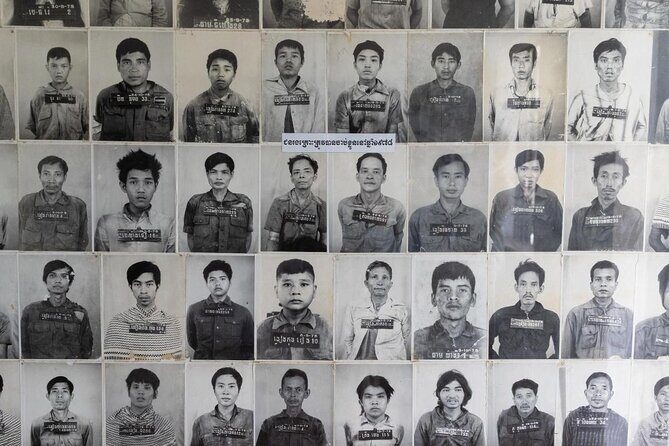
- Tuol Sleng gets about 2 hours, with cells and exhibits that explain how detention worked.
- Cheung Ek also gets about 2 hours, focused on memorials over excavated mass graves.
- A guided thread matters here; one guide named Sony was highlighted as friendly and careful with context.
- It’s not just a museum visit—it’s a quiet, heavy walk through memorial space.
- Modest dress is enforced, covering shoulders and going below the knees.
A half-day that traces survival to execution
This tour is built for one goal: to help you understand Cambodia’s darkest chapter in a way that feels connected, not fragmented. You start in Phnom Penh at the former S-21 prison (now Tuol Sleng), then move out to Cheung Ek, the best-known killing field. Taken together, it’s a clear path—from interrogation and detention to transfer and killing.
I like the structure because it prevents a common mistake. If you visit only one site, you can miss the logic of the system. Here, you get the cause-and-effect chain: prisoners were processed at S21 and then moved to killing fields, where they were killed. That connection is what gives the day its weight.
One note for your expectations: this is not light sightseeing. You’ll be walking through exhibits and memorials tied to torture, executions, and mass graves. It can feel like your brain needs time to catch up.
If you're still narrowing it down, here are other tours in Phnom Penh we've reviewed.
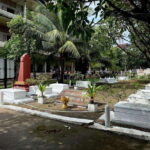
Getting into Tuol Sleng Genocide Museum (S21)
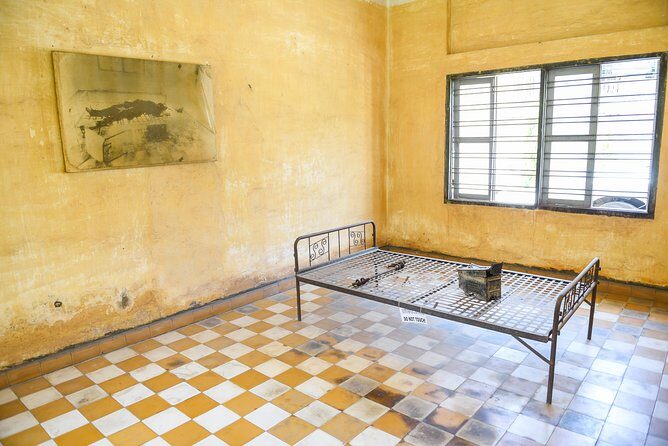
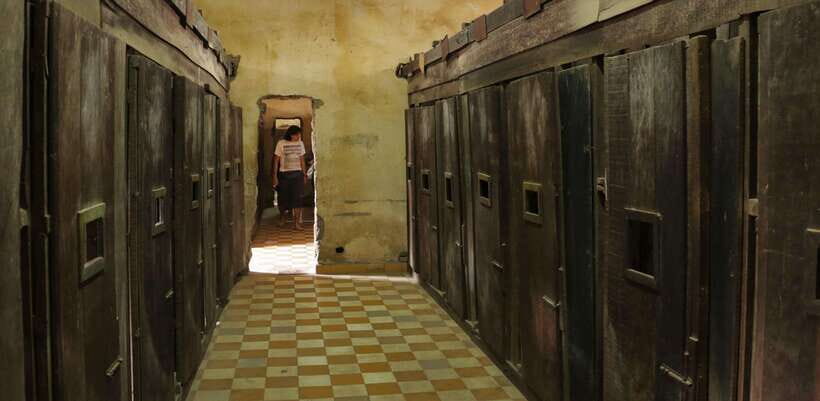
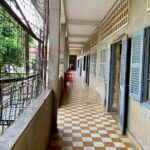
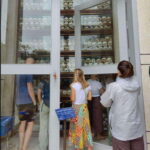
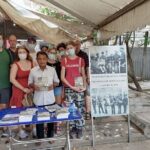
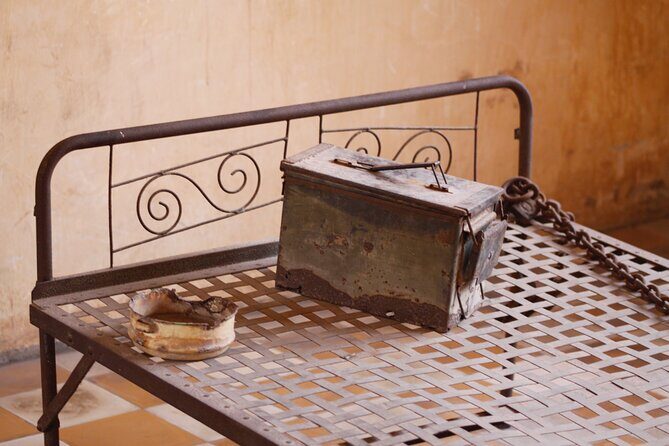
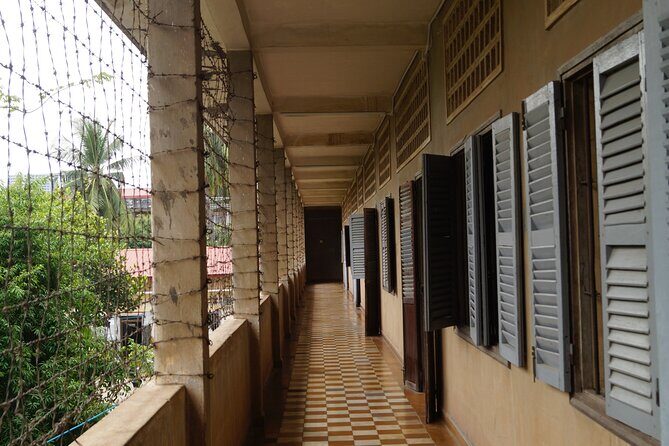
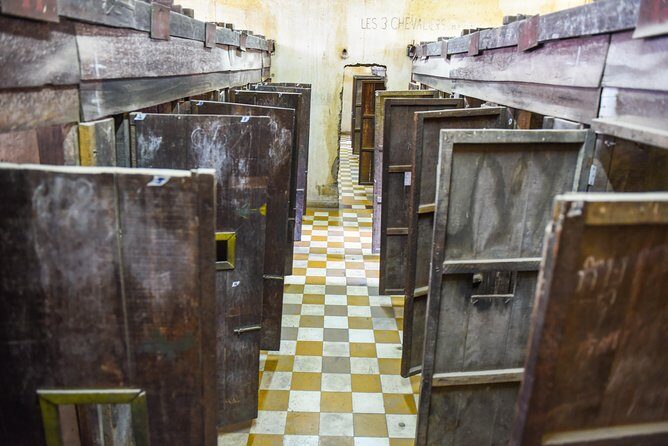
Tuol Sleng Genocide Museum is a former high school (Tuol Svay Pre School) that the Khmer Rouge converted into a detention center known as S-21. The tour gives you the essential context of Pol Pot and the Khmer Rouge regime, then walks you through what the prison site still shows: classrooms turned into crude cells, and exhibits that connect those rooms to interrogation and torture.
Expect to spend about 2 hours here, and don’t treat that as a casual timeframe. The site is designed to keep you close to evidence—photographs, paintings, and the layout of the detention rooms. The day is hardest when you notice the normal school setting, then realize what it became.
Practical tip: pace yourself. You don’t need to read every panel at full speed. If you try to consume it all, you’ll burn out early and feel worse later in the day. Give yourself small pauses, especially before moving from one room to the next.
Also, be prepared for the emotional swing. This isn’t a distant history lesson. You’re looking at the mechanisms of abuse—interrogation and torture designed to extract confessions—then seeing what happened after.
What Cheung Ek Killing Fields shows you
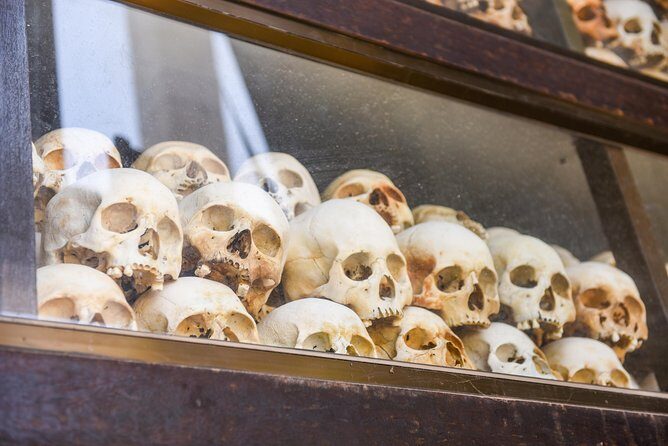
Cheung Ek Genocidal Center is located just outside Phnom Penh, so the tour gives you a reset from city traffic before the memorial walk begins. The site has layers. Before the Khmer Rouge used it as a killing field, it was a Chinese cemetery. During the Khmer Rouge years, it became one of the regime’s most known killing locations.
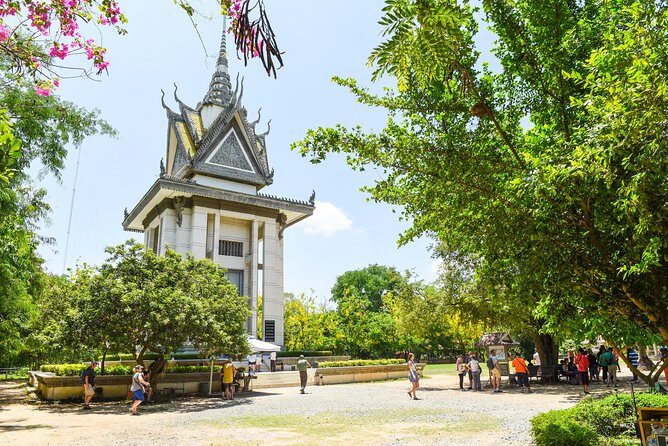
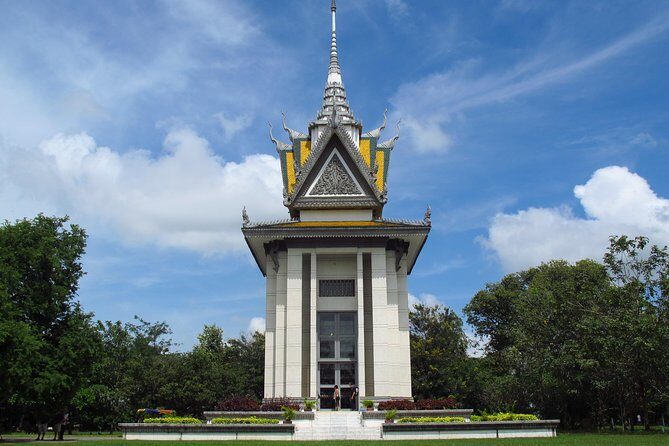
Here’s what you should plan on seeing: the memorial stupa and areas tied to mass graves. The tour description notes that the remains of almost 9,000 bodies have been excavated in this area, and the memorial stupa displays over 5,000 skulls, bones, and clothes of victims.
You’ll get about 2 hours at Cheung Ek. This portion tends to feel different from Tuol Sleng. Instead of rooms and displays, you’re dealing with open memorial space and a concentration of artifacts connected to human remains. The experience can feel quieter and more exposed.
If you’re taking photos, think practically. The tour notes warn that natural elements can be rough on electronics. Wrap and protect your camera or phone, and plan for the fact that Cheung Ek is outdoors.
How a guide turns facts into a story
This is one of those tours where “information” isn’t the whole point. The guide helps you connect what you’re seeing to what it meant in the Khmer Rouge system.
One review highlighted a guide named Sony as excellent—friendly, considerate, and sharing a lot of context. That kind of guiding matters because the sites can overwhelm you with detail. A good guide helps you focus on the essentials: why S21 existed, how prisoners were treated, and what happened after transfer to the killing fields.
You might wonder if you can skip the guide and use audio instead. One review mentioned questioning whether the dedicated guide was worth the extra money compared with audio options at both sites. If you’re the type who prefers reading at your own pace, audio may feel tempting.
My practical take: pay for the guide if you want a clear thread and thoughtful explanations while you’re standing in the rooms. Audio can help, but it can’t respond to your confusion in real time—like when you run into details that don’t instantly make sense.
Time, value, and how the 4 hours add up
The tour runs about 4 hours total, with roughly 2 hours at each stop. That’s a tight schedule, especially because Tuol Sleng and Cheung Ek both ask for mental focus. In a short day, you won’t get to wander freely. You’ll move through the sites as a sequence.
Now, the money question: it’s listed at $80.77 per person. For that price, you’re getting a professional English-speaking guide, transportation by car/mini-van/coach with a professional driver, and entrance and donation fees for the visits included. You also get round-trip transport tied to your location in Phnom Penh (more on that next).
Is it good value? Usually, yes, because the big costs here are not just tickets. It’s also guide time and getting you between sites without hassle. If you tried to DIY this with a guide of your own and a driver, you’d likely spend a similar amount once you add entrance fees and transport.
One logistics caution: the tour’s return transfers are included only for people staying inside Phnom Penh. Areas like Koh Dach, Tonle Bati, and Oudong, plus river and cruise terminals and Phnom Penh International Airport, are excluded and may require a supplement.

Dress code, camera care, and emotional prep
This is the part I’d take most seriously before booking. Tuol Sleng has a strict dress code tied to respect for victims and the premises. You need modest clothing: shoulders covered and clothing that falls below the knees.
Avoid shirts with obscene and disrespectful prints and pictures, and also avoid brightly-coloured clothing. If your outfit doesn’t meet the rules, entry may be refused. I’d rather plan for a safe outfit than show up with something that could derail your day.
For cameras and phones: the tour notes say natural elements can damage electronics, so protect your devices. Wrap them, use protective covers, and don’t count on perfect conditions.
Emotionally, give yourself a buffer. This isn’t a stop you pair with another heavy activity right after. If you can, schedule the rest of your day for something quiet and low-effort.
Who this tour fits best
This tour fits best if you want a guided understanding of the Khmer Rouge’s system and you’re prepared for a very serious, moving experience. It’s also designed for people who appreciate structure: pickup, a driver, set time at each site, and explanations while you’re there.
It’s private in the sense that only your group participates, which can make it feel less crowded and more personal. You’ll still see a lot of the same evidence as everyone else, but the pacing with your guide can feel steadier.
It’s not recommended for families with children under 12. That doesn’t mean kids can’t be taught history responsibly—it means this specific content and setting may be too intense for that age group.
If you’re traveling solo or as a couple, you’ll likely appreciate the fixed route and minimal planning. If you’re the kind of traveler who likes to linger and wander, just remember the schedule is built around covering both sites in a half-day.
Should you book the Tuol Sleng and Cheung Ek tour?
I’d book this tour if your goal is understanding, not just checking boxes. The strongest reason is the pairing: Tuol Sleng shows the detention and interrogation side, and Cheung Ek shows the killing field side. You come away with the timeline and the system, not two disconnected visits.
I’d think twice if you’re sensitive to graphic, heavy subject matter, or if dress code compliance is an issue for you—because getting turned away is avoidable. And if you’re traveling with younger kids, I’d look for a different option that better fits their needs.
If you do book, plan a modest outfit in advance, protect your phone or camera, and be ready to slow down. This is one of those experiences where the value is in what you learn while you’re standing in the rooms and memorial space—then carrying that understanding with you long after you leave.
FAQ
How long is the tour?
It runs for about 4 hours total, including roughly 2 hours at Tuol Sleng and about 2 hours at Cheung Ek.
Is hotel pickup included?
Pickup is offered for customers staying in Phnom Penh (return transfers are included only for people staying in and inside Phnom Penh). If you’re outside those areas, pickup and drop-off aren’t included and supplements may apply.
What’s included in the price?
The tour includes a half-day trip with a professional English-speaking guide, transportation by car/mini-van/coach with a professional driver, and all entrance and donation fees for the mentioned visits, plus applicable taxes and service charges.
Do I need to pay for entrance fees?
No. Entrance and donation fees for Tuol Sleng and Cheung Ek are included as part of the tour.
Is there a dress code?
Yes. You need modest clothing that covers shoulders and falls below the knees. Shirts with obscene or disrespectful prints and brightly-coloured clothing may result in refusal of entry.
Is this tour suitable for children?
It’s not recommended for families with children under the age of 12.
What if I cancel?
You can cancel for a full refund if you cancel up to 24 hours before the experience starts. If you cancel less than 24 hours before, the amount paid will not be refunded.