REVIEW · PHNOM PENH
Phnom Penh Silk Island Vespa Tour / Tuk Tuk Available
Book on Viator →Operated by Vespa Backstreet · Bookable on Viator
On two wheels, Phnom Penh gets quiet fast. I like the safe, comfortable rides with experienced local drivers, and I really enjoyed the silk-weaving visit where you can see how craft turns into scarves. One thing to watch: the tofu skin stop may be closed on your day, so your factory time could be lighter than you hoped.
This tour is built for people who want real time on the backroads, not just a short city loop. You get hotel pickup and drop-off, water and a snack, and a small group feel (maximum 12). If you want a simple half-day plan with ferry time and village culture, it’s a strong value.
A possible drawback for picky planners: you move through several stops on a tight schedule, so you won’t have hours and hours to roam Silk Island on your own.
In This Review
- Key things I’d focus on before you go
- Price and logistics: what $29 really covers
- Phnom Penh’s backroads: why this ride format works
- Stop 1: Mongkol Serey Temple (the Golden Temple)
- Crossing to Silk Island: ferry time and what to expect
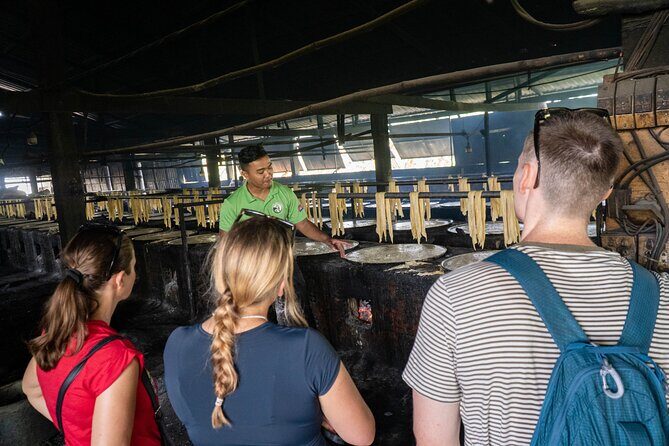
- Koh Oknha Tei: villages, tofu skin, and local market life
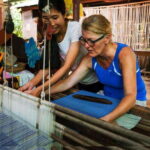
- Silk Island Community Center: silk weaving in a real working setting
- Vespa vs tuk-tuk: choosing what fits your comfort
- What to bring (and what to skip)
- Who this tour is for (and who should pass)
- Should you book Phnom Penh Silk Island on a Vespa or tuk-tuk?
- FAQ
- How much does the Phnom Penh Silk Island Vespa Tour cost?
- How long is the tour?
- Do they pick you up from your hotel?
- What do I ride in—Vespa or a tuk-tuk?
- Is it an English-speaking tour?
- What’s included in the price?
- What is not included?
- Are admission tickets included?
- How big is the group?
- What’s the cancellation policy?
Key things I’d focus on before you go
- Experienced driver plus small-group pace makes the ride feel steady and easy
- Mekong Silk Island culture through countryside villages, craft, and temple time
- Silk weaving at the community center is the hands-on highlight
- Ferry crossing included (but double-check any ferry-terminal ticket details)
- Tofu skin stop can vary depending on what’s operating that day
- Vespa or tuk-tuk choice helps you match your comfort level
Price and logistics: what $29 really covers
At $29 per person for roughly 4 hours 30 minutes, this is priced like a local field trip, not a premium sightseeing bus. That matters in Phnom Penh, where you can easily spend time moving around without learning much.
You’ll start with hotel pickup and drop-off, and you’ll ride in a Vespa or tuk-tuk with an experienced driver. You also get water and a snack, plus ferry time to the island and a village donation tied into the stops.
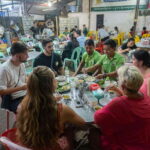
The tour also uses a mobile ticket, which is handy if you prefer not to mess with printed paper in Cambodia’s heat. Group size is capped at 12 travelers, which keeps the day from feeling like a cattle chute.
The main thing I’d keep realistic: this is a half-day. You’ll see several places, but you won’t slow-walk everything. If your dream day is long, relaxed wandering with no timeline stress, you might want a longer island outing instead.
Other tuk-tuk tours we've reviewed in Phnom Penh
Phnom Penh’s backroads: why this ride format works
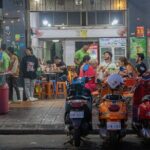
What I like most about this tour style is that you don’t just arrive—you travel there in a way that changes the mood. The drive runs through quieter areas with orchards, market gardens, and farmland along the Mekong-side scenery. That’s a big part of why the half-day feels fuller than the clock suggests.
Riding on a Vespa (or tuk-tuk if you choose that) also helps you cover distance while staying close to daily life. You get the best of both worlds: you see countryside without having to figure out local transport yourself.
There’s also a comfort factor. Guides like Tinan and SoK are known for keeping energy up, and the ride is described as feeling safe at all times. Even if you’re not a motorbike person, this is the kind of route where having an experienced local driver really matters.
One practical tip: dress for the ride. Light layers help with sun and wind. Wear shoes you’re comfortable walking in at temple and village stops, since you’ll step out a few times.
Stop 1: Mongkol Serey Temple (the Golden Temple)
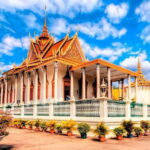
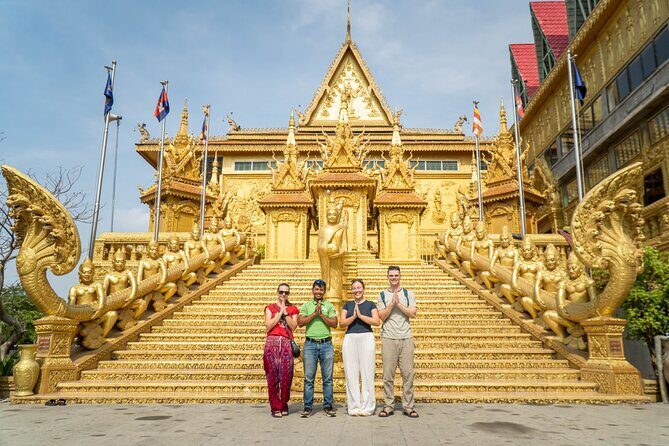
Your first real cultural stop is the Mongkol Serey Temple, often described as the Golden Temple. You’ll spend about 30 minutes here, and the admission ticket is included.
This is a good opener because you’re in a calm setting early in the day. It helps set the context for what you’ll see later—Buddhism shows up not just in big temples, but in daily rhythms, village life, and the way people organize community spaces.
If you want to get more out of this stop, arrive mentally ready to listen. The tour is guided in English, so you’ll have someone explaining what you’re looking at rather than just taking photos and moving on.
Potential drawback: 30 minutes is brief. It’s long enough for a meaningful look, not long enough to treat the temple like a full museum visit. If you love slow temple time, you’ll probably want to return on your own later.
Crossing to Silk Island: ferry time and what to expect
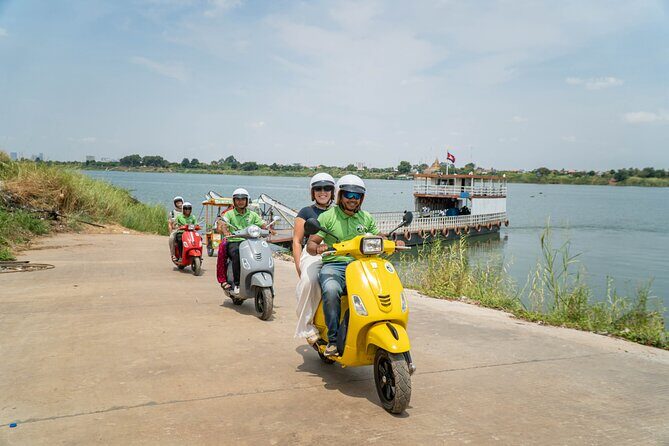
Next comes the ferry segment. You’ll head to the Silk Island ferry terminal and board the boat for about 30 minutes.
Here’s the detail I’d pay attention to: the itinerary notes a ferry-terminal ticket listed as not included, while the overall inclusions say ferry trips to the island are included. That sounds contradictory on paper, so I’d treat it like this: confirm with your operator whether you’ll need to pay any small additional fee at the terminal.
Why this ferry stretch is worth it: it breaks the day into two distinct worlds. Phnom Penh changes once you’re on the water and heading toward the Mekong-side communities. Even if you’re short on time, the ferry gives you a mental reset before village stops.
Bring a little patience for weather and boat schedules. Water travel can be straightforward, or it can have small delays depending on the day.
Koh Oknha Tei: villages, tofu skin, and local market life
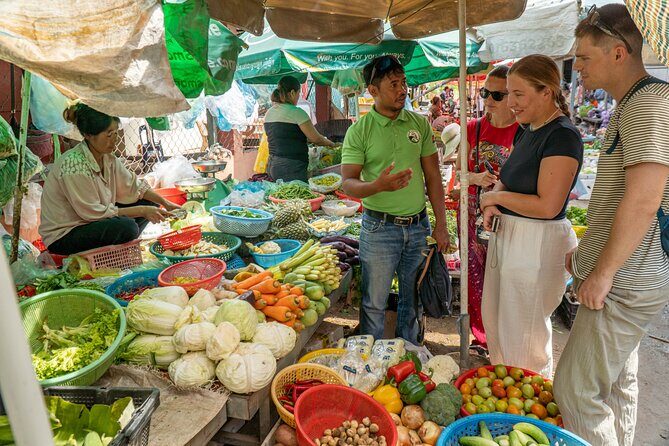
Once you arrive on the island side, you head to Koh Oknha Tei for about 2 hours, and the stop is listed with free admission.
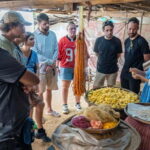
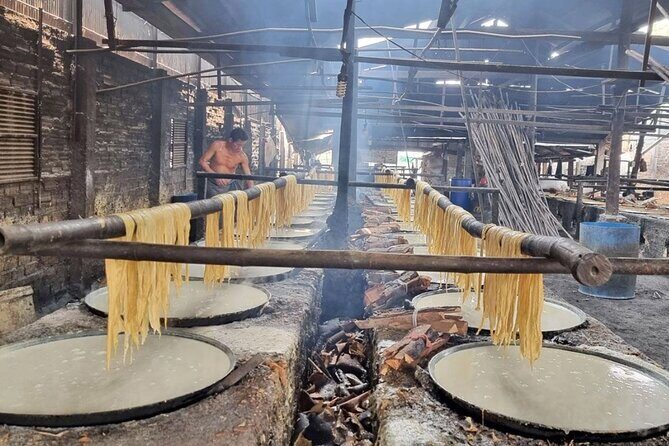
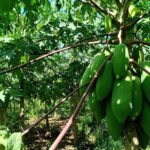
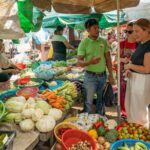
This is the countryside part of the tour, where you get close to everyday village activity. You’ll move through areas tied to farming villages, a local market, and the process around tofu skin producing. There’s also a Buddhist temple included in the mix.
In my opinion, this stop is valuable for two reasons:
- It shows how food production and daily trade fit into village life.
- It gives you something tactile to ask questions about, not just scenic views.
One practical consideration: the tofu skin part may not run on every day. In at least one case, the tofu place was closed when the group arrived, so the visit shifted to a less structured look. If that happens to you, don’t expect a full production demonstration—think of it more like a stop that can vary.
If you care most about seeing a working process, plan your expectations flexibly. Ask your guide on the spot what is available that day, and follow their lead.
Other Silk Island tours we've reviewed in Phnom Penh

Silk Island Community Center: silk weaving in a real working setting
Your final big culture stop is the Silk Island Community Center for about 1 hour 30 minutes, and here the admission ticket is included.
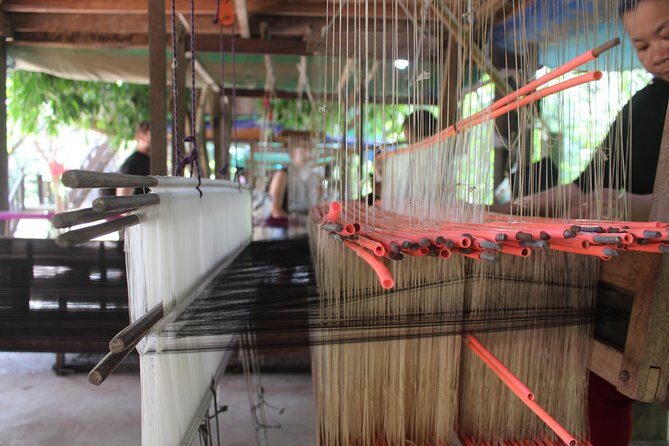
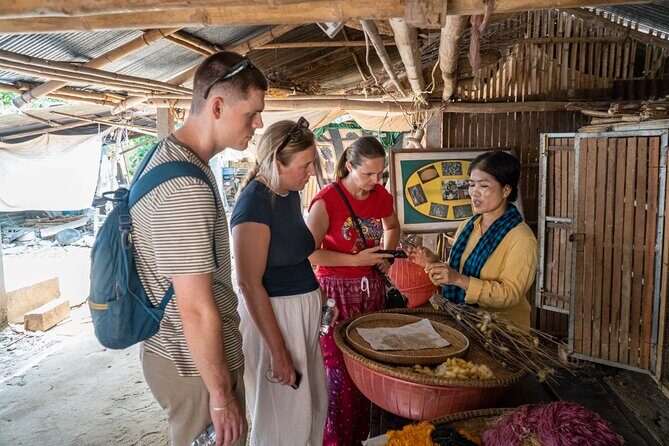
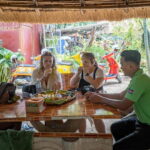
This is the part I’d put at the top of your must-see list. The day is designed to take you from temple and countryside life to the craft that connects communities to global markets. You’ll visit the silk weaving work, and local villagers explain the history of silk weaving in Cambodia and how the tradition has been passed down.
What makes this stop click is that it’s not just watching. The weaving lesson format tends to help you understand the steps behind the final product—how something delicate (scarf material) comes from a whole chain of careful work.
Also, this is where your village donation connects most clearly to what you’re seeing. If you buy nothing, you still get value from learning and from supporting local community efforts through the tour’s structure.
The main scheduling note: 1.5 hours flies by if you’re really into craft. You’ll likely leave wanting more time with the artisans, but you’ll at least come away with a clear sense of what silk weaving actually involves.
Vespa vs tuk-tuk: choosing what fits your comfort
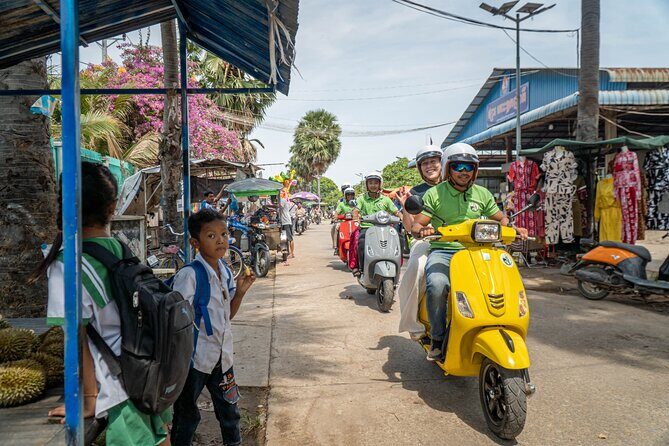
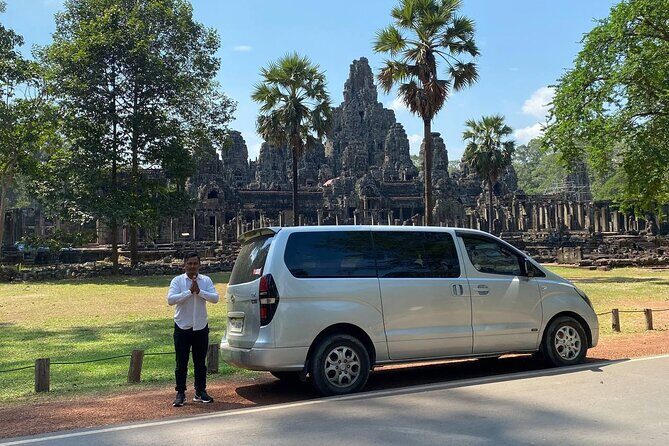
You’ll have a choice between Vespa and tuk-tuk, and either way you’re riding with an experience driver. If you’re nervous about motorcycles, pick the tuk-tuk. If you want the full backstreet feel, Vespa is usually the more direct and nimble experience.
Either way, the ride is designed to feel steady. The day is described as safe at all times, and the drivers are said to be cautious and professional.
How to decide:
- Choose tuk-tuk if you prefer slower, more protected seating and want a lower-stress ride.
- Choose Vespa if you like wind, quick movement through narrow roads, and feeling close to the scenery.
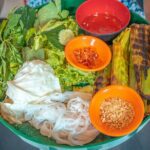
Pack sensible ride basics: light sun protection, comfortable shoes, and a small layer for breezes. You’ll get water and a snack, so you won’t be scrambling to find a bottle on the road.
What to bring (and what to skip)
This isn’t a “bring everything” outing, but you’ll be happier with a few basics.
Bring:
- Comfortable walking shoes for temple and village paths
- Sun protection (hat/sunglasses) since the schedule runs in daylight
- A light layer, especially for ferry breeze
- Your phone for the mobile ticket check
Skip or minimize:
- Heavy bags. You’ll want both hands free for photos and quick steps.
- Anything you don’t want to carry during a short, active day.
Also, you’ll have water and a snack included, but if you’re sensitive to energy dips, you might still want a small personal snack as backup. Just remember the tour lists personal expenses as not included.
Who this tour is for (and who should pass)
This tour is a great fit if you want:
- A half-day cultural outing with countryside scenery
- A guided, English-friendly day that includes temple + ferry + craft
- A small group feel (max 12 travelers)
- A day that’s affordable compared to piecing together transport and tickets alone
It may not be ideal if you:
- Hate any schedule pressure. This day moves between stops on a tight timeline.
- Only want “working factory” demonstrations. The tofu skin portion can vary if a stop is closed that day.
- Want lots of unscripted time on Silk Island. The plan includes community center time and village stops, not long solo roaming.
The sweet spot is people who like practical learning—how people live, how craft is made, and why traditions still matter.
Should you book Phnom Penh Silk Island on a Vespa or tuk-tuk?
Yes, I’d book this if you’re spending a limited number of days in Phnom Penh and want one solid outing that connects the city to the Mekong-side communities. The combination of hotel pickup, experienced drivers, ferry time, and a silk weaving visit makes it hard to beat for the price.
I’d make one adjustment to your expectations: treat the tofu skin stop as a bonus that can vary, not as the core guarantee. The weaving workshop is the steadier highlight, and it’s the reason many people come away feeling the day was worth it.
If you want a safe, well-paced half-day with real local culture and a mix of temples, countryside, and craft, this tour delivers.
FAQ
How much does the Phnom Penh Silk Island Vespa Tour cost?
It costs $29.00 per person.
How long is the tour?
The tour lasts about 4 hours 30 minutes.
Do they pick you up from your hotel?
Yes. Hotel pickup and drop-off are included.
What do I ride in—Vespa or a tuk-tuk?
You can ride in a Vespa or tuk-tuk, with an experienced driver.
Is it an English-speaking tour?
Yes. The tour includes an English speaking guide.
What’s included in the price?
Included are hotel pickup/drop-off, the Vespa or tuk-tuk with an experience driver, English speaking tour, village donation, ferry trips to the island, and water and snack.
What is not included?
Personal expenses are not included. Also, the itinerary lists that the ferry terminal ticket is not included, even though ferry trips are listed as included—double-check before you go.
Are admission tickets included?
Admission is included for Mongkol Serey Temple and the Silk Island Community Center. The Koh Oknha Tei stop is listed as free admission. The ferry terminal ticket is listed as not included.
How big is the group?
The tour has a maximum of 12 travelers.
What’s the cancellation policy?
You can cancel for a full refund if you cancel at least 24 hours before the experience starts. Free cancellation is allowed up to that point.